
CAS 91-01-0PubChem CID 7037
Benzhydrol
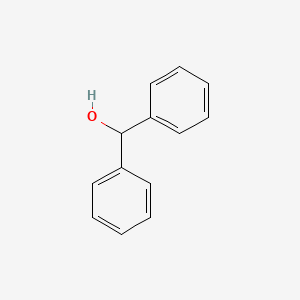
Diphenylmethanol is a secondary alcohol that is diphenylmethane which carries a hydroxy group at position 1. It has a role as a human xenobiotic metabolite, a bacterial xenobiotic metabolite, a human urinary metabolite and a rat metabolite. It is a member of benzyl alcohols and a secondary alcohol. It derives from a hydride of a diphenylmethane. — ChEBI
- IUPAC name
- diphenylmethanol
- Molecular formula
- C13H12O
- Molecular weight
- 184.23 g/mol
- Exact mass
- 184.088815002 Da
- XLogP3
- 2.7
- Topological polar surface area
- 20.2 Ų
- Hydrogen-bond donors
- 1
- Hydrogen-bond acceptors
- 1
- Covalent units
- 1
- Defined stereocentres
- 0
Also known as
DiphenylcarbinolBenzohydrolHydroxydiphenylmethaneDiphenyl carbinolDiphenylmethyl alcoholalpha-PhenylbenzenemethanolBenzenemethanol, alpha-phenyl-S4HQ1H8OWD
16 more reported names
CHEBI:156087NSC-32150RefChem:565239202-033-8Benzhydryl alcoholBenzenemethanol, .alpha.-phenyl-diphenyl methanoldiphenyl-methanolNSC 32150Diphenylmethanol, 99%BENZOHYDROL [MI].alpha.-PhenylbenzenemethanolDiphenylmethanol (Benzhydrol)diphenylmethan-1-olD0898alpha-phenylbenzyl alcohol
External database identifiers
- ChEBI:CHEBI:156087
- ChEMBL:CHEMBL2386190
- EPA DTXSID:DTXSID2059015
- PubMed:22749456
- PubMed:22699773
- PubMed:22686420
- PubMed:22654610
- PubMed:22464687
- PubMed:22043293
- PubMed:22008723
- PubMed:21905141
- PubMed:21837179
- PubMed:21802309
- PubMed:21788138
- PubMed:21588476
Retrieved from NIH PubChem on 2026-08-31 by checksum-valid CAS matching. Chemical properties do not replace the regulatory decision on this page.