
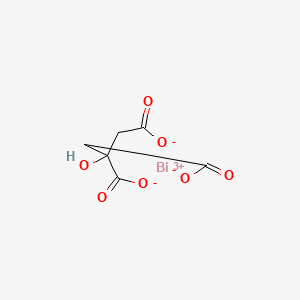
CAS 813-93-4PubChem CID 13135
Bismuth Citrate
Bismuth citrate is it is a colour additive. It contains a citrate(3-). — ChEBI
- IUPAC name
- bismuth 2-hydroxypropane-1,2,3-tricarboxylate
- Molecular formula
- C6H5BiO7
- Molecular weight
- 398.08 g/mol
- Exact mass
- 397.98393 Da
- Topological polar surface area
- 141.0 Ų
- Hydrogen-bond donors
- 1
- Hydrogen-bond acceptors
- 7
- Covalent units
- 2
- Defined stereocentres
- 0
Also known as
Bi-citrate1,2,3-Propanetricarboxylic acid, 2-hydroxy-, bismuth(3+) salt (1:1)RefChem:569474212-390-1Bismuth(III) citratebismuth(3+) 2-hydroxypropane-1,2,3-tricarboxylateBismuth( cento) citrate, 99.99% trace metals basisBismuth (III) citrate
16 more reported names
C6H5BiO7Bismuth citrate [USP:USP]bismuth;citrateUNII-N04867Y76N1,2,3-Propanetricarboxylic acid, 2-hydroxy-, bismuth(3+) salt (1:1); Bismuth citrate (7CI); Bismuth, [citrato(3-)]- (8CI); Livzon dele; Tegokat 752EINECS 212-390-1Bismuth citrate (USP)Bismuth citrate - USPEC 212-390-1TEGOKAT 752Bismuth, (citrato(3-))-citric acid bismuth(III) saltBISMUTH CITRATE [MART.]BISMUTH CITRATE [USP-RS]BISMUTH CITRATE [WHO-DD]CHEBI:157700
External database identifiers
- ChEBI:CHEBI:157700
- EPA DTXSID:DTXSID6074330
Retrieved from NIH PubChem on 2026-09-02 by checksum-valid CAS matching. Chemical properties do not replace the regulatory decision on this page.