
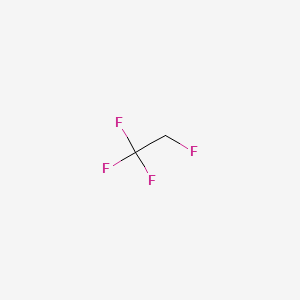
CAS 811-97-2PubChem CID 13129
1,1,1,2-Tetrafluoroethane
1,1,1,2-tetrafluoroethane appears as a colorless gas with a slight ethereal odor. Vapors are heavier than air. Shipped liquefied under own vapor pressure. Flash point 351 °F. Inhalation at high concentrations is harmful and may cause heart irregularities, unconsciousness or death without warning. Liquid contact may cause frostbite. Vapors can replace the available oxygen. — CAMEO Chemicals
- IUPAC name
- 1,1,1,2-tetrafluoroethane
- Molecular formula
- C2H2F4
- Molecular weight
- 102.03 g/mol
- Exact mass
- 102.00926271 Da
- XLogP3
- 1.7
- Topological polar surface area
- 0.0 Ų
- Hydrogen-bond donors
- 0
- Hydrogen-bond acceptors
- 4
- Covalent units
- 1
- Defined stereocentres
- 0
Also known as
NorfluraneHFC-134aTetrafluoroethane1,2,2,2-TetrafluoroethaneRefrigerant R134aHFA 134aHFA-134aR-134a
16 more reported names
NorfluranoGenetron 134aKhladon 134aNorfluranumArcton 134aDymel 134aEthane, 1,1,1,2-tetrafluoro-HFC 134aFron 134aSuva 134aSolkane 134aHCFC 134a1,1,1,2-TetrafluorethanForane 134aFreon 134aFC 134a
External database identifiers
Retrieved from NIH PubChem on 2026-08-31 by checksum-valid CAS matching. Chemical properties do not replace the regulatory decision on this page.