
CAS 8029-68-3PubChem CID 3657
Hydroxyurea
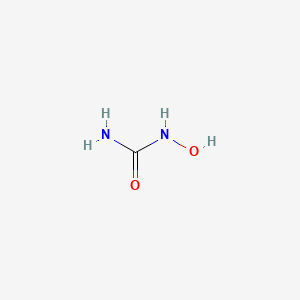
Hydroxyurea is a member of the class of ureas that is urea in which one of the hydrogens is replaced by a hydroxy group. An antineoplastic used in the treatment of chronic myeloid leukaemia as well as for sickle-cell disease. It has a role as an antimetabolite, an antineoplastic agent, a radical scavenger, an immunomodulator, a genotoxin, a teratogenic agent, a DNA synthesis inhibitor, an antimitotic and an EC 1.17.4.1 (ribonucleoside-diphosphate reductase) inhibitor. It is a member of ureas and a one-carbon compound. — ChEBI
- IUPAC name
- hydroxyurea
- Molecular formula
- CH4N2O2
- Molecular weight
- 76.055 g/mol
- Exact mass
- 76.027277375 Da
- XLogP3
- -1.8
- Topological polar surface area
- 75.4 Ų
- Hydrogen-bond donors
- 3
- Hydrogen-bond acceptors
- 2
- Covalent units
- 1
- Defined stereocentres
- 0
Also known as
127-07-1HydroxycarbamideN-HydroxyureaHydreaOxyureaCarbamoyl oximeCarbamohydroxamic acidCarbamohydroximic acid
16 more reported names
LitalirHydroxycarbamineUrea, hydroxy-Onco-carbideBiosupressinDroxiaHidrixHyduraCarbamyl hydroxamateHydureaN-CarbamoylhydroxylamineSiklosHydroxicarbamidumHydroxylureaHidroxicarbamidaXromi
External database identifiers
Retrieved from NIH PubChem on 2026-08-31 by checksum-valid CAS matching. Chemical properties do not replace the regulatory decision on this page.