
CAS 7803-55-6PubChem CID 516859
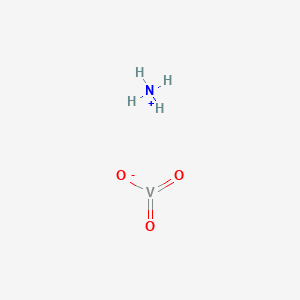
Ammonium metavanadate
Ammonium metavanadate appears as a white crystalline powder. Slightly soluble in water and denser than water. Decomposes at 410 °F. May release toxic fumes. Moderately toxic. An irritant. Used as a dryer for paints and inks, and for dyes. Loses ammonia upon heating. — CAMEO Chemicals
- IUPAC name
- azanium oxido(dioxo)vanadium
- Molecular formula
- H4NO3V
- Molecular weight
- 116.978 g/mol
- Exact mass
- 116.963076 Da
- Topological polar surface area
- 58.2 Ų
- Hydrogen-bond donors
- 1
- Hydrogen-bond acceptors
- 3
- Covalent units
- 2
- Defined stereocentres
- 0
Also known as
Ammonium monovanadateAmmonium metavanadate (NH4VO3)Ammonium vanadium trioxideAmmonium vanadium oxide (NH4VO3)RCRA waste number P119Ammonium trioxovanadate(1-)Vanadic acid (HVO3), ammonium saltVanadate (VO31-), ammonium
16 more reported names
FL85PX638GVanadate (VO3(1-)), ammoniumNSC-215196vanadiumoylol amineRefChem:112178Ammonium vanadate (NH4VO3)232-261-3Ammonium trioxovanadateAmmonium vanadate ((NH4)VO3)Ammonium vanadate(V)AMMONIUM VANADATEazanium;oxido(dioxo)vanadiumVanadic acid, ammonium saltHSDB 6038EINECS 234-351-8Ammonium-m-vanadate
External database identifiers
Retrieved from NIH PubChem on 2026-08-31 by checksum-valid CAS matching. Chemical properties do not replace the regulatory decision on this page.