
CAS 7705-08-0PubChem CID 24380
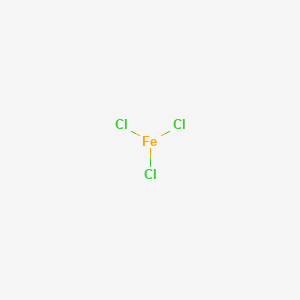
Iron chloride (FeCl3)
Ferric chloride is an orange to brown-black solid. It is slightly soluble in water. It is noncombustible. When wet it is corrosive to aluminum and most metals. Pick up and remove spilled solid before adding water. It is used to treat sewage, industrial waste, to purify water, as an etching agent for engraving circuit boards, and in the manufacture of other chemicals. — CAMEO Chemicals
- IUPAC name
- trichloroiron
- Molecular formula
- Cl3Fe
- Molecular weight
- 162.20 g/mol
- Exact mass
- 160.841494 Da
- Topological polar surface area
- 0.0 Ų
- Hydrogen-bond donors
- 0
- Hydrogen-bond acceptors
- 0
- Covalent units
- 1
- Defined stereocentres
- 0
Also known as
FERRIC CHLORIDEIron trichlorideIron chlorideFlores martisIron perchlorideChlorure perriquePerchlorure de ferNatural molysite
16 more reported names
FERRIC CHLORIDE, ANHYDROUSChlorure ferriqueIron sesquichloride (DOT)FeCl3U38V3ZVV3VIron sesquichlorideCHEBI:30808NSC-51150NSC-135798Ferric trichlorideRefChem:6640231-729-4Ferric chloride, hexahydrateIron (III), chloride, hexahydrateIron(3+) chloride, hexahydrateIron(III) chloride
External database identifiers
- ChEBI:CHEBI:30808
Retrieved from NIH PubChem on 2026-08-31 by checksum-valid CAS matching. Chemical properties do not replace the regulatory decision on this page.