
CAS 7664-41-7PubChem CID 222
Ammonia
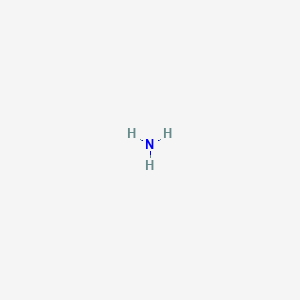
Ammonia is an azane that consists of a single nitrogen atom covelently bonded to three hydrogen atoms. It has a role as a NMR chemical shift reference compound, a metabolite, a neurotoxin, a nucleophilic reagent, a mouse metabolite, an EC 3.5.1.4 (amidase) inhibitor and a refrigerant. It is a gas molecular entity, an azane and a mononuclear parent hydride. It is a conjugate base of an ammonium. It is a conjugate acid of an azanide. — ChEBI
- IUPAC name
- azane
- Molecular formula
- H3N
- Molecular weight
- 17.031 g/mol
- Exact mass
- 17.026549100 Da
- XLogP3
- -0.7
- Topological polar surface area
- 1.0 Ų
- Hydrogen-bond donors
- 1
- Hydrogen-bond acceptors
- 1
- Covalent units
- 1
- Defined stereocentres
- 0
Also known as
Ammonia gasNitro-silAmmonia anhydrousAmmonia, anhydrousAnhydrous ammoniaAmmoniakLiquid AmmoniaAM-Fol
16 more reported names
ammoniacAqueous ammoniaRefrigerent R717amoniacoAmmoniacaAmoniakR 717R 717 (ammonia)Aqua ammoniaAmmonia inhalantAmmonium causticum5138Q19F1XCHEBI:16134Ammonia (anhydrous)InhalantSmelling Salts
External database identifiers
- ChEBI:CHEBI:16134
- ChEBI:CHEBI:50471
- ChEMBL:CHEMBL1160819
- EPA DTXSID:DTXSID0023872
- EPA DTXSID:DTXSID801029786
- EPA DTXSID:DTXSID80420101
- PubMed:39481765
- PubMed:38703806
- PubMed:34389318
- PubMed:33745965
- PubMed:31863799
- PubMed:30968116
- PubMed:29618784
- PubMed:29285805
- PubMed:28379573
- PubMed:26639393
- PubMed:26318273
- PubMed:24069137
Retrieved from NIH PubChem on 2026-08-31 by checksum-valid CAS matching. Chemical properties do not replace the regulatory decision on this page.