
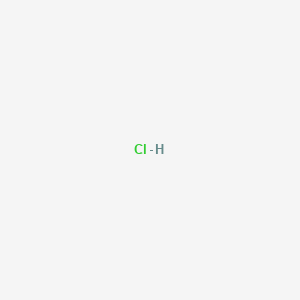
Hydrochloric Acid
Hydrogen chloride, anhydrous appears as a colorless gas with a sharp, pungent odor. Fumes strongly in moist air. Nonflammable. Corrosive to metals and tissues and irritating to the eyes and respiratory system. Heavier than air. Long-term inhalation of low concentrations or short-term inhalation of high concentrations has adverse health effects. Prolonged exposure to fire or intense heat may result in the violent rupture and rocketing of the container. Used in the manufacture of rubber, pharmaceuticals, chemicals, and in gasoline refining and metals processing. Rate of onset: Immediate Persistence: Minutes to hours Odor threshold: 0.77 ppm Source/use/other hazard: Ore, other metal refining/cleaning; food/pickling; petroleum; corrosive liq. — CAMEO Chemicals
- IUPAC name
- chlorane
- Molecular formula
- ClH
- Molecular weight
- 36.46 g/mol
- Exact mass
- 35.9766777 Da
- XLogP3
- 0.8
- Topological polar surface area
- 0.0 Ų
- Hydrogen-bond donors
- 1
- Hydrogen-bond acceptors
- 0
- Covalent units
- 1
- Defined stereocentres
- 0
Also known as
16 more reported names
External database identifiers
- ChEBI:CHEBI:17883
- ChEBI:CHEBI:23116
- ChEBI:CHEBI:36683
- ChEMBL:CHEMBL1231821
- EPA DTXSID:DTXSID2020711
- PubMed:32531310
- PubMed:32006539
- PubMed:31900028
- PubMed:31898605
- PubMed:29743441
- PubMed:29618784
- PubMed:27780710
- PubMed:25478868
- PubMed:24144632
- PubMed:24122261
- PubMed:23266427
- PubMed:22906572
Retrieved from NIH PubChem on 2026-08-31 by checksum-valid CAS matching. Chemical properties do not replace the regulatory decision on this page.