
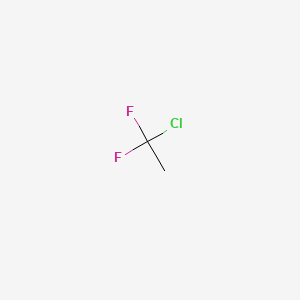
CAS 75-68-3PubChem CID 6388
1-Chloro-1,1-difluoroethane
1-chloro-1,1-difluoroethane appears as a colorless, odorless gas shipped as a liquid under own vapor pressure. Contact with the unconfined liquid may cause frostbite by evaporative cooling. Easily ignited. Vapors heavier than air. A leak may be either liquid or vapor. May asphyxiate by the displacement of air. Prolonged exposure to fire or intense heat may cause the containers to violently rupture and rocket. — CAMEO Chemicals
- IUPAC name
- 1-chloro-1,1-difluoroethane
- Molecular formula
- C2H3ClF2
- Molecular weight
- 100.49 g/mol
- Exact mass
- 99.9891341 Da
- XLogP3
- 2.0
- Topological polar surface area
- 0.0 Ų
- Hydrogen-bond donors
- 0
- Hydrogen-bond acceptors
- 2
- Covalent units
- 1
- Defined stereocentres
- 0
Also known as
Freon 142bGenetron 142bHCFC-142bPropellant 142bGenetron 1011,1-Difluoro-1-chloroethaneEthane, 1-chloro-1,1-difluoro-Gentron 142B
16 more reported names
Fluorocarbon FC142bMonochlorodifluoroethaneR-142bHydrochlorofluorocarbon 142bChloroethylidene fluorideFluorocarbon 142bIsotron 142bCFC 142bFREON 142Difluoro-1-chloroethaneFC142bChlorofluorocarbon 142bFUC3XHA6GYFC 142bCFC-142BSOLKANE 142B
External database identifiers
- EPA DTXSID:DTXSID9023960
- PubMed:11764159
Retrieved from NIH PubChem on 2026-08-31 by checksum-valid CAS matching. Chemical properties do not replace the regulatory decision on this page.