
CAS 75-45-6PubChem CID 6372
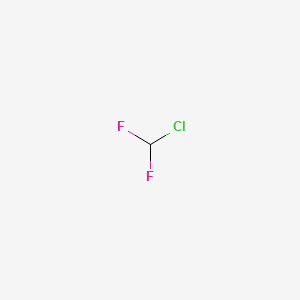
Chlorodifluoromethane
Chlorodifluoromethane is a colorless gas with an ethereal odor. It is shipped as a liquefied gas under its own vapor pressure. It is noncombustible. It can asphyxiate by the displacement of air. Contact with the liquid can cause frostbite. Toxic gases can be produced in fires involving this material. Exposure of the container to prolonged heat or fire may cause it to rupture violently and rocket. — CAMEO Chemicals
- IUPAC name
- chloro(difluoro)methane
- Molecular formula
- CHClF2
- Molecular weight
- 86.47 g/mol
- Exact mass
- 85.9734841 Da
- XLogP3
- 1.8
- Topological polar surface area
- 0.0 Ų
- Hydrogen-bond donors
- 0
- Hydrogen-bond acceptors
- 2
- Covalent units
- 1
- Defined stereocentres
- 0
Also known as
DifluorochloromethaneFreon 22HCFC-22Propellant 22MonochlorodifluoromethaneFrigen 22Methane, chlorodifluoro-Fluorocarbon 22
16 more reported names
Fluorocarbon-22Algofrene type 6Algofrene 22Arcton 4DifluoromonochloromethaneGenetron 22Daiflon 22Eskimon 22Flugene 22Haltron 22Isotron 22Khladon 22Refrigerant R 22Algeon 22Arcton 22Forane 22
External database identifiers
- ChEBI:CHEBI:82417
- ChEMBL:CHEMBL116155
- EPA DTXSID:DTXSID6020301
- PubMed:23089519
- PubMed:22442834
- PubMed:22132135
- PubMed:21918544
- PubMed:21847789
- PubMed:21719388
- PubMed:21655021
- PubMed:21461374
- PubMed:21202502
- PubMed:21202250
- PubMed:21202244
- PubMed:21202233
Retrieved from NIH PubChem on 2026-08-31 by checksum-valid CAS matching. Chemical properties do not replace the regulatory decision on this page.