
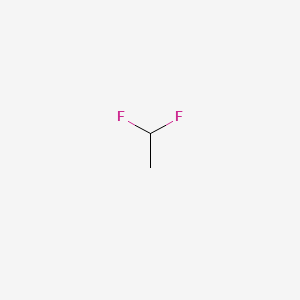
CAS 75-37-6PubChem CID 6368
1,1-Difluoroethane
1,1-Difluoroethane is colorless, odorless gas shipped as a liquefied gas under its vapor pressure. Contact with the liquid can cause frostbite. It is easily ignited. Its vapors are heavier than air and a flame can travel back to the source of leak very easily. This leak can be either a liquid or vapor leak. It can asphyxiate by the displacement of air. Under prolonged exposure to fire or heat the containers may rupture violently and rocket. — CAMEO Chemicals
- IUPAC name
- 1,1-difluoroethane
- Molecular formula
- C2H4F2
- Molecular weight
- 66.05 g/mol
- Exact mass
- 66.02810645 Da
- XLogP3
- 1.4
- Topological polar surface area
- 0.0 Ų
- Hydrogen-bond donors
- 0
- Hydrogen-bond acceptors
- 2
- Covalent units
- 1
- Defined stereocentres
- 0
Also known as
Ethylidene fluorideEthylidene difluorideEthane, 1,1-difluoro-HFC-152aGenetron 152aAlgofrene type 67Freon 152aPropellant 152a
16 more reported names
Halocarbon 152ARefrigerant 152aGenetron 100Ethylene fluorideDymel 152ADymel 152Hydrofluorocarbon 152aHFC 152aFluorocarbon 152aR 152aFC 152aR-152a0B1U8K2ME0RefChem:71081200-866-1687-441-8
External database identifiers
Retrieved from NIH PubChem on 2026-08-31 by checksum-valid CAS matching. Chemical properties do not replace the regulatory decision on this page.