
CAS 628-97-7PubChem CID 12366
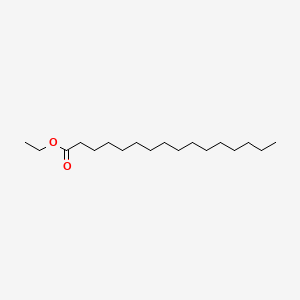
Ethyl palmitate
Ethyl hexadecanoate is a long-chain fatty acid ethyl ester resulting from the formal condensation of the carboxy group of palmitic acid with the hydroxy group of ethanol. It has a role as a plant metabolite. It is a long-chain fatty acid ethyl ester and a hexadecanoate ester. — ChEBI
- IUPAC name
- ethyl hexadecanoate
- Molecular formula
- C18H36O2
- Molecular weight
- 284.5 g/mol
- Exact mass
- 284.271530387 Da
- XLogP3
- 7.8
- Topological polar surface area
- 26.3 Ų
- Hydrogen-bond donors
- 0
- Hydrogen-bond acceptors
- 2
- Covalent units
- 1
- Defined stereocentres
- 0
Also known as
Hexadecanoic acid, ethyl esterPalmitic acid, ethyl esterEthyl cetylateFEMA No. 2451NSC-8918IRD3M534ZMCHEBI:84932WE(2:0/16:0)
16 more reported names
RefChem:139032211-064-6Palmitic acid ethyl esterhexadecanoic acid ethyl esterEthyl n-hexadecanoateHexadecanoic acid ethylHexadecanoic acid,ethyl esterhexadecanoic acid-ethyl esterAI3-06331NSC8918HY-N2086Ethyl palmitate, analytical standardTox21_302505AC-35085EthylpalmitateEthyl palmitate, United States Pharmacopeia (USP) Reference Standard
External database identifiers
- ChEBI:CHEBI:84932
- ChEMBL:CHEMBL3561042
- EPA DTXSID:DTXSID2047511
- PubMed:22842335
- PubMed:22710192
- PubMed:22693901
- PubMed:22669306
- PubMed:22364438
- PubMed:22260042
- PubMed:22136358
- PubMed:21958524
- PubMed:21943200
- PubMed:21915372
- PubMed:21629774
- PubMed:21533136
Retrieved from NIH PubChem on 2026-08-31 by checksum-valid CAS matching. Chemical properties do not replace the regulatory decision on this page.