
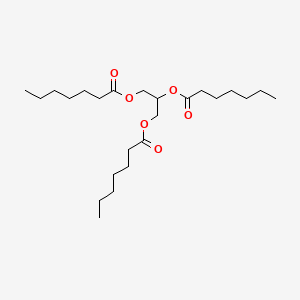
CAS 620-67-7PubChem CID 69286
Triheptanoin
Triheptanoin is a source of heptanoate fatty acids, which can be metabolized without the enzymes of long chain fatty acid oxidation. In clinical trials, patients with long chain fatty acid oxidation disorders (lc-FAODs) treated with triheptanoin are less likely to develop hypoglycemia, cardiomyopathy, rhabdomyolysis, and hepatomegaly. Complications in lc-FAOD patients are reduced from approximately 60% to approximately 10% with the addition of triheptanoin. Triheptanoin was granted FDA approval on 30 June 2020. — DrugBank
- IUPAC name
- 2,3-di(heptanoyloxy)propyl heptanoate
- Molecular formula
- C24H44O6
- Molecular weight
- 428.6 g/mol
- Exact mass
- 428.31378912 Da
- XLogP3
- 7.3
- Topological polar surface area
- 78.9 Ų
- Hydrogen-bond donors
- 0
- Hydrogen-bond acceptors
- 6
- Covalent units
- 1
- Defined stereocentres
- 0
Also known as
TrienanthoinTrioenanthoinTriheptylinGlycerol triheptanoateHeptanoin, tri-Triheptanoic glycerideDermofeel TC 7Dojolvi
16 more reported names
GLYCERYL TRIHEPTANOATEglyceroltriheptanoateUX007Dub thgDermofeel tc-7Radiamuls 2375Lanol 37 ttriheptanoinatriheptanoineHeptanoic acid, 1,2,3-propanetriyl ester2P6O7CFW5KUX-007Heptanoic acid, 1,1',1''-(1,2,3-propanetriyl) ester1,3-bis(heptanoyloxy)propan-2-yl heptanoatetriheptanoinumRefChem:57618
External database identifiers
Retrieved from NIH PubChem on 2026-08-31 by checksum-valid CAS matching. Chemical properties do not replace the regulatory decision on this page.