
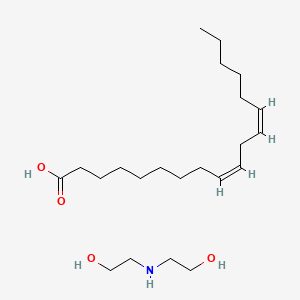
CAS 59231-42-4PubChem CID 6441885
Diethanolammonium linoleate
The CIR Expert Panel concluded that diethanolamine and the 16 related salts listed below are safe in the present practices of use and concentration when formulated to be non-irritating. The Expert Panel cautions that ingredients should not be used in cosmetic products in which N-nitroso compounds can be formed. — Cosmetic Ingredient Review (CIR)
- IUPAC name
- 2-(2-hydroxyethylamino)ethanol;(9Z,12Z)-octadeca-9,12-dienoic acid
- Molecular formula
- C22H43NO4
- Molecular weight
- 385.6 g/mol
- Exact mass
- 385.31920885 Da
- Topological polar surface area
- 89.8 Ų
- Hydrogen-bond donors
- 4
- Hydrogen-bond acceptors
- 5
- Covalent units
- 2
- Defined stereocentres
- 0
Also known as
DEA-LinoleateDiethanolamine linoleateLinoleic acid, diethanolamine salt6BPC602F27EINECS 261-676-2AEC DEA-LINOLEATEETHANOL, 2,2'-IMINOBIS-, (Z,Z)-9,12-OCTADECADIENOATE (SALT)ETHANOL, 2,2'-IMINOBIS-, (9Z,12Z)-9,12-OCTADECADIENOATE (SALT)
4 more reported names
RefChem:586954DEA-LINOLEATE [INCI]UNII-6BPC602F27(9Z,12Z)-Octadeca-9,12-dienoic acid, compound with 2,2'-iminodiethanol (1:1)
External database identifiers
- EPA DTXSID:DTXSID401021392
Retrieved from NIH PubChem on 2026-08-31 by checksum-valid CAS matching. Chemical properties do not replace the regulatory decision on this page.