
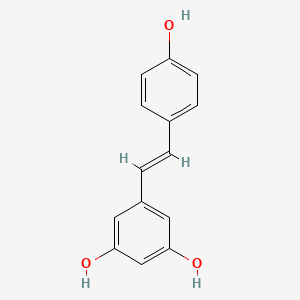
CAS 501-36-0PubChem CID 445154
Resveratrol
Resveratrol is a plant polyphenol found in high concentrations in red grapes that has been proposed as a treatment for hyperlipidemia and to prevent fatty liver, diabetes, atherosclerosis and aging. Resveratrol use has been associated with rare instances of serum enzyme elevations during therapy but has not been convincingly linked to episodes of clinically apparent liver injury. — LiverTox
- IUPAC name
- 5-[(E)-2-(4-hydroxyphenyl)ethenyl]benzene-1,3-diol
- Molecular formula
- C14H12O3
- Molecular weight
- 228.24 g/mol
- Exact mass
- 228.078644241 Da
- XLogP3
- 3.1
- Topological polar surface area
- 60.7 Ų
- Hydrogen-bond donors
- 3
- Hydrogen-bond acceptors
- 3
- Covalent units
- 1
- Defined stereocentres
- 0
Also known as
trans-resveratrol3,4',5-Trihydroxystilbene(E)-resveratrolResvida3,4',5-Stilbenetriol3,4',5-Trihydroxy-trans-stilbeneBiofortCuspidatin
16 more reported names
5-[(1E)-2-(4-Hydroxyphenyl)ethenyl]-1,3-benzenediolJotrolSRT-501(E)-5-(p-Hydroxystyryl)resorcinolResveratrol p 5SRT501Melinjo resveratrol 20Srt 501m5-[(E)-2-(4-hydroxyphenyl)vinyl]benzene-1,3-diolNSC-327430Q369O8926LCHEBI:27881CHEBI:45713Ca 1201BIA 6-512BIA-6-512
External database identifiers
Retrieved from NIH PubChem on 2026-08-31 by checksum-valid CAS matching. Chemical properties do not replace the regulatory decision on this page.