
CAS 3012-65-5PubChem CID 18171
Diammonium Citrate
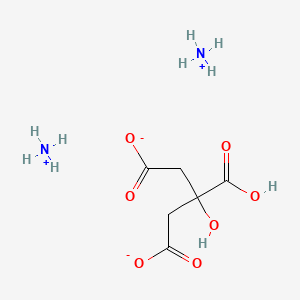
Diammonium citrate is a citrate salt in which two of the three carboxy groups are deprotonated and associated with ammonium ions as counter-cations. It has a role as a buffer. It is an ammonium salt and a citrate salt. — ChEBI
- IUPAC name
- diazanium;3-carboxy-3-hydroxypentanedioate
- Molecular formula
- C6H14N2O7
- Molecular weight
- 226.18 g/mol
- Exact mass
- 226.08010079 Da
- Topological polar surface area
- 140.0 Ų
- Hydrogen-bond donors
- 4
- Hydrogen-bond acceptors
- 7
- Covalent units
- 3
- Defined stereocentres
- 0
Also known as
Ammonium citrate dibasicMicrostopDiammonium hydrogen citrateDibasic ammonium citrateAmmonium monohydrogen citrateAmmCitrateAmmonium citrate, dibasiccitric acid diammonium salt
16 more reported names
ammonium hydrogen citrateAmmonium monohydrogencitratAmmonium monohydrogencitrateCitric acid, diammonium saltDiammonium citrate (secondary)2-Hydroxy-1,2,3-propanetricarboxylic acid, diammonium saltdiammonium 3-carboxy-3-hydroxypentanedioate1,2,3-Propanetricarboxylic acid, 2-hydroxy-, diammonium saltCHEBI:63076N9BUG430K8DTXCID5079DA-H-C cpdRefChem:586249221-146-3Citrate (diammonium)Ammonium hydrogencitrate
External database identifiers
- ChEBI:CHEBI:63076
Retrieved from NIH PubChem on 2026-08-31 by checksum-valid CAS matching. Chemical properties do not replace the regulatory decision on this page.