
CAS 2855-13-2PubChem CID 17857
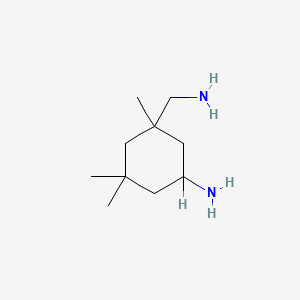
Isophorone diamine
Isophoronediamine appears as a clear to light-yellow liquid. Highly soluble though slightly denser than water. May be toxic by inhalation and skin absorption. Corrosive to skin. Used to make other chemicals. — CAMEO Chemicals
- IUPAC name
- 3-(aminomethyl)-3,5,5-trimethylcyclohexan-1-amine
- Molecular formula
- C10H22N2
- Molecular weight
- 170.30 g/mol
- Exact mass
- 170.178298710 Da
- XLogP3
- 1.1
- Topological polar surface area
- 52.0 Ų
- Hydrogen-bond donors
- 2
- Hydrogen-bond acceptors
- 2
- Covalent units
- 1
- Defined stereocentres
- 0
Also known as
Isophoronediamine3-Aminomethyl-3,5,5-trimethylcyclohexylamineCyclohexanemethanamine, 5-amino-1,3,3-trimethyl-5-Amino-1,3,3-trimethylcyclohexanemethylamineVestamin IPDCyclohexanemethylamine, 5-amino-1,3,3-trimethyl-Araldite HY 5083X5WYA841BU
16 more reported names
Vestamine IPDALuxam IPDChemammina CA 17RefChem:792054220-666-83-(Aminomethyl)-3,5,5-trimethylcyclohexanamine5-Amino-1,3,3-trimethylcyclohexanemethanamine1-Amino-3-aminomethyl-3,5,5-trimethylcyclohexane3-(aminomethyl)-3,5,5-trimethylcyclohexylamineCAS-2855-13-2IPDACCRIS 6680HSDB 4058EINECS 220-666-8UN2289UNII-X5WYA841BU
External database identifiers
Retrieved from NIH PubChem on 2026-08-31 by checksum-valid CAS matching. Chemical properties do not replace the regulatory decision on this page.