
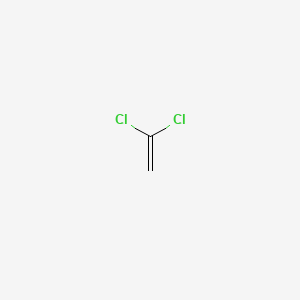
Vinylidene chloride
Vinylidene chloride is used as an intermediate in chemical synthesis and to produce polyvinylidene chloride copolymers. The primary acute (short-term) effects in humans from vinylidene chloride exposure are on the central nervous system (CNS), including CNS depression and symptoms of inebriation, convulsions, spasms, and unconsciousness at high concentrations. Low-level, chronic (long-term) inhalation exposure of vinylidene chloride in humans may effect the liver. Animal studies indicate that chronic exposure to vinylidene chloride can affect the liver, kidneys, CNS and lungs. Human data are considered inadequate in providing evidence of cancer from exposure to vinylidene chloride. The most recent cancer classification for vinylidene chloride can be found on IRIS. — EPA Hazardous Air Pollutants
- IUPAC name
- 1,1-dichloroethene
- Molecular formula
- C2H2Cl2
- Molecular weight
- 96.94 g/mol
- Exact mass
- 95.9533555 Da
- XLogP3
- 2.3
- Topological polar surface area
- 0.0 Ų
- Hydrogen-bond donors
- 0
- Hydrogen-bond acceptors
- 0
- Covalent units
- 1
- Defined stereocentres
- 0
Also known as
16 more reported names
External database identifiers
- ChEBI:CHEBI:34031
- ChEMBL:CHEMBL156455
- EPA DTXSID:DTXSID8021438
- PubMed:26682919
- PubMed:24958746
- PubMed:23039917
- PubMed:22989309
- PubMed:22814410
- PubMed:22685458
- PubMed:22643424
- PubMed:22589164
- PubMed:22565376
- PubMed:22512272
- PubMed:22472325
- PubMed:22454582
Retrieved from NIH PubChem on 2026-08-31 by checksum-valid CAS matching. Chemical properties do not replace the regulatory decision on this page.