
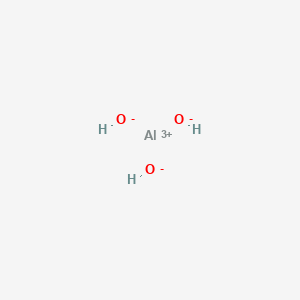
CAS 21645-51-2PubChem CID 10176082
Aluminum Hydroxide
Aluminum hydroxide is an inorganic salt used as an antacid. It is a basic compound that acts by neutralizing hydrochloric acid in gastric secretions. Subsequent increases in pH may inhibit the action of pepsin. An increase in bicarbonate ions and prostaglandins may also confer cytoprotective effects. — DrugBank
- IUPAC name
- aluminum trihydroxide
- Molecular formula
- AlH3O3
- Molecular weight
- 78.004 g/mol
- Exact mass
- 77.9897574 Da
- Topological polar surface area
- 3.0 Ų
- Hydrogen-bond donors
- 3
- Hydrogen-bond acceptors
- 3
- Covalent units
- 4
- Defined stereocentres
- 0
Also known as
Hydrated aluminaaluminum hydrateDried aluminium hydroxideAluminum hydroxide, driedAluminium hydroxide, driedAluminum hydroxide gel, driedAluminium hydroxide gel, driedHydroxyde d' aluminium
16 more reported names
aluminium(III) hydroxideDi-mu-hydroxytetrahydroxydialuminumAlum AdjuvantBasalgelDermadroxSarpepDermaMedALterna GELAlumane TrihydrateAlumina, HydratedHydroxide, AluminumASTONEAGRANTENDERGRANAluminum oxide hydratedRefChem:5538Aluminium hydroxide (Al(OH)3)
External database identifiers
- PubMed:5113
Retrieved from NIH PubChem on 2026-09-02 by checksum-valid CAS matching. Chemical properties do not replace the regulatory decision on this page.