
CAS 18282-10-5PubChem CID 16747781
Tin oxide (SnO2)
Tin(iv) oxide appears as white or off-white crystalline solid or powder. mp: 1127 °C, Sublimes: 1800-1900 °C, density: 6.95 g/cm3 Insoluble in water. Soluble in concentrated sulfuric acid, hydrochloric acid. Occurs in nature as the mineral cassiterite. Used as a catalyst, in putty, as a polishing powder for steel and glass, in ceramic glazes and colors. "Flowers of tin" refers to the material collected as the result of condensation after sublimation. — CAMEO Chemicals
- IUPAC name
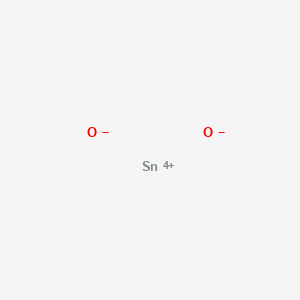
- bis(oxygen(2-));tin(4+)
- Molecular formula
- O2Sn
- Molecular weight
- 150.71 g/mol
- Exact mass
- 151.892032 Da
- Topological polar surface area
- 2.0 Ų
- Hydrogen-bond donors
- 0
- Hydrogen-bond acceptors
- 2
- Covalent units
- 3
- Defined stereocentres
- 0
Also known as
KM7N50LOS6CI 77861C.I. 77861StannoxylPutty powderPolishing powderTin ashNanotek tin oxide
16 more reported names
Nanotek SnO2Nyacol Sn 15Nyacol Sn 15CGNalco Sn 20Sam 05 (catalyst)S 1 (tin compound)S 8 (oxide)Sn 38 (oxide)RefChem:888980Sam 05P 3001S 3976T 1186242-159-0CHEBI:52991stannanedione
External database identifiers
- EPA DTXSID:DTXSID8042474
Retrieved from NIH PubChem on 2026-08-31 by checksum-valid CAS matching. Chemical properties do not replace the regulatory decision on this page.