
CAS 174721-08-5PubChem CID 21599928
Ginsenoside Rh4
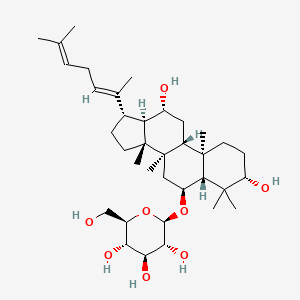
Ginsenoside Rh4 is a triterpenoid saponin. — ChEBI
- IUPAC name
- (2R,3R,4S,5S,6R)-2-[[(3S,5R,6S,8R,9R,10R,12R,13R,14R,17S)-3,12-dihydroxy-4,4,8,10,14-pentamethyl-17-[(2E)-6-methylhepta-2,5-dien-2-yl]-2,3,5,6,7,9,11,12,13,15,16,17-dodecahydro-1H-cyclopenta[a]phenanthren-6-yl]oxy]-6-(hydroxymethyl)oxane-3,4,5-triol
- Molecular formula
- C36H60O8
- Molecular weight
- 620.9 g/mol
- Exact mass
- 620.42881887 Da
- XLogP3
- 5.6
- Topological polar surface area
- 140.0 Ų
- Hydrogen-bond donors
- 6
- Hydrogen-bond acceptors
- 8
- Covalent units
- 1
- Defined stereocentres
- 15
Also known as
Ginsenoside Rh(4)RefChem:1432286-O-glucopyranosyldammar-20(22),24-diene-3,6,12-triol(3beta,6alpha,12beta,20E)-3,12-Dihydroxydammara-20(22),24-dien-6-yl beta-D-glucopyranoside;20(22)E-ginsenoside Rh4CHEBI:176255HY-N0905CS-3843
6 more reported names
EBC-617034FS-7833T6S1485AC-34672DA-63767(20E)-3beta,12beta-Dihydroxydammara-20(22),24-dien-6alpha-yl beta-D-glucopyranoside
External database identifiers
- ChEBI:CHEBI:176255
- ChEMBL:CHEMBL504029
- EPA DTXSID:DTXSID001317113
- PubMed:33359794
- PubMed:32535096
- PubMed:29298510
Retrieved from NIH PubChem on 2026-08-31 by checksum-valid CAS matching. Chemical properties do not replace the regulatory decision on this page.