
CAS 17013-01-3PubChem CID 6364607
Disodium Fumarate
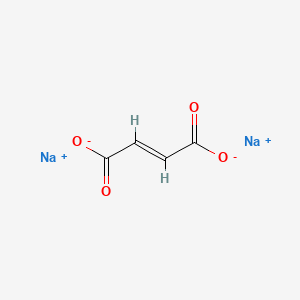
Disodium fumarate is an organic sodium salt resulting from the replacement of the protons from the carboxy groups of fumaric acid by sodium ions. It has a role as a food acidity regulator. It contains a fumarate(2-). — ChEBI
- IUPAC name
- disodium;(E)-but-2-enedioate
- Molecular formula
- C4H2Na2O4
- Molecular weight
- 160.04 g/mol
- Exact mass
- 159.97484710 Da
- Topological polar surface area
- 80.3 Ų
- Hydrogen-bond donors
- 0
- Hydrogen-bond acceptors
- 4
- Covalent units
- 3
- Defined stereocentres
- 0
Also known as
Fumaran sodnyFUMARIC ACID, DISODIUM SALTFumaran sodny [Czech]disodium (2E)-but-2-enedioate2-Butenedioic acid (E)-, disodium saltUNII-0578QTK490FUMARATE DISODIUMEINECS 241-087-7
16 more reported names
0578QTK490CHEBI:115156DISODIUM FUMARATE [WHO-DD]RefChem:1350382-Butenedioic acid (E)-, disodium salt (9CI)DISODIUM FUMARATE [INCI]2Butenedioic acid (E), disodium salt2Butenedioic acid (E), disodium salt (9CI)241-087-7Fumaric acid disodium saltFUMARICACIDDISODIUMSALTSodium fumarate dibasicDisodium maleate371-47-1C4H2Na2O4sodium monofumarate
External database identifiers
- ChEBI:CHEBI:115156
- EPA DTXSID:DTXSID10168802
Retrieved from NIH PubChem on 2026-08-31 by checksum-valid CAS matching. Chemical properties do not replace the regulatory decision on this page.