
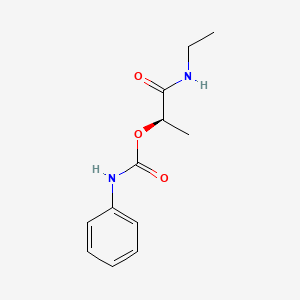
Carbetamide
Carbetamide is a carbamate pesticide. Carbamate pesticides are derived from carbamic acid and kill insects in a similar fashion as organophosphate insecticides. They are widely used in homes, gardens and agriculture. The first carbamate, carbaryl, was introduced in 1956 and more of it has been used throughout the world than all other carbamates combined. Because of carbaryl's relatively low mammalian oral and dermal toxicity and broad control spectrum, it has had wide use in lawn and garden settings. Most of the carbamates are extremely toxic to Hymenoptera, and precautions must be taken to avoid exposure to foraging bees or parasitic wasps. Some of the carbamates are translocated within plants, making them an effective systemic treatment. (L795) — Toxin and Toxin Target Database (T3DB)
- IUPAC name
- [(2R)-1-(ethylamino)-1-oxopropan-2-yl] N-phenylcarbamate
- Molecular formula
- C12H16N2O3
- Molecular weight
- 236.27 g/mol
- Exact mass
- 236.11609238 Da
- XLogP3
- 1.6
- Topological polar surface area
- 67.4 Ų
- Hydrogen-bond donors
- 2
- Hydrogen-bond acceptors
- 3
- Covalent units
- 1
- Defined stereocentres
- 1
Also known as
16 more reported names
External database identifiers
- EPA DTXSID:DTXSID7041756
Retrieved from NIH PubChem on 2026-09-02 by checksum-valid CAS matching. Chemical properties do not replace the regulatory decision on this page.