
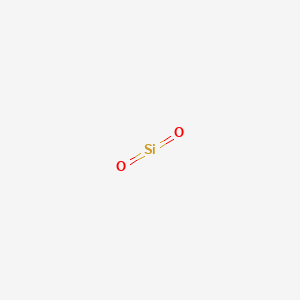
CAS 14808-60-7PubChem CID 24261
Silica
Silicon dioxide, or silica, is an oxide of silicon with the chemical formula SiO2. It is found in nature as agate, amethyst, chalcedony, cristobalite, flint, sand, QUARTZ, and tridymite as transparent and tasteless crystals. Inhalation of fine crystals is toxic to humans leading to respiratory toxicity. In powdered food products and pharmaceutical tablets, silicon dioxide is added as a flow agent to absorb water. Colloidal silica is also used as a wine, beer, and juice fining agent or stabilizer. — DrugBank
- IUPAC name
- dioxosilane
- Molecular formula
- O2Si
- Molecular weight
- 60.084 g/mol
- Exact mass
- 59.966755773 Da
- Topological polar surface area
- 34.1 Ų
- Hydrogen-bond donors
- 0
- Hydrogen-bond acceptors
- 2
- Covalent units
- 1
- Defined stereocentres
- 0
Also known as
SILICON DIOXIDE7631-86-9Silicic anhydrideDiatomaceous silicaWessalonZorbax silSilica, amorphousSilica, colloidal
16 more reported names
SillikolloidActicelCarplexExtrusilPorasilSantocelSilikilSiloxidSipernatNeosilNeosylZipaxcolloidal silicaWhite carbonSilicone dioxideVulkasil S
External database identifiers
- ChEBI:CHEBI:30563
- EPA DTXSID:DTXSID1029677
Retrieved from NIH PubChem on 2026-08-31 by checksum-valid CAS matching. Chemical properties do not replace the regulatory decision on this page.