
CAS 143-23-7PubChem CID 8924
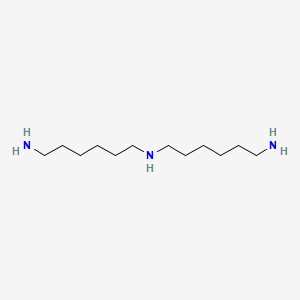
N-(6-Aminohexyl)-1,6-hexanediamine
Bis-hexamethylene triamine appears as a colorless crystalline or flaked solid. Corrosive. Irritating to skin and eyes. May be toxic by ingestion. Used to make plastics. — CAMEO Chemicals
- IUPAC name
- N'-(6-aminohexyl)hexane-1,6-diamine
- Molecular formula
- C12H29N3
- Molecular weight
- 215.38 g/mol
- Exact mass
- 215.236147938 Da
- XLogP3
- 0.8
- Topological polar surface area
- 64.1 Ų
- Hydrogen-bond donors
- 3
- Hydrogen-bond acceptors
- 3
- Covalent units
- 1
- Defined stereocentres
- 0
Also known as
Bis(hexamethylene)triamineBis(6-aminohexyl)amineDihexylenetriamine1,13-Diamino-7-azatridecane1,6-Hexanediamine, N-(6-aminohexyl)-7-Azatridecane-1,13-diamine6,6'-DiaminodihexylamineN-(Aminohexyl)-1,6-hexanediamine
16 more reported names
Dihexylamine, 6,6'-diamino-HSDB 5646EINECS 205-593-1BID902UF5VNSC 92231bis-hexamethylene triamineNSC-922311,6-Hexanediamine, N1-(6-aminohexyl)-Bis(6aminohexyl)amine6,6'DiaminodihexylamineRefChem:8282121,13Diamino7azatridecane7Azatridecane1,13diamineDihexylamine, 6,6'diaminoN(Aminohexyl)1,6hexanediamine1,6Hexanediamine, N(6aminohexyl)
External database identifiers
- ChEMBL:CHEMBL318516
- EPA DTXSID:DTXSID4027109
- PubMed:22250577
- PubMed:21593793
- PubMed:19705394
- PubMed:16287032
- PubMed:15962942
Retrieved from NIH PubChem on 2026-08-31 by checksum-valid CAS matching. Chemical properties do not replace the regulatory decision on this page.