
CAS 142-78-9PubChem CID 8899
Lauric acid monoethanolamide
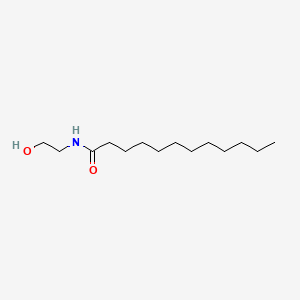
N-(dodecanoyl)ethanolamine is an N-(long-chain-acyl)ethanolamine resulting from the formal condensation of the carboxy group of dodecanoic acid (myristic acid) with the amino group of ethanolamine. It is a N-(long-chain-acyl)ethanolamine and a N-(saturated fatty acyl)ethanolamine. It is functionally related to a dodecanoic acid. — ChEBI
- IUPAC name
- N-(2-hydroxyethyl)dodecanamide
- Molecular formula
- C14H29NO2
- Molecular weight
- 243.39 g/mol
- Exact mass
- 243.219829168 Da
- XLogP3
- 4.0
- Topological polar surface area
- 49.3 Ų
- Hydrogen-bond donors
- 2
- Hydrogen-bond acceptors
- 2
- Covalent units
- 1
- Defined stereocentres
- 0
Also known as
N-LauroylethanolamineLaurylethanolamideCopramylAmisol LDEComperlan LMLauridit LMVistalanLauroyl monoethanolamide
16 more reported names
Ultrapole HCyclomide LMRolamid CMStabilor CMHCrillon LMEAmisol LMELauric ethylolamideLauric acid ethanolamideDodecanamide, N-(2-hydroxyethyl)-Steinamid L 203LaurylamidoethanolRewomid L 2032-DodecanamidoethanolLauric acid monoethanolamineLauric N-(2-hydroxyethyl)amide098P2IGT76
External database identifiers
- ChEBI:CHEBI:85263
- ChEMBL:CHEMBL246914
- EPA DTXSID:DTXSID5025493
- PubMed:21296126
- PubMed:20541546
- PubMed:20492349
- PubMed:20451210
- PubMed:12023948
Retrieved from NIH PubChem on 2026-08-31 by checksum-valid CAS matching. Chemical properties do not replace the regulatory decision on this page.