
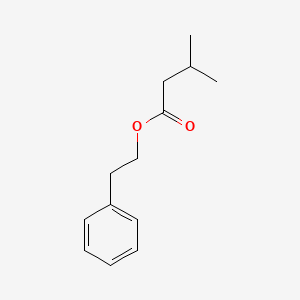
CAS 140-26-1PubChem CID 8792
Phenylethyl isovalerate
phenethyl isovalerate has been reported in Heracleum dissectum, Matricaria discoidea, and other organisms with data available. — LOTUS - the natural products occurrence database
- IUPAC name
- 2-phenylethyl 3-methylbutanoate
- Molecular formula
- C13H18O2
- Molecular weight
- 206.28 g/mol
- Exact mass
- 206.130679813 Da
- XLogP3
- 3.6
- Topological polar surface area
- 26.3 Ų
- Hydrogen-bond donors
- 0
- Hydrogen-bond acceptors
- 2
- Covalent units
- 1
- Defined stereocentres
- 0
Also known as
Phenethyl isovalerateButanoic acid, 3-methyl-, 2-phenylethyl esterISOVALERIC ACID, PHENETHYL ESTERPhenylethyl 3-methylbutyrateFEMA No. 2871K86JE60K0LNSC-21899RefChem:172673
16 more reported names
205-406-32-Phenylethyl isovaleratephenethyl 3-methylbutanoatePhenethyl isovalerianate2-Phenylethyl 3-methylbutirateBenzylcarbinyl isovaleratePhenethyl 3-methylbutyrateBenzylcarbinyl isopentanoateBenzylcarbinyl 3-methylbutanoate.beta.-Phenylethyl isovalerate2-phenylethyl isopentanoateBenzyl carbinyl isovalerianate3-methylbutanoic acid 2-phenylethyl esterPhenyl ethyl 3-methyl-butanoatePhenethyl isovalerate (natural)Isovaleric Acid Phenethyl Ester
External database identifiers
- EPA DTXSID:DTXSID2059693
Retrieved from NIH PubChem on 2026-08-31 by checksum-valid CAS matching. Chemical properties do not replace the regulatory decision on this page.