
CAS 13925-07-0PubChem CID 26334
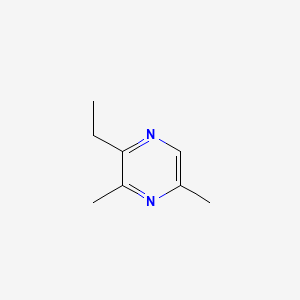
2-Ethyl-3,5-dimethylpyrazine
2-Ethyl-3,5-dimethylpyrazine is a metabolite found in or produced by Saccharomyces cerevisiae. — Yeast Metabolome Database (YMDB)
- IUPAC name
- 2-ethyl-3,5-dimethylpyrazine
- Molecular formula
- C8H12N2
- Molecular weight
- 136.19 g/mol
- Exact mass
- 136.100048391 Da
- XLogP3
- 1.5
- Topological polar surface area
- 25.8 Ų
- Hydrogen-bond donors
- 0
- Hydrogen-bond acceptors
- 2
- Covalent units
- 1
- Defined stereocentres
- 0
Also known as
Pyrazine, 2-ethyl-3,5-dimethyl-3-Ethyl-2,6-dimethylpyrazine2,6-Dimethyl-3-ethylpyrazine2-Ethyl-3,5-dimethyl pyrazineR182EY5L8CFEMA NO. 3150RefChem:86882237-694-1
16 more reported names
3,5-Dimethyl-2-ethylpyrazineFEMA 3150Pyrazine, 2,6-dimethyl-3-ethyl-BRN 0636984Pyrazine, 3-ethyl-2,6-dimethylPyrazine, 3,5-dimethyl-2-ethyl-2-Ethyl-3,5(6)-dimethyl-pyrazineAS-500652-Ethyl-3,5-dimethylpyrazine (contains 2-Ethyl-3,6-dimethylpyrazine)3-ETHYL-2,6-DIMETHYLPYRAZINE [FHFI]3,5-cocoa pyrazineEINECS 237-694-1UNII-R182EY5L8C2-Ethyl-3,5(or 3,6)-dimethylpyrazineFT-06386642-Ethyl-3,5(6)-dim
External database identifiers
- ChEBI:CHEBI:193645
- ChEMBL:CHEMBL328856
- EPA DTXSID:DTXSID7065679
- PubMed:19651413
- PubMed:18298065
- PubMed:16881704
- PubMed:16076130
- PubMed:12236694
Retrieved from NIH PubChem on 2026-08-31 by checksum-valid CAS matching. Chemical properties do not replace the regulatory decision on this page.