
CAS 1343-88-0PubChem CID 72941442
Magnesium Silicate
Magnesium silicate is a compound of magnesium oxide and silicon. It is the magnesium salt of silicic acid containing an unspecified amount of water. The molecular formula can be expressed more clearly as MgSiO3.xH2O. It is known as talc and it presents many uses in the cosmetic industry, food industry and pharmaceutical industry. Under the FDA, magnesium silicate is determined as a member of the substances generally recognized as safe (GRAS) to be used as an anticaking agent. — DrugBank
- IUPAC name
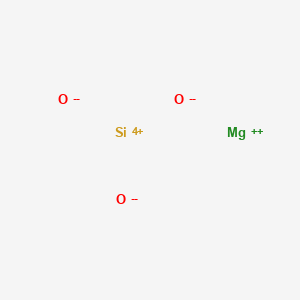
- magnesium;tris(oxygen(2-));silicon(4+)
- Molecular formula
- MgO3Si
- Molecular weight
- 100.39 g/mol
- Exact mass
- 99.9467121 Da
- Topological polar surface area
- 3.0 Ų
- Hydrogen-bond donors
- 0
- Hydrogen-bond acceptors
- 3
- Covalent units
- 5
- Defined stereocentres
- 0
Also known as
AmbosolSilicic acid, magnesium saltMagsorbentAvibestBritesorbGastomagMagmasilNaisuton
16 more reported names
NovasorbSalisilTrinesiumTrisominChoozNikkagel MShimugon MMagnesol XLTri-SilBritesorb 90Haiburaito 325Macrosorb M 15Haiburaito 1250Silton SS 1Celkate T 21Kyowaad 600S
Retrieved from NIH PubChem on 2026-08-31 by checksum-valid CAS matching. Chemical properties do not replace the regulatory decision on this page.