
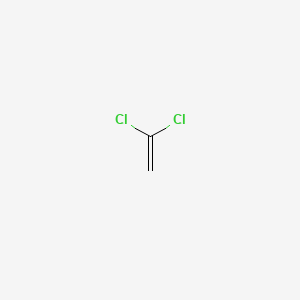
Vinylidene chloride
Vinylidene chloride is used as an intermediate in chemical synthesis and to produce polyvinylidene chloride copolymers. The primary acute (short-term) effects in humans from vinylidene chloride exposure are on the central nervous system (CNS), including CNS depression and symptoms of inebriation, convulsions, spasms, and unconsciousness at high concentrations. Low-level, chronic (long-term) inhalation exposure of vinylidene chloride in humans may effect the liver. Animal studies indicate that chronic exposure to vinylidene chloride can affect the liver, kidneys, CNS and lungs. Human data are considered inadequate in providing evidence of cancer from exposure to vinylidene chloride. The most recent cancer classification for vinylidene chloride can be found on IRIS. — EPA Hazardous Air Pollutants
- IUPAC 名称
- 1,1-dichloroethene
- 分子式
- C2H2Cl2
- 分子量
- 96.94 g/mol
- 精确质量
- 95.9533555 Da
- XLogP3
- 2.3
- 拓扑极性表面积
- 0.0 Ų
- 氢键供体
- 0
- 氢键受体
- 0
- 共价单元
- 1
- 已定义的立体中心
- 0
又称
另有 16 个已报告名称
外部数据库标识符
- ChEBI:CHEBI:34031
- ChEMBL:CHEMBL156455
- EPA DTXSID:DTXSID8021438
- PubMed:26682919
- PubMed:24958746
- PubMed:23039917
- PubMed:22989309
- PubMed:22814410
- PubMed:22685458
- PubMed:22643424
- PubMed:22589164
- PubMed:22565376
- PubMed:22512272
- PubMed:22472325
- PubMed:22454582
于 2026-08-31 通过校验和有效的 CAS 匹配从美国国立卫生研究院 (NIH) PubChem 检索。化学性质不能取代本页的监管决定。