
·
How to Check a Beauty Product’s Ingredients Before Buying Online
Match the seller, product size, shade and market to a complete ingredient label before ordering. Learn what to ask when the store photo is missing.
阅读文章 →
阅读有关欧盟化妆品成分、附件 II–VI 限制、警示语、防腐剂、紫外线过滤剂、着色剂、合规主题和成分研究的实用文章。
与化妆品成分和欧盟参考数据相关的文章、解读和更新。
Match the seller, product size, shade and market to a complete ingredient label before ordering. Learn what to ask when the store photo is missing.

Check the wording, formula version and test outcome behind a cosmetic claim. Work through a claim about the finished product versus one about an ingredient.
Find the nano marker on an EU cosmetic label, keep it with the ingredient name, and check the correct particle-specific entry for a given use.
Read the plus/minus colorant group on a makeup label and learn how to confirm which pigment belongs to the shade you actually bought.
Find SLS, SLES and other shampoo surfactants on the label. Compare two sample formulas and see what “sulfate free” and lather can tell you.
Read Parfum and Aroma in an EU ingredient list, check separately declared fragrance names, and find what a fragrance claim still cannot show.
Identify Hyaluronic Acid and its sodium salt on skincare labels and learn how to interpret multi-form or percentage claims without guessing.
Find Glycerin on moisturizer, cleanser and hair care labels. Learn how its other names differ from related ingredients and what origin claims require.
Compare two versions of a skincare formula, identify added and reordered names, and distinguish what the label confirms from what it leaves unknown.
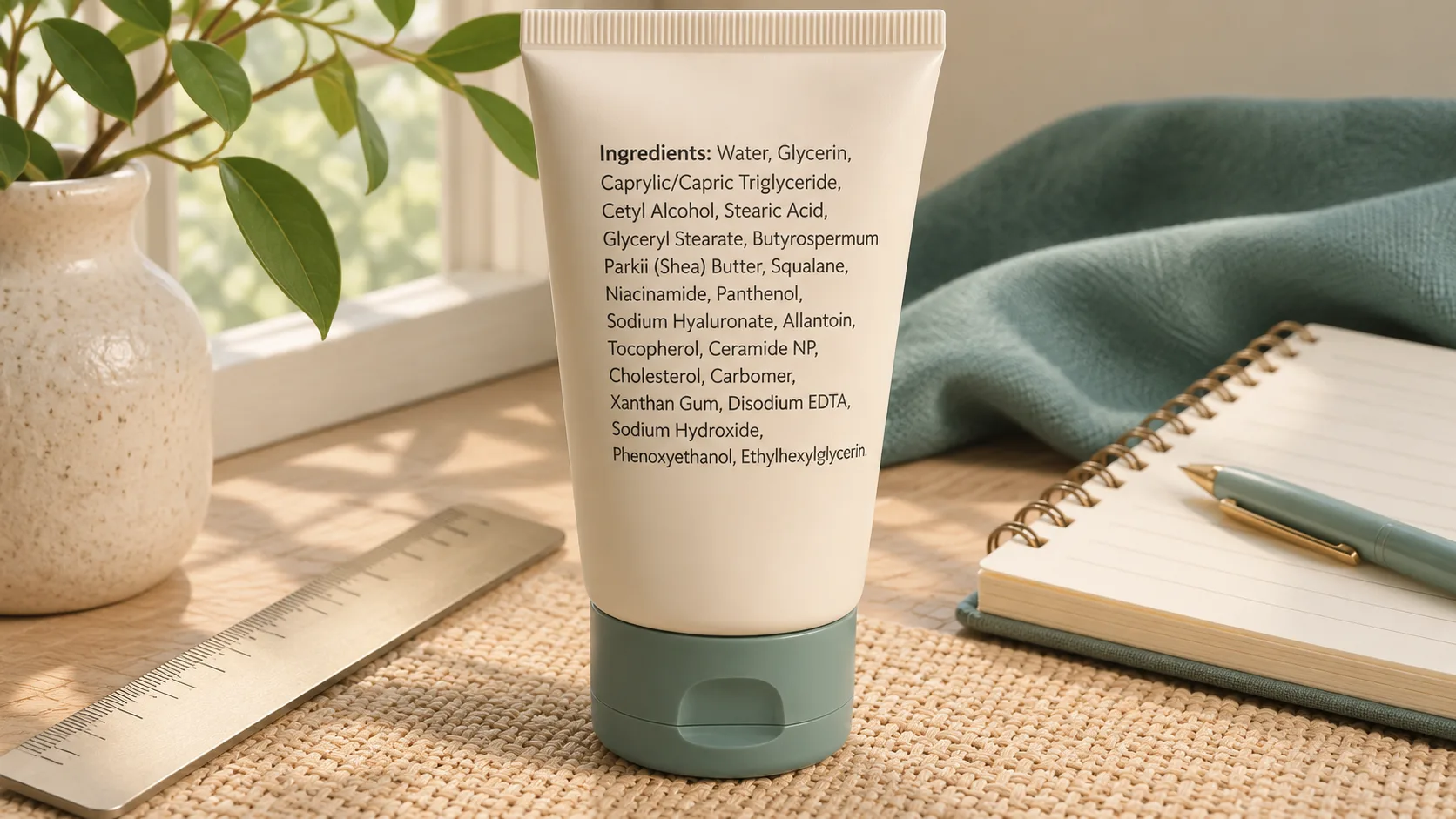
Read the EU 1% rule with two sample lists, see where colorants fit and learn what a changed ingredient order can actually establish.
Compare the EU zinc oxide and zinc oxide (nano) UV-filter entries. Check which identity, supplier grade and use details matter for an Annex VI lookup.
Work through cosmetic ingredient lookups when a CAS number is missing, multiple identifiers are supplied, or a name needs confirmation.
Find the federal sources for prohibited cosmetic ingredients, color additives and MoCRA. Compare the exact product and use with EU records separately.
Learn what INCI means, who assigns cosmetic ingredient names, how the EU glossary uses them and how to look up a name from your label.
Identify photoinitiators on gel nail product labels, distinguish TPO from related names and check the applicable EU and GB records for the exact material.

Compare post-Brexit cosmetic ingredient rules for Great Britain and the EU. Build a worksheet for entry wording, conditions, source dates and markets.
Understand the difference between a cosmetic ingredient lookup, a hazard score and an EU restriction. Verify what each source covers for an exact substance.
Find the source and ingredient identity for a Korean cosmetics check. Compare an MFDS entry with EU conditions for a matching product type.
Read the guide to Saudi cosmetic ingredient sources, including SFDA lists and GSO references. Document the exact product, ingredient and regulatory source.
Understand the New Zealand cosmetic ingredient schedules and how to compare an entry with EU rules for the same ingredient and intended use.
Distinguish methylchloroisothiazolinone from methylisothiazolinone on the label, then find the relevant individual or mixture entry in the EU source.
Find out how Japan’s cosmetic ingredient lists work, where quasi-drugs fit and what product details to record before comparing a rule with the EU.
Read how India’s cosmetics rules and IS 4707 relate. Capture the standard edition, ingredient form and type of use for a repeatable lookup.
Use genus, species, plant part and preparation to look up an extract, oil or botanical water by its exact cosmetic label name.

Find European Commission CosIng resources and record the dataset version, fields and retrieval date before comparing exports or importing a revised file.
Copy the exact ingredient list, check identity and open the relevant EU annex entries. Learn what to record when a search returns an unresolved match.

Check a hair dye ingredient against the relevant Annex III entry. Preserve the exact identity, product use and warning wording for a repeatable review.
Read an EU UV-filter entry by identity, concentration basis, product type and warnings, with references to the Annex VI list and worked examples.
Interpret an Annex V preservative entry using the substance name, use conditions and any concentration basis, with references for exact lookups.
Compare cosmetic ingredient assessments by CIR and SCCS. Record the substance form, exposure and product use before consulting current legal sources.

Trace a carcinogenic, mutagenic or reprotoxic classification to the relevant EU cosmetics record, and check the form, effective date and exceptions.
Read colorant identifiers on cosmetic labels, match the exact CI number and check the Annex IV conditions for the application area and shade.
Understand China’s prohibited cosmetic ingredient sources and check a name and its identifiers before comparing a listing with EU Annex II.

Compare what China’s IECIC and the EU CosIng inventory record, and keep ingredient identity separate from product-specific restrictions.
Check a Canadian Hotlist entry by exact identity and intended use. Record the stated conditions and verify what changes when comparing with the EU.
Follow the Brazilian cosmetic ingredient lists and the references behind them. Record source version, ingredient identity and product category for a check.
Understand how ingredient and product rules connect in Australia. Identify the product category and source before comparing an ingredient with EU records.

Find the ASEAN lists for prohibited and restricted ingredients, colorants, preservatives and UV filters, and check which local rules apply.
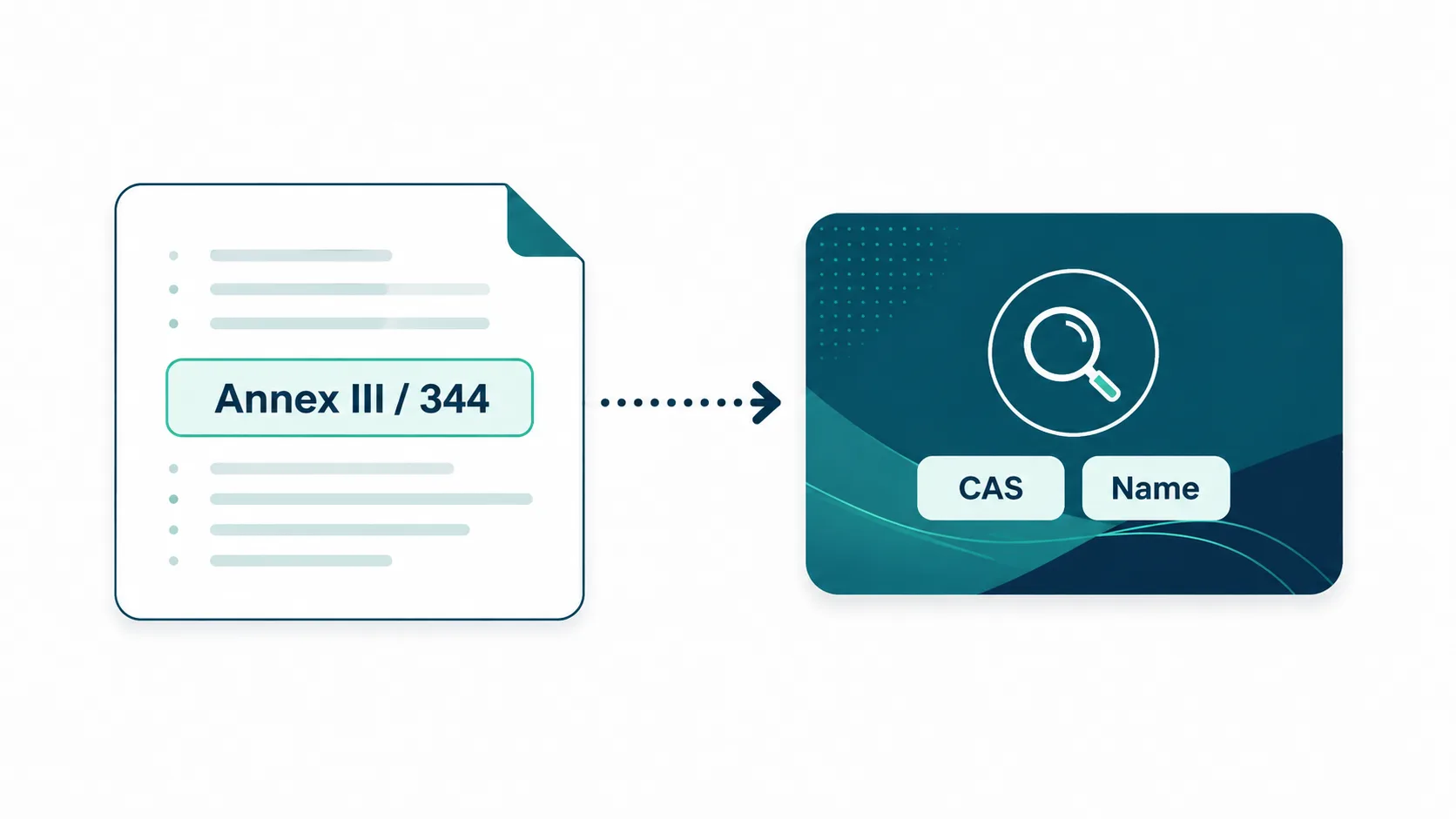
Locate a cosmetics entry by annex and reference number. Use the exact name, identifiers and official source version to reproduce the lookup.
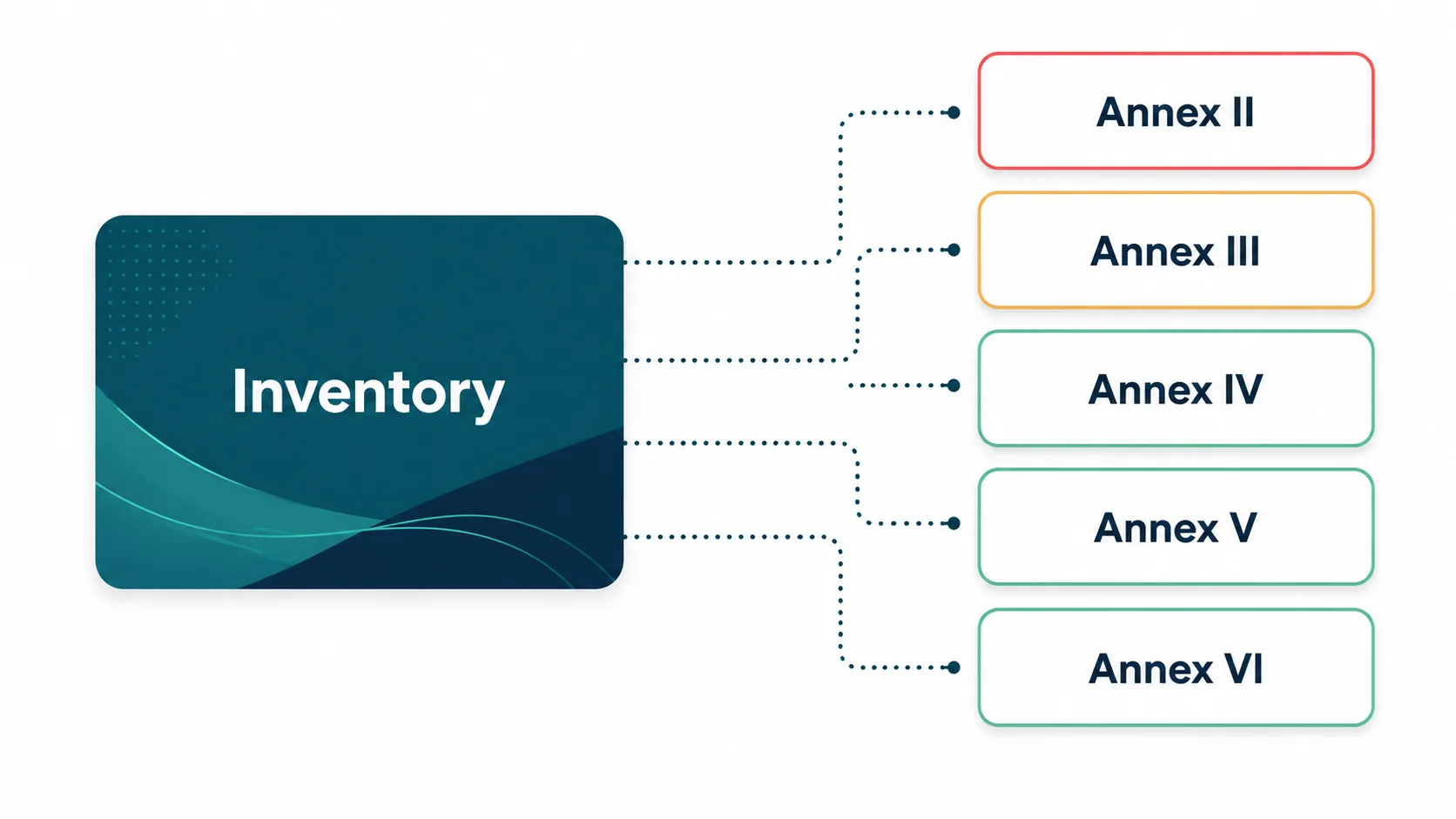
Use CosIng to identify ingredients and distinguish inventory information from EU annex conditions, with a practical lookup workflow.

Use JSON endpoints to find EU annex entries, PubChem identities and market records. Keep query parameters, pagination and source dates in your notes.
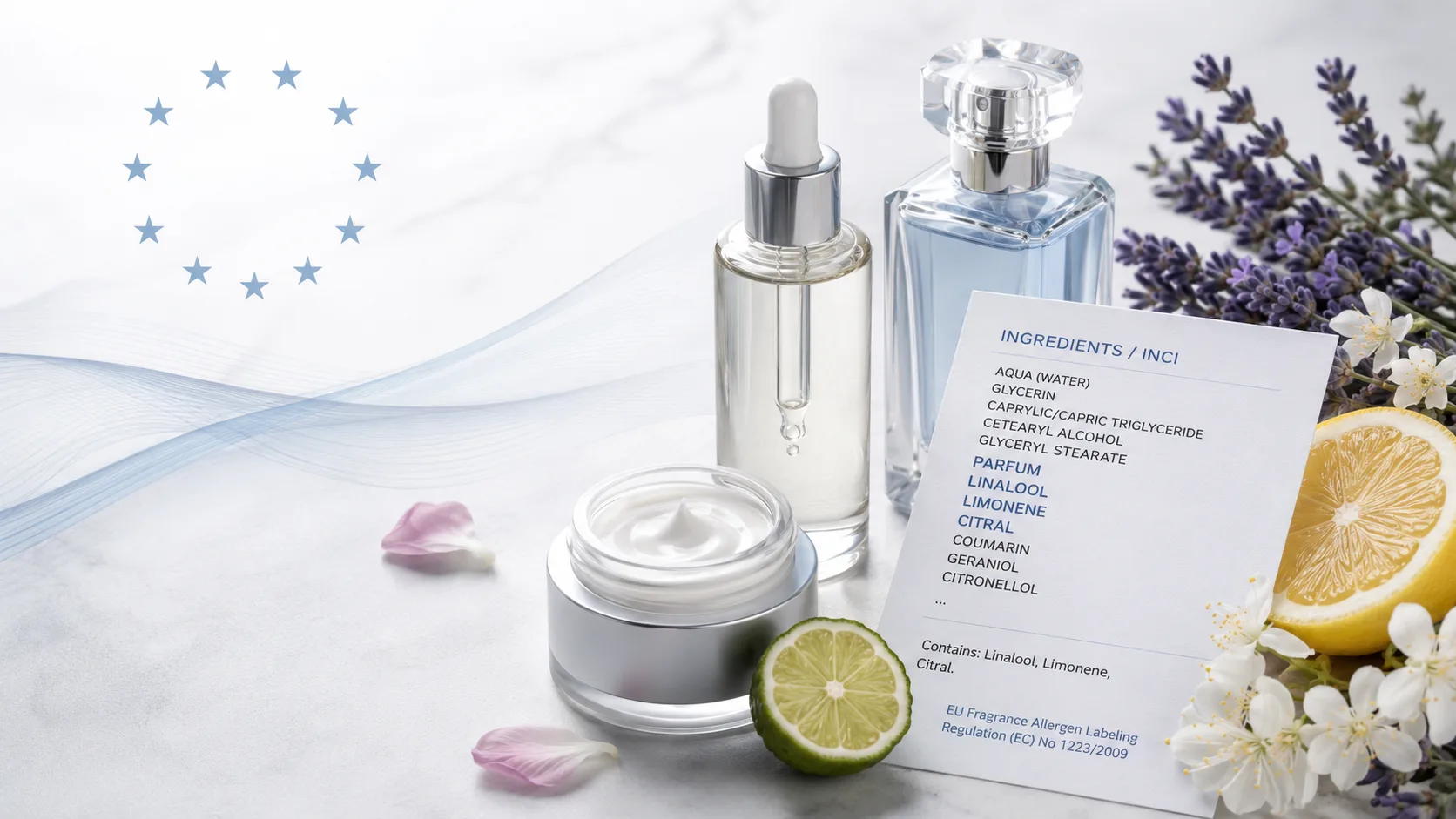
Check EU fragrance allergen declarations, applicable transition dates and intended product use. Verify individual names alongside Parfum or Aroma.
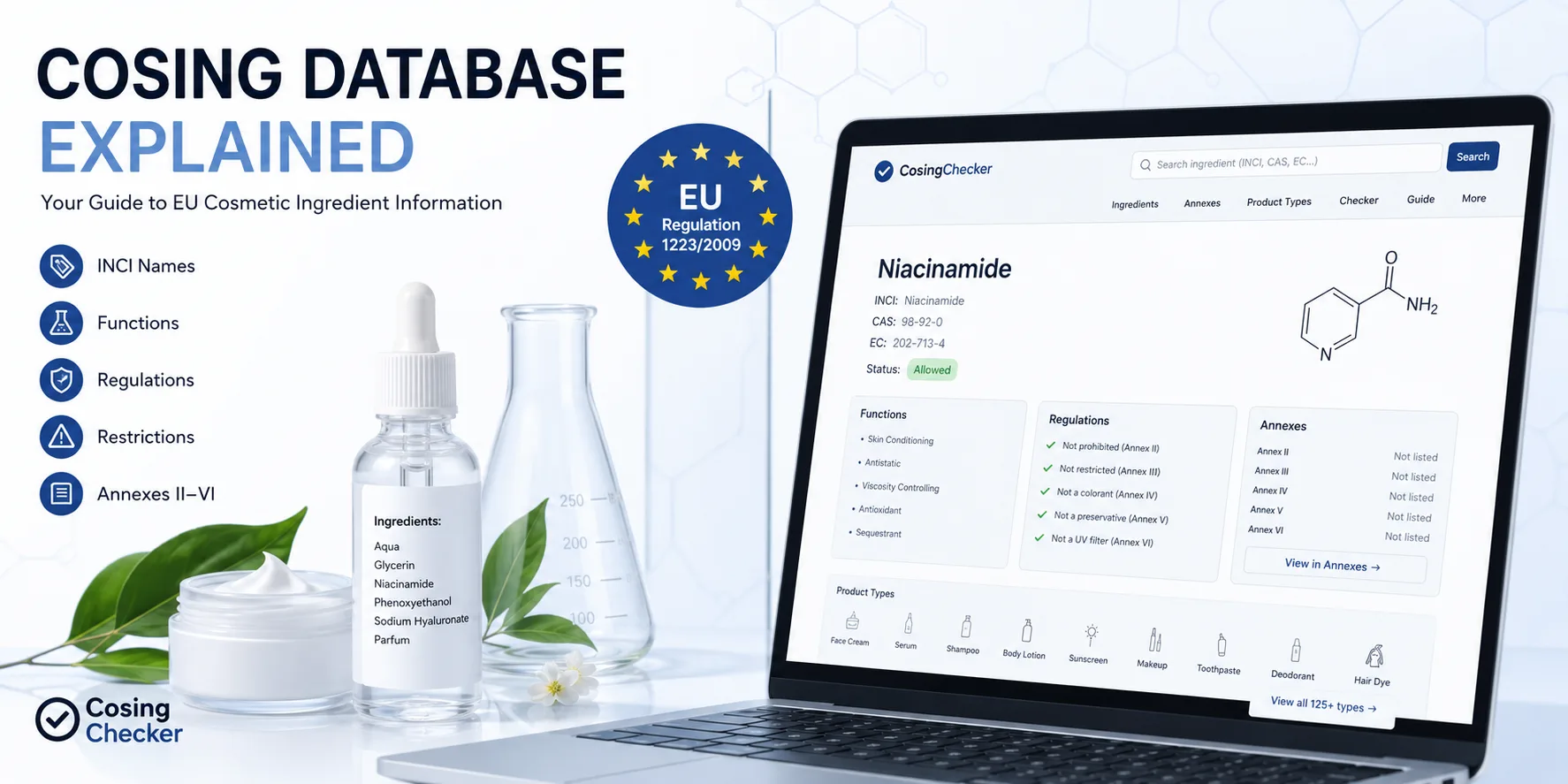
Find a cosmetic ingredient by INCI name, CAS or EC number. Follow two worked examples to distinguish a CosIng inventory entry from an EU Annex rule.
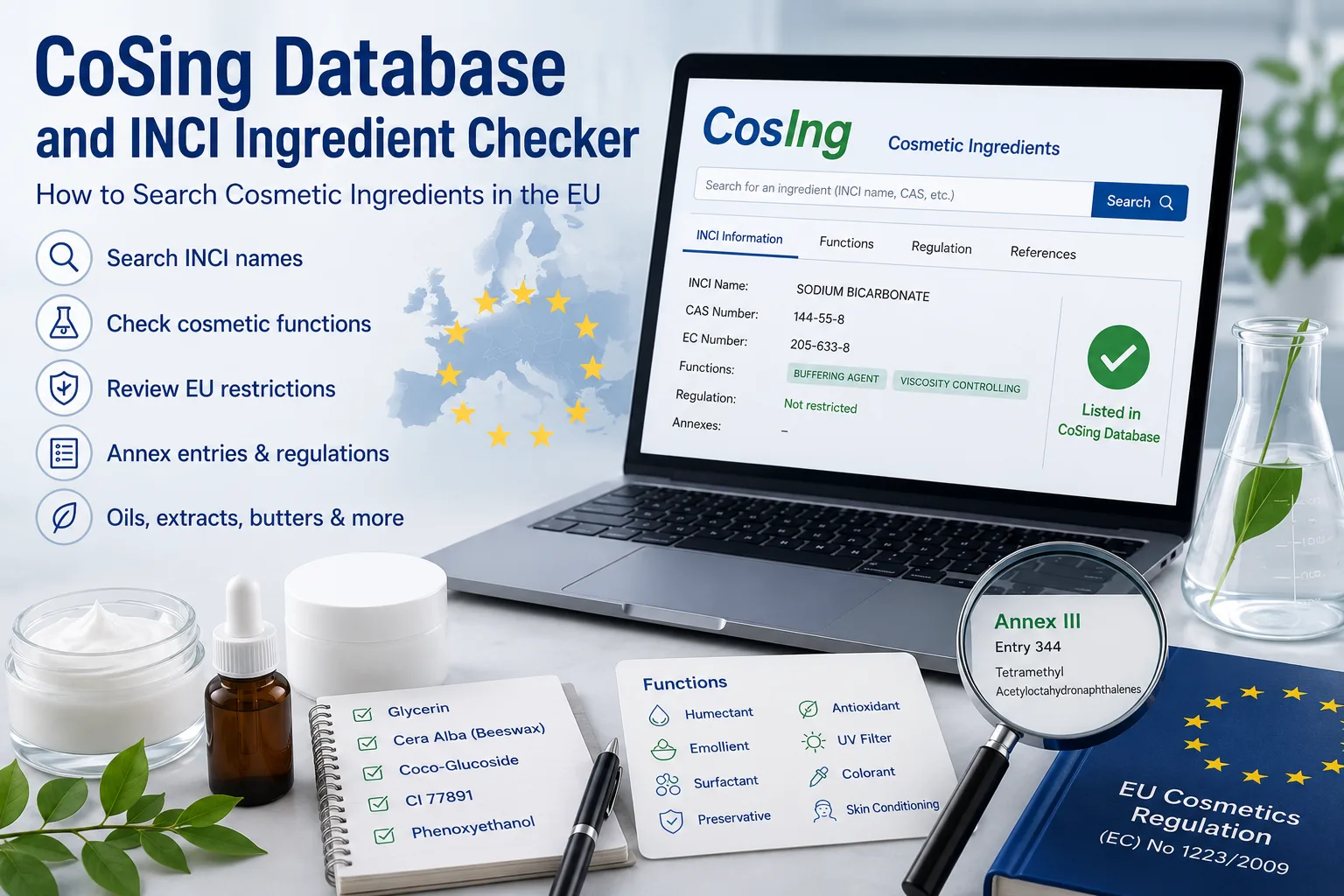
Paste a cosmetic ingredient list, select a market and follow a worked example to read inventory matches, Annex results and names that need checking.
Compare alcohol names on cosmetic packaging, from Alcohol Denat. to fatty alcohols, and look up the role of the exact ingredient in the inventory.
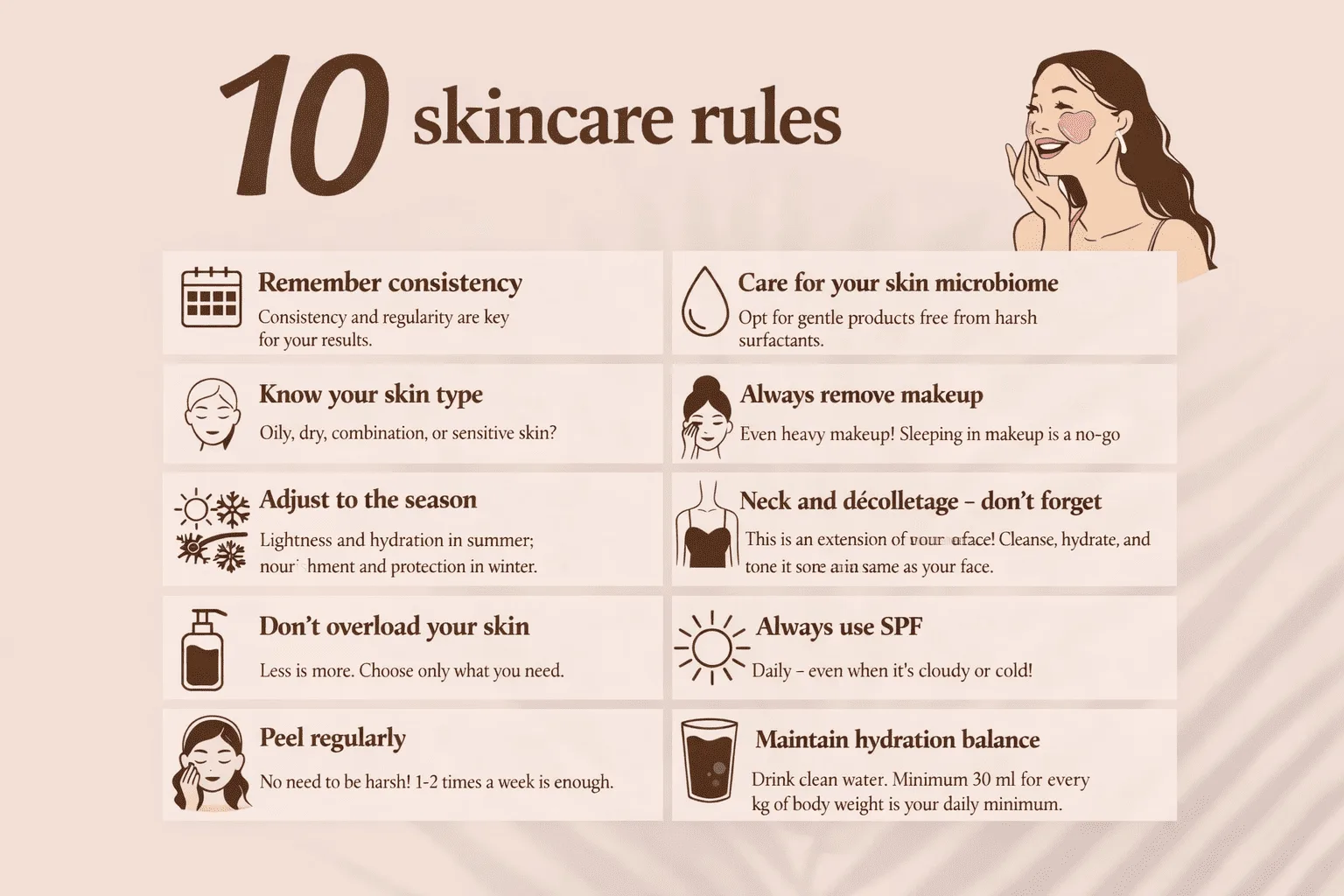
Use package directions and an ingredient list when comparing skincare products. Keep the exact variants and your observations together.
Prepare the exact product names, ingredient photos and directions for a healthcare conversation. Use ingredient records to verify names on the package.
Learn what preservative functions describe. Check the exact ingredient, its EU annex conditions and evidence specific to the finished product.
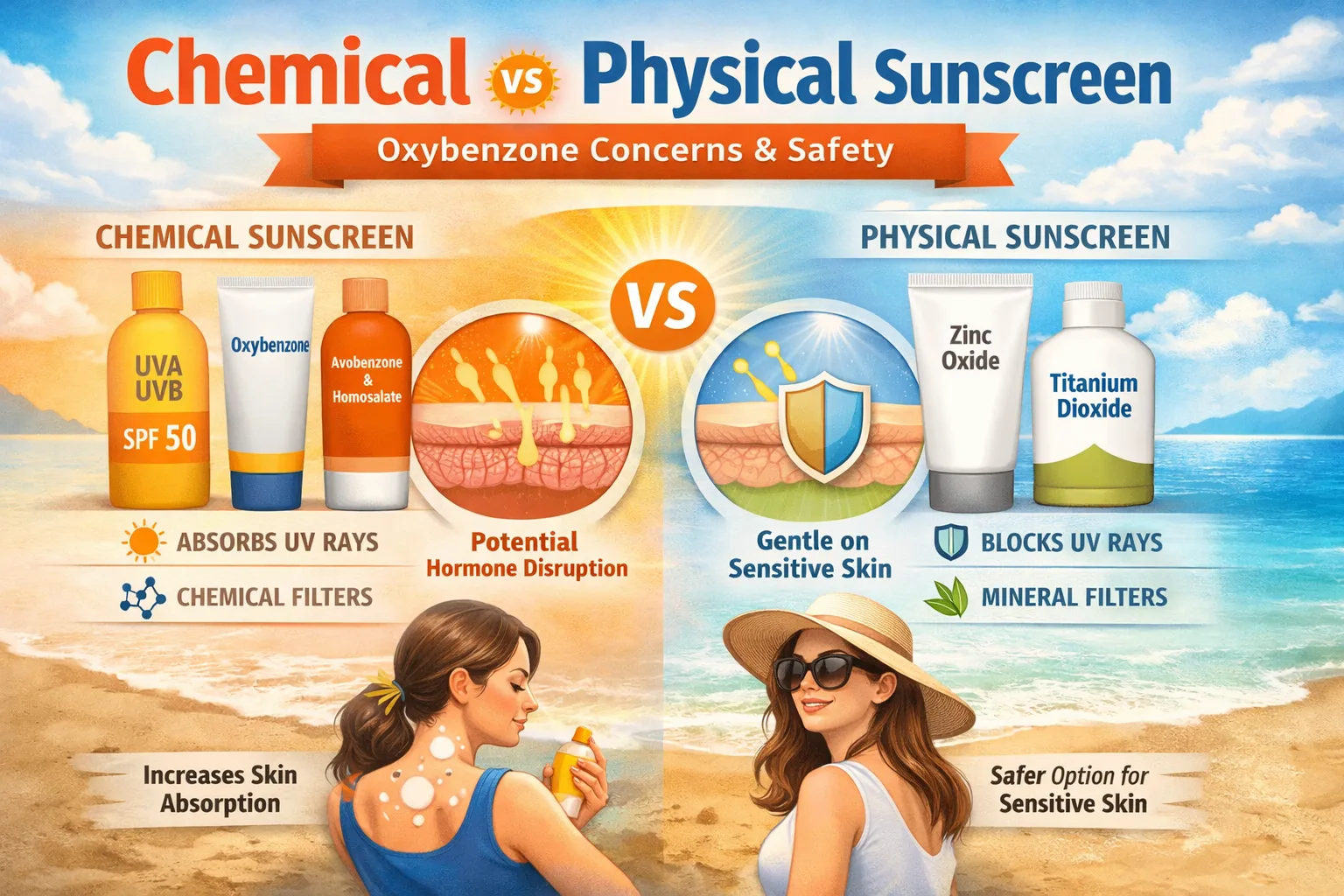
Look up oxybenzone and other UV-filter names, then check the actual sunscreen’s SPF, coverage claims and use directions for your market.
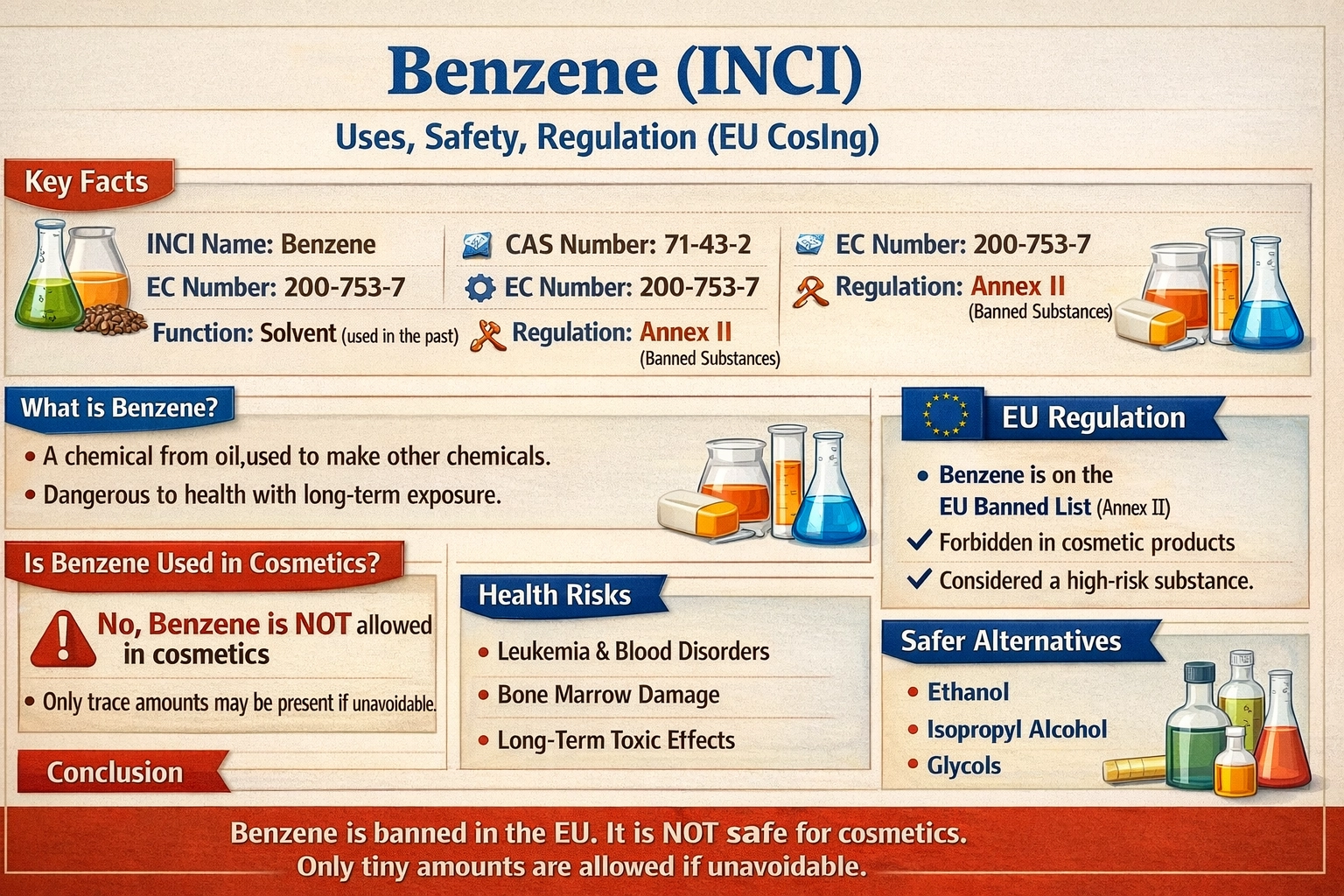
Find benzene’s EU regulatory context and learn what to record when checking a specific batch, product notice or source document.
CosIng Checker 博客涵盖与欧盟化妆品成分合规和 CosIng 参考数据库相关的实用主题。文章面向配方师、法规事务专业人员以及所有处理欧盟化妆品数据的人员。