
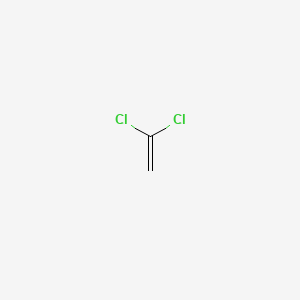
Vinylidene chloride
Vinylidene chloride is used as an intermediate in chemical synthesis and to produce polyvinylidene chloride copolymers. The primary acute (short-term) effects in humans from vinylidene chloride exposure are on the central nervous system (CNS), including CNS depression and symptoms of inebriation, convulsions, spasms, and unconsciousness at high concentrations. Low-level, chronic (long-term) inhalation exposure of vinylidene chloride in humans may effect the liver. Animal studies indicate that chronic exposure to vinylidene chloride can affect the liver, kidneys, CNS and lungs. Human data are considered inadequate in providing evidence of cancer from exposure to vinylidene chloride. The most recent cancer classification for vinylidene chloride can be found on IRIS. — EPA Hazardous Air Pollutants
- IUPAC-Name
- 1,1-dichloroethene
- Summenformel
- C2H2Cl2
- Molekulargewicht
- 96.94 g/mol
- Exakte Masse
- 95.9533555 Da
- XLogP3
- 2,3
- Topologische polare Oberfläche
- 0,0 Ų
- Wasserstoffbrücken-Donoren
- 0
- Wasserstoffbrücken-Akzeptoren
- 0
- Kovalente Einheiten
- 1
- Definierte Stereozentren
- 0
Auch bekannt als
16 weitere gemeldete Namen
Kennungen in externen Datenbanken
- ChEBI:CHEBI:34031
- ChEMBL:CHEMBL156455
- EPA DTXSID:DTXSID8021438
- PubMed:26682919
- PubMed:24958746
- PubMed:23039917
- PubMed:22989309
- PubMed:22814410
- PubMed:22685458
- PubMed:22643424
- PubMed:22589164
- PubMed:22565376
- PubMed:22512272
- PubMed:22472325
- PubMed:22454582
Am 2026-08-31 von NIH PubChem durch prüfsummengültigen CAS-Abgleich abgerufen. Chemische Eigenschaften ersetzen nicht die regulatorische Entscheidung auf dieser Seite.