
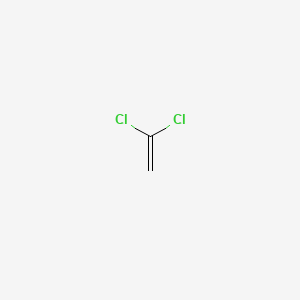
Vinylidene chloride
Vinylidene chloride is used as an intermediate in chemical synthesis and to produce polyvinylidene chloride copolymers. The primary acute (short-term) effects in humans from vinylidene chloride exposure are on the central nervous system (CNS), including CNS depression and symptoms of inebriation, convulsions, spasms, and unconsciousness at high concentrations. Low-level, chronic (long-term) inhalation exposure of vinylidene chloride in humans may effect the liver. Animal studies indicate that chronic exposure to vinylidene chloride can affect the liver, kidneys, CNS and lungs. Human data are considered inadequate in providing evidence of cancer from exposure to vinylidene chloride. The most recent cancer classification for vinylidene chloride can be found on IRIS. — EPA Hazardous Air Pollutants
- IUPAC 명칭
- 1,1-dichloroethene
- 분자식
- C2H2Cl2
- 분자량
- 96.94 g/mol
- 정확한 질량
- 95.9533555 Da
- XLogP3
- 2.3
- 위상 극성 표면적
- 0.0 Ų
- 수소 결합 공여체
- 0
- 수소 결합 수용체
- 0
- 공유결합 단위
- 1
- 정의된 입체중심
- 0
다른 이름
보고된 명칭 16개 더 보기
외부 데이터베이스 식별자
- ChEBI:CHEBI:34031
- ChEMBL:CHEMBL156455
- EPA DTXSID:DTXSID8021438
- PubMed:26682919
- PubMed:24958746
- PubMed:23039917
- PubMed:22989309
- PubMed:22814410
- PubMed:22685458
- PubMed:22643424
- PubMed:22589164
- PubMed:22565376
- PubMed:22512272
- PubMed:22472325
- PubMed:22454582
체크섬이 유효한 CAS 일치를 통해 2026-08-31에 NIH PubChem에서 가져왔습니다. 화학적 특성은 이 페이지의 규제 판단을 대체하지 않습니다.