
Official EU label nameGlossary entry 3215
BENZOPHENONE
This record confirms an official common ingredient name for EU cosmetic product labelling. It does not by itself confirm that the substance is permitted, unrestricted or safe.
Global evidence snapshot
The resolved identity has matching regulatory evidence in 5 of 13 indexed market datasets: 4 country records and 1 EU Annex records. Every result and evidence gap is listed below.
Markets checked
13
Markets with evidence
5
Evidence gaps
8
Resolved identifiers
3
Resolved substance identity
CAS:119-61-919-61-9
EC:204-337-6
Ingredient index records:
2 matched or reported names
BENZOPHENONEBenzophenone
Regulatory evidence in all 13 markets
Open each matched record for its scope, concentration, conditions, warnings and official source version.
Swipe or scroll horizontally to see dataset coverage and next actions.
| Market | Result | Records | Dataset | Meaning / next action |
|---|---|---|---|---|
| European Union EU | Prohibited | 1Open record 1 | Complete annex dataset Regulation (EC) 1223/2009 consolidated to 1 May 2026 | Review every linked record and exact conditions. |
| Great Britain GB | Prohibited | 1Open record 1 | Complete consolidated annex dataset GB retained Regulation 1223/2009 schedules, effective 15 August 2026 | Review every linked record and exact conditions. |
| Canada CA | Restricted | 1Open record 1 | Complete Hotlist snapshot Health Canada Cosmetic Ingredient Hotlist, 13 August 2025 | Review every linked record and exact conditions. |
| New Zealand NZ | No local match | 0 | Complete schedules dataset Cosmetic Products Group Standard schedules effective 1 January 2026 | The searchable spreadsheet is an aid; the legal Group Standard and incorporated notices remain authoritative. |
| ASEAN ASEAN | Prohibited | 1Open record 1 | Complete regional annex dataset ASEAN Cosmetic Directive annexes 2026-1, 22 June 2026 | Review every linked record and exact conditions. |
| China CN | No local match | 0 | Complete prohibited catalogues plus official-source workflow NMPA 2021 banned catalogues plus dynamic IECIC List I/List II system current since 2025 | IECIC listing is not blanket approval; absence may require the new cosmetic ingredient route, and restrictions are checked separately. |
| Japan JP | No local match | 0 | Complete Standards appendices dataset MHLW Standards for Cosmetics official English source and Japanese amendments checked for the imported snapshot | The Japanese text and subsequent notices are canonical; no local match is not a product-compliance conclusion. |
| South Korea KR | No local match | 0 | Complete current appendix dataset MFDS Notice 2026-19, effective 18 March 2026 | Korean source wording is canonical and other positive lists/notices may still apply to the formulation. |
| United States US | No local match | 0 | Complete enumerated federal ingredient rules eCFR Title 21 issue date 27 August 2026 | FDA has no general approved-cosmetic-ingredient catalogue; absence from these sections is not approval or proof of safety. |
| Australia AU | No local match | 0 | Complete cosmetic-relevant Poisons Standard subset plus official workflow Therapeutic Goods (Poisons Standard—June 2026) Instrument 2026 | An AICIS Inventory match is not cosmetic approval; no Inventory match can indicate a new, exempted, reported or confidential introduction. |
| Brazil BR | No local match | 0 | Complete prohibited dataset plus current restricted-list workflow ANVISA RDC 1.029/2026 and RDC 1.030/2026, published 15 June 2026 | RDC 1.030/2026 amends rather than replaces the prohibited baseline, and the second restricted-list revision was still under consultation in July 2026. |
| India IN | No local match | 0 | Complete current Part 2 dataset plus official workflow for Parts 1, 3 and 4 Cosmetics Rules 2020 plus current BIS IS 4707 parts (1:2020, 2:2025, 3:2025, 4:2022) | The standards are separate controlled publications; absence from a locally indexed excerpt is not permission. |
| Saudi Arabia SA | Prohibited | 1Open record 1 | Complete official list index SFDA live prohibited/restricted lists, snapshot 30 August 2026 | Review every linked record and exact conditions. |
No market rows match this filter.
Matching market records and conditions
Great Britain
GB retained Regulation 1223/2009 schedules, effective 15 August 2026Canada
Health Canada Cosmetic Ingredient Hotlist, 13 August 2025ASEAN
ASEAN Cosmetic Directive annexes 2026-1, 22 June 2026Saudi Arabia
SFDA live prohibited/restricted lists, snapshot 30 August 2026Exact Annex II–VI evidence
Annex IIentry 1703
Open full regulatory recordBenzophenone
Chemical identity and properties
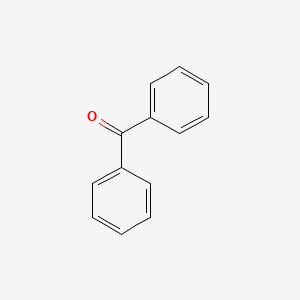
CAS 119-61-9PubChem CID 3102
Benzophenone
Benzophenone appears as white solid with a flowery odor. May float or sink in water. (USCG, 1999) — CAMEO Chemicals
- IUPAC name
- diphenylmethanone
- Molecular formula
- C13H10O
- Molecular weight
- 182.22 g/mol
- Exact mass
- 182.073164938 Da
- XLogP3
- 3.4
- Topological polar surface area
- 17.1 Ų
- Hydrogen-bond donors
- 0
- Hydrogen-bond acceptors
- 1
- Covalent units
- 1
- Defined stereocentres
- 0
Also known as
Diphenyl ketoneBenzoylbenzeneMethanone, diphenyl-Phenyl ketonealpha-OxoditaneKetone, diphenylDiphenylketoneBenzene, benzoyl-
16 more reported names
alpha-OxodiphenylmethaneKayacure bpAdjutan 6016Caswell No. 081GFEMA No. 2134NSC 8077CCRIS 629EPA Pesticide Chemical Code 000315701M4TTV9OCHEBI:41308AI3-00754NSC-8077RefChem:916948204-337-6diphenyl-methanone.alpha.-Oxoditane
External database identifiers
- ChEBI:CHEBI:41308
- ChEMBL:CHEMBL90039
- EPA DTXSID:DTXSID0021961
- PubMed:37217011
- PubMed:35164063
- PubMed:28927721
- PubMed:27633901
- PubMed:24308608
- PubMed:23062433
- PubMed:23044367
- PubMed:23026299
- PubMed:23001760
- PubMed:22988620
- PubMed:22969533
- PubMed:22967656
Evidence from additional scientific databases
NIH PubChem PUG-View
Exact identifier match3102
Attributed physical-property, hazard, environmental and use annotations.
- Boiling Point: 582.6 °F at 760 mmHg (NTP, 1992) Source: CAMEO Chemicals
- Boiling Point: 305.4 °C Source: DrugBank
- Boiling Point: 305.9 °C Source: Hazardous Substances Data Bank (HSDB)
- Boiling Point: 305.00 to 307.00 °C. @ 760.00 mm Hg Source: Human Metabolome Database (HMDB)
- Boiling Point: 305 °C Source: ILO-WHO International Chemical Safety Cards (ICSCs)
- Boiling Point: 305 °C Source: Joint FAO/WHO Expert Committee on Food Additives (JECFA)
- Boiling Point: 583 °F Source: Occupational Safety and Health Administration (OSHA)
- Boiling Point: 305.4 °C @760 [mm Hg] Source: PAC Chemical Database, U.S. Department of Energy
- Color/Form: Orthorhombic prisms from alcohol (alpha); monoclinic prisms (beta) Source: Hazardous Substances Data Bank (HSDB)
- Color/Form: Rhombic prisms (stable form), monoclinic prisms (labile form), white crystals Source: Hazardous Substances Data Bank (HSDB)
- Density: 1.085 at 122 °F (USCG, 1999) - Denser than water; will sink Source: CAMEO Chemicals
- Density: 1.111 g/cu cm at 18 °C Source: Hazardous Substances Data Bank (HSDB)
- Density: Relative density (water = 1): 1.1 Source: ILO-WHO International Chemical Safety Cards (ICSCs)
- Density: 1.085 Source: Occupational Safety and Health Administration (OSHA)
- Density: 1.1 @25 °C Source: PAC Chemical Database, U.S. Department of Energy
- Flash Point: greater than 270 °F (USCG, 1999) Source: CAMEO Chemicals
- Flash Point: 146 °C Source: Haz-Map, Information on Hazardous Chemicals and Occupational Diseases
- LogP: 3.18 Source: DrugBank
- LogP: log Kow = 3.18 Source: Hazardous Substances Data Bank (HSDB)
- LogP: 3.18 Source: Human Metabolome Database (HMDB)
- LogP: 3.38 Source: ILO-WHO International Chemical Safety Cards (ICSCs)
- Melting Point: alpha-118.6 °F; beta-79 °F; gamma-117 °F. (NTP, 1992) Source: CAMEO Chemicals
- Melting Point: 47.8 °C Source: DrugBank
- Melting Point: 48.5 °C Source: Hazardous Substances Data Bank (HSDB)
- Melting Point: Melting point: 47 °C (gamma-Benzophenone) Source: Hazardous Substances Data Bank (HSDB)
- Melting Point: 26 °C Source: Human Metabolome Database (HMDB)
- Melting Point: 48.5 °C Source: ILO-WHO International Chemical Safety Cards (ICSCs)
- Melting Point: 119 °F Source: Occupational Safety and Health Administration (OSHA)
- Melting Point: 49 °C Source: PAC Chemical Database, U.S. Department of Energy
- Odor: Geranium-like odor Source: Hazardous Substances Data Bank (HSDB)
- Odor: Sweet, rose-like odor Source: Hazardous Substances Data Bank (HSDB)
- Physical Description: Benzophenone appears as white solid with a flowery odor. May float or sink in water. (USCG, 1999) Source: CAMEO Chemicals
- Physical Description: Dry Powder; Liquid; Liquid; Large Crystals; Liquid; Large Crystals; Dry Powder Source: EPA Chemical Data Reporting (CDR)
- Physical Description: White solid with sweet, rose-like odor; [Hawley] White crystalline solid with a pleasant odor; [MSDSonline] Source: Haz-Map, Information on Hazardous Chemicals and Occupational Diseases
- Physical Description: Solid Source: Human Metabolome Database (HMDB)
- Physical Description: WHITE CRYSTALS WITH FLOWERY ODOR. Source: ILO-WHO International Chemical Safety Cards (ICSCs)
- Physical Description: white rhombic crystals or flakes with a mild powdery floral odour Source: Joint FAO/WHO Expert Committee on Food Additives (JECFA)
- Physical Description: White solid with flowery odor. Source: Occupational Safety and Health Administration (OSHA)
- Refractive Index: Index of refraction = 1.6077 at 19 °C Source: Hazardous Substances Data Bank (HSDB)
- Solubility: Insoluble (<1 mg/ml at 77 °F) (NTP, 1992) Source: CAMEO Chemicals
- Solubility: 137 mg/L (at 25 °C) Source: DrugBank
- Solubility: In water, 1.37X10+2 mg/L at 25 °C Source: Hazardous Substances Data Bank (HSDB)
- Solubility: One gram dissolves in 7.5 mL alcohol and 6 mL ether; soluble in chloroform Source: Hazardous Substances Data Bank (HSDB)
- Solubility: Very soluble in acetone, acetic acid, and carbon disulfide; soluble in benzene and methanol. Source: Hazardous Substances Data Bank (HSDB)
- Solubility: 0.137 mg/mL at 25 °C Source: Human Metabolome Database (HMDB)
- Solubility: Solubility in water: none Source: ILO-WHO International Chemical Safety Cards (ICSCs)
- Solubility: insoluble in water and glycerol; slightly soluble in propylene glycol; soluble in oils Source: Joint FAO/WHO Expert Committee on Food Additives (JECFA)
- Solubility: very soluble (in ethanol) Source: Joint FAO/WHO Expert Committee on Food Additives (JECFA)
- Vapor Pressure: 0.00193 [mmHg] Source: Haz-Map, Information on Hazardous Chemicals and Occupational Diseases
- Vapor Pressure: 1 [mm Hg] @108.2 °C Source: PAC Chemical Database, U.S. Department of Energy
- IARC Carcinogenic Agent: Benzophenone Source: International Agency for Research on Cancer (IARC)
- IARC Carcinogenic Classes: Group 2B: Possibly carcinogenic to humans Source: International Agency for Research on Cancer (IARC)
- IARC Monographs: Volume 101: (2012) Some Chemicals Present in Industrial and Consumer Products, Food and Drinking-water Source: International Agency for Research on Cancer (IARC)
- Publication Year: 2013 Source: International Agency for Research on Cancer (IARC)
- Evaluation Year: 2011 Source: International Agency for Research on Cancer (IARC)
- Substance: Benzophenone Source: NTP Technical Reports
- NTP Technical Report: TR-533: Toxicology and Carcinogenesis Studies of Benzophenone (CASRN 119-61-9) in F344/N Rats and B6C3F1 Mice (Feed Studies) (2006 ) Source: NTP Technical Reports
- Peer Review Date: 12/09/04 Source: NTP Technical Reports
- Conclusion for Male Rat: Some Evidence Source: NTP Technical Reports
- Conclusion for Female Rat: Equivocal Evidence Source: NTP Technical Reports
- Conclusion for Male Mice: Some Evidence Source: NTP Technical Reports
- Conclusion for Female Mice: Some Evidence Source: NTP Technical Reports
- Exposure Routes: The substance can be absorbed into the body through the skin and by ingestion. Source: ILO-WHO International Chemical Safety Cards (ICSCs)
- First Aid: EYES: First check the victim for contact lenses and remove if present. Flush victim's eyes with water or normal saline solution for 20 to 30 minutes while simultaneously calling a hospital or poison control center. Do not put any ointments, oils, or medication in the victim's eyes without specific instructions from a physician. IMMEDIATELY transport the victim after flushing eyes to a hospital even if no symptoms (such as redness or irritation) develop.; SKIN: IMMEDIATELY flood affected skin with water while removing and isolating all contaminated clothing. Gently wash all affected skin areas thoroughly with soap and water. If symptoms such as redness or irritation develop, IMMEDIATELY call a physician and be prepared to transport the victim to a hospital for treatment.; INHALATION: IMMEDIATELY leave the contaminated area; take deep breaths of fresh air. If symptoms (such as wheezing, coughing, shortness of breath, or burning in the mouth, throat, or chest) develop, call a physician and be prepared to transport the victim to a hospital. Provide proper respiratory protection to rescuers entering an unknown atmosphere. Whenever possible, Self-Contained Breathing Apparatus (SCBA) shou Source: CAMEO Chemicals
- Signal: Danger Source: Regulation (EC) No 1272/2008 of the European Parliament and of the Council
- GHS Hazard Statements: H350: May cause cancer [Danger Carcinogenicity] Source: Regulation (EC) No 1272/2008 of the European Parliament and of the Council
- Precautionary Statement Codes: P203, P280, P318, P405, and P501 (click each P-code to see the statement) Source: Regulation (EC) No 1272/2008 of the European Parliament and of the Council
- Note: This chemical does not meet GHS hazard criteria for 1.8% (84 of 4790) of reports. Source: European Chemicals Agency (ECHA)
- Signal: Warning Source: European Chemicals Agency (ECHA)
- GHS Hazard Statements: H373 (37.4%): May causes damage to organs through prolonged or repeated exposure [Warning Specific target organ toxicity, repeated exposure]; H411 (74.8%): Toxic to aquatic life with long lasting effects [Hazardous to the aquatic environment, long-term hazard] Source: European Chemicals Agency (ECHA)
- Precautionary Statement Codes: P260, P273, P319, P391, and P501 (click each P-code to see the statement) Source: European Chemicals Agency (ECHA)
- ECHA C&L Notifications Summary: Aggregated GHS information provided per 4790 reports by companies from 68 notifications to the ECHA C&L Inventory. Each notification may be associated with multiple companies.; Reported as not meeting GHS hazard criteria per 84 of 4790 reports by companies.; There are 67 notifications provided by 4706 of 4790 reports by companies with hazard statement code(s).; Information may vary between notifications depending on impurities, additives, and other factors. The percentage value in parenthesis indicates the notified classification ratio from companies that provide hazard codes. Only hazard codes with percentage values above 10% are shown. For more detailed information, please visit ECHA C&L website. Source: European Chemicals Agency (ECHA)
- Signal: Danger Source: NITE-CMC
- GHS Hazard Statements: H302: Harmful if swallowed [Warning Acute toxicity, oral]; H350: May cause cancer [Danger Carcinogenicity]; H373: May causes damage to organs through prolonged or repeated exposure [Warning Specific target organ toxicity, repeated exposure] Source: NITE-CMC
- Precautionary Statement Codes: P203, P260, P264, P270, P280, P301+P317, P318, P319, P330, P405, and P501 (click each P-code to see the statement) Source: NITE-CMC
- Signal: Warning Source: NITE-CMC
- Health Effects: Acute exposure to cholinesterase inhibitors can cause a cholinergic crisis characterized by severe nausea/vomiting, salivation, sweating, bradycardia, hypotension, collapse, and convulsions. Increasing muscle weakness is a possibility and may result in death if respiratory muscles are involved. Accumulation of ACh at motor nerves causes overstimulation of nicotinic expression at the neuromuscular junction. When this occurs symptoms such as muscle weakness, fatigue, muscle cramps, fasciculation, and paralysis can be seen. When there is an accumulation of ACh at autonomic ganglia this causes overstimulation of nicotinic expression in the sympathetic system. Symptoms associated with this are hypertension, and hypoglycemia. Overstimulation of nicotinic acetylcholine receptors in the central nervous system, due to accumulation of ACh, results in anxiety, headache, convulsions, ataxia, depression of respiration and circulation, tremor, general weakness, and potentially coma. When there is expression of muscarinic overstimulation due to excess acetylcholine at muscarinic acetylcholine receptors symptoms of visual disturbances, tightness in chest, wheezing due to bronchoconstriction, incre Source: Toxin and Toxin Target Database (T3DB)
- Toxicity Summary: IDENTIFICATION AND USE: Benzophenone (BZP) comes in the form of orthorhombic prisms, monoclinic prisms, and white crystals. It has a characteristic sweet geranium or rose-like odor. BZP is used as a photoinitiator, a fragrance enhancer, an ultraviolet stabilizer, and, occasionally, as a flavor ingredient; it is also used in the manufacture of insecticides, agricultural chemicals, pharmaceuticals (antihistamines), hypnotics, paints, lacquers and cosmetics; and is an additive for plastics, coatings, and adhesives. Not registered for current use as a pesticide in the U.S., but approved pesticide uses may change periodically and so federal, state and local authorities must be consulted for currently approved uses. HUMAN EXPOSURE AND TOXICITY: There is limited information on the toxic effects of BZP in humans published. It showed little activity in the hormone-responsive reporter assay tested in various cell lines. ANIMAL STUDIES: BZP showed no estrogenic activity, however, after irradiating an aqueous solution of BZP with UV or sunlight, it can be converted into ring-hydroxylated derivatives (3-hydroxy BP (BP-3OH) and 4-hydroxyBP (BP-4OH)) that have estrogenic activity. BP-4OH was more Source: Hazardous Substances Data Bank (HSDB)
- Toxicity Summary: Benzophenone is a cholinesterase or acetylcholinesterase (AChE) inhibitor. A cholinesterase inhibitor (or 'anticholinesterase') suppresses the action of acetylcholinesterase. Because of its essential function, chemicals that interfere with the action of acetylcholinesterase are potent neurotoxins, causing excessive salivation and eye-watering in low doses, followed by muscle spasms and ultimately death. Nerve gases and many substances used in insecticides have been shown to act by binding a serine in the active site of acetylcholine esterase, inhibiting the enzyme completely. Acetylcholine esterase breaks down the neurotransmitter acetylcholine, which is released at nerve and muscle junctions, in order to allow the muscle or organ to relax. The result of acetylcholine esterase inhibition is that acetylcholine builds up and continues to act so that any nerve impulses are continually transmitted and muscle contractions do not stop. Among the most common acetylcholinesterase inhibitors are phosphorus-based compounds, which are designed to bind to the active site of the enzyme. The structural requirements are a phosphorus atom bearing two lipophilic groups, a leaving group (such as a h Source: Toxin and Toxin Target Database (T3DB)
- Environmental Bioconcentration: BCF values of 3.4-9.2 were measured using carp (Cyprinus carpio) which were exposed to benzophenone concentrations of 0.3 ppm over an 6-week period(1). According to a classification scheme(2), this BCF range suggests the potential for bioconcentration in aquatic organisms is low(SRC). Source: Hazardous Substances Data Bank (HSDB)
- Environmental Fate: TERRESTRIAL FATE: Based on a classification scheme(1), Koc values of 413(2) and 517(3) indicate that benzophenone is expected to have moderate to low mobility in soil(SRC). Volatilization of benzophenone from moist soil surfaces is expected to be an important fate process(SRC) given an estimated Henry's Law constant of 1.9X10⁻⁶ atm-cu m/mole(SRC), based upon its vapor pressure, 1.93X10⁻³ mm Hg(4), and water solubility, 137 mg/L(5). Benzophenone is not expected to volatilize from dry soil surfaces(SRC) based upon its vapor pressure(4). Utilizing the Japanese MITI test, 0% of the Theoretical BOD was reached in 2 weeks(6) indicating that biodegradation is not an important environmental fate process in soil(SRC). Source: Hazardous Substances Data Bank (HSDB)
- Environmental Fate: AQUATIC FATE: Based on a classification scheme(1), Koc values of 430(2) and 517(3) indicate that benzophenone is not expected to adsorb to suspended solids and sediment(SRC). Volatilization from water surfaces is expected(4) based upon an estimated Henry's Law constant of 1.9X10⁻⁶ atm-cu m/mole(SRC), derived from its vapor pressure, 1.93X10⁻³ mm Hg(5), and water solubility, 137 mg/L(6). Using this Henry's Law constant and an estimation method(4), volatilization half-lives for a model river and model lake are 15 and 110 days, respectively(SRC). According to a classification scheme(7), a BCF range of 3.4-9.2(8) suggests that bioconcentration in aquatic organisms is low(SRC). Utilizing the Japanese MITI test, 0% of the Theoretical BOD was reached in 2 weeks(8) indicating that biodegradation is not an important environmental fate process in water(SRC). Source: Hazardous Substances Data Bank (HSDB)
- Environmental Fate: ATMOSPHERIC FATE: According to a model of gas/particle partitioning of semivolatile organic compounds in the atmosphere(1), benzophenone, which has a vapor pressure of 1.93X10⁻³ mm Hg at 25 °C(2), is expected to exist solely as a vapor in the ambient atmosphere. Vapor-phase benzophenone is degraded in the atmosphere by reaction with photochemically-produced hydroxyl radicals(SRC); the half-life for this reaction in air is estimated to be 3 days(SRC), calculated from its rate constant of 3.6X10⁻¹² cu cm/molecule-sec at 25 °C(SRC) that was derived using a structure estimation method(3). Benzophenone absorbs UV light at wavelengths >290 nm(4) and, therefore, may be susceptible to direct photolysis by sunlight(SRC). Source: Hazardous Substances Data Bank (HSDB)
- Consumer Uses: Anti-stain agent; Not Known or Reasonably Ascertainable; Photosensitive agent Source: EPA Chemical Data Reporting (CDR)
- Industry Uses: Photosensitive agent; Surface modifier; Not Known or Reasonably Ascertainable; Anti-stain agent; Tanning agents not otherwise specified Source: EPA Chemical Data Reporting (CDR)
- Sources/Uses: Used in perfumes, flavoring agents, and organic synthesis; Also used as an inhibitor of styrene polymerization, a photoinitiator, an ultraviolet curing agent, and an additive (plastics, cosmetics, coatings, and adhesives); [HSDB] Occurs naturally in some foods; [AIHA] Benzophenone (BZP), and substituted BZP numbered 1-12, trade mark Uvinul, are photo-screen agents widely used in sunscreens and in cosmetics, such as antiaging creams and hair sprays and shampoos, paints, and plastics. [Kanerva, p. 1755] Source: Haz-Map, Information on Hazardous Chemicals and Occupational Diseases
- Industrial Processes with risk of exposure: Painting (Pigments, Binders, and Biocides) [Category: Paint]; Working with Glues and Adhesives [Category: Other]; Plastic Composites Manufacturing [Category: Industry] Source: Haz-Map, Information on Hazardous Chemicals and Occupational Diseases
- Uses: For benzophenone (USEPA/OPP Pesticide Code: 000315) there are 0 labels match. /SRP: Not registered for current use in the U.S., but approved pesticide uses may change periodically and so federal, state and local authorities must be consulted for currently approved uses./ Source: Hazardous Substances Data Bank (HSDB)
- Uses: Fixative for heavy perfumes, such as geranium, new-mown hay, especially when used in soaps. In the manufacture of antihistamines, hypnotics, insecticides. Source: Hazardous Substances Data Bank (HSDB)
- Uses: Organic synthesis; ... derivatives are used as ultraviolet absorbers; flavoring; ... polymerization inhibitor for styrene Source: Hazardous Substances Data Bank (HSDB)
- Uses: Paints, lacquers and varnish industry, cosmetics, intermediate. Source: Hazardous Substances Data Bank (HSDB)
- Uses: For more Uses (Complete) data for BENZOPHENONE (7 total), please visit the HSDB record page. Source: Hazardous Substances Data Bank (HSDB)
- Uses: Benzophenone is found in fruits. Benzophenone is a widely used building block in organic chemistry, being the parent diarylketone. Source: Toxin and Toxin Target Database (T3DB)
Mapped by: Existing checksum-valid CAS to unique PubChem CID match. Retrieved: 2026-08-31. Open source record
Scientific classifications and hazard annotations provide context and do not replace the market-specific regulatory decision shown above.
Additional source coverage and match status
| Source | Result | Checked |
|---|---|---|
| NIH PubChem PUG-View | Exact match | 2026-08-31 |
A recorded no-match is useful evidence that the source was checked; it is not a claim that the substance does not exist elsewhere.
Retrieved from NIH PubChem on 2026-09-02 by checksum-valid CAS matching. Chemical properties do not replace the regulatory decision on this page.
Additional authoritative substance research
Each link searches that source for this identity. A link is a research route, not a claim that the source holds an exact record. What each source is, and its legal weight
Take this record further
Official source and scope
Imported from Commission Implementing Decision (EU) 2025/1175 (dataset version EU 2025/1175). The glossary supplies common ingredient names for the ingredient list required by Article 19(1)(g); it is not an approval or safety list.
Open official Decision