
PHENYL MERCURIC CHLORIDE
Chlorophenylmercury
PHENYL MERCURIC CHLORIDE 在本页关联 1 条欧盟附件记录。 清单备注:V/17。
按市场划分的监管证据
此矩阵将已核实的成分规则与已映射但尚未导入的来源区分开。没有已导入的规则并不意味着该成分获准使用。
滑动或横向滚动以查看所有列。
| 市场 | 证据状态 | 记录 | 来源语言 |
|---|---|---|---|
| European Union | 已关联证据 Positive-list entry with conditions 打开此证据 | 1 | English and EU languages |
| Great Britain | 来源已映射 Official source mapped; ingredient rule not imported | 0 | English |
| Canada | 来源已映射 Official source mapped; ingredient rule not imported | 0 | English and French |
| New Zealand | 来源已映射 Official source mapped; ingredient rule not imported | 0 | English |
| ASEAN | 来源已映射 Official source mapped; ingredient rule not imported | 0 | English and national languages |
| China | 来源已映射 Official source mapped; ingredient rule not imported | 0 | Chinese with selected English material |
| Japan | 来源已映射 Official source mapped; ingredient rule not imported | 0 | Japanese; official English translation available |
| South Korea | 来源已映射 Official source mapped; ingredient rule not imported | 0 | Korean with some English names |
| United States | 来源已映射 Official source mapped; ingredient rule not imported | 0 | English |
| Australia | 来源已映射 Official source mapped; ingredient rule not imported | 0 | English |
| Brazil | 来源已映射 Official source mapped; ingredient rule not imported | 0 | Portuguese with INCI crosswalks |
| India | 来源已映射 Official source mapped; ingredient rule not imported | 0 | English and Hindi |
| Saudi Arabia | 来源已映射 Official source mapped; ingredient rule not imported | 0 | Arabic and English |
PHENYL MERCURIC CHLORIDE 的清单详情
INCI 名称
PHENYL MERCURIC CHLORIDE
说明
Chlorophenylmercury
PHENYL MERCURIC CHLORIDE 的附件记录
PHENYL MERCURIC ACETATE / PHENYL MERCURIC BENZOATE
关键数据
- PRESERVATIVE
Exclusively or mainly intended to inhibit the development of micro-organisms in the cosmetic product. All authorised preservatives are substances in the positive list of Annex V to the Cosmetics Regulation 1223/2009.
化学身份与性质
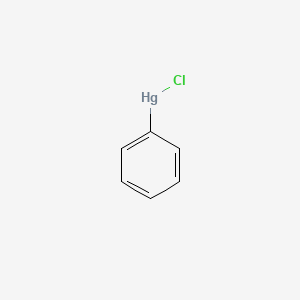
Phenylmercuric Chloride
Phenylmercuric chloride is an organomercuric compound. Mercury is a heavy, silvery d-block metal and one of six elements that are liquid at or near room temperature and pressure. It is a naturally occuring substance, and combines with other elements such as chlorine, sulfur, or oxygen to form inorganic mercury compounds (salts). Mercury also combines with carbon to make organic mercury compounds. (L1) — Toxin and Toxin Target Database (T3DB)
- IUPAC 名称
- chloro(phenyl)mercury
- 分子式
- C6H5ClHg
- 分子量
- 313.15 g/mol
- 精确质量
- 313.978621 Da
- 拓扑极性表面积
- 0.0 Ų
- 氢键供体
- 0
- 氢键受体
- 0
- 共价单元
- 1
- 已定义的立体中心
- 0
又称
另有 16 个已报告名称
外部数据库标识符
- EPA DTXSID:DTXSID4042129
- PubMed:17489621
- PubMed:13717574
- PubMed:9144456
来自其他科学数据库的证据
NIH PubChem PUG-View
Attributed physical-property, hazard, environmental and use annotations.
- Color/Form: White satiny leaflets 来源: Hazardous Substances Data Bank (HSDB)
- LogP: log Kow= 1.78 来源: Hazardous Substances Data Bank (HSDB)
- Melting Point: 250-252 °C 来源: Hazardous Substances Data Bank (HSDB)
- Physical Description: White solid; [Merck Index] White powder; [MSDSonline] 来源: Haz-Map, Information on Hazardous Chemicals and Occupational Diseases
- Solubility: Sol in about 20,000 parts cold water; slightly sol in hot alcohol; sol in benzene, ether, pyridine 来源: Hazardous Substances Data Bank (HSDB)
- Vapor Pressure: 0.02 [mmHg] 来源: Haz-Map, Information on Hazardous Chemicals and Occupational Diseases
- Carcinogen Classification: No indication of carcinogenicity (not listed by IARC). (L135) 来源: Toxin and Toxin Target Database (T3DB)
- Exposure Routes: Oral (L7) ; inhalation (L7) ; dermal (L7) 来源: Toxin and Toxin Target Database (T3DB)
- Signal: Danger 来源: European Chemicals Agency (ECHA)
- GHS Hazard Statements: H300+H310+H330 (22.2%): Fatal if swallowed, in contact with skin or if inhaled [Danger Acute toxicity, oral; acute toxicity, dermal; acute toxicity, inhalation]; H300 (100%): Fatal if swallowed [Danger Acute toxicity, oral]; H310 (100%): Fatal in contact with skin [Danger Acute toxicity, dermal]; H330 (100%): Fatal if inhaled [Danger Acute toxicity, inhalation]; H373 (100%): May causes damage to organs through prolonged or repeated exposure [Warning Specific target organ toxicity, repeated exposure]; H400 (100%): Very toxic to aquatic life [Warning Hazardous to the aquatic environment, acute hazard]; H410 (100%): Very toxic to aquatic life with long lasting effects [Warning Hazardous to the aquatic environment, long-term hazard] 来源: European Chemicals Agency (ECHA)
- Precautionary Statement Codes: P260, P262, P264, P270, P271, P273, P280, P284, P301+P316, P302+P352, P304+P340, P316, P319, P320, P321, P330, P361+P364, P391, P403+P233, P405, and P501 (click each P-code to see the statement) 来源: European Chemicals Agency (ECHA)
- ECHA C&L Notifications Summary: Aggregated GHS information provided per 9 reports by companies from 4 notifications to the ECHA C&L Inventory. Each notification may be associated with multiple companies.; Information may vary between notifications depending on impurities, additives, and other factors. The percentage value in parenthesis indicates the notified classification ratio from companies that provide hazard codes. Only hazard codes with percentage values above 10% are shown. For more detailed information, please visit ECHA C&L website. 来源: European Chemicals Agency (ECHA)
- Health Effects: Mercury mainly affects the nervous system. Exposure to high levels of metallic, inorganic, or organic mercury can permanently damage the brain, kidneys, and developing fetus. Effects on brain functioning may result in irritability, shyness, tremors, changes in vision or hearing, and memory problems. Acrodynia, a type of mercury poisoning in children, is characterized by pain and pink discoloration of the hands and feet. Mercury poisoning can also cause Hunter-Russell syndrome and Minamata disease. (L7) 来源: Toxin and Toxin Target Database (T3DB)
- Toxicity Summary: High-affinity binding of the divalent mercuric ion to thiol or sulfhydryl groups of proteins is believed to be the major mechanism for the activity of mercury. Through alterations in intracellular thiol status, mercury can promote oxidative stress, lipid peroxidation, mitochondrial dysfunction, and changes in heme metabolism. Mercury is known to bind to microsomal and mitochondrial enzymes, resulting in cell injury and death. For example, mercury is known to inhibit aquaporins, halting water flow across the cell membrane. It also inhibits the protein LCK, which causes decreased T-cell signalling and immune system depression. Mercury is also believed to inhibit neuronal excitability by acting on the postsynaptic neuronal membrane. It also affects the nervous system by inhibiting protein kinase C and alkaline phosphatase, which impairs brain microvascular formation and function, as well as alters the blood-brain barrier. Organic mercury exerts developmental effects by binding to tubulin, preventing microtubule assembly and causing mitotic inhibition. Mercury also produces an autoimmune response, likely by modification of major histocompatibility complex (MHC) class II molecules, self 来源: Toxin and Toxin Target Database (T3DB)
- Sources/Uses: Used formerly as antimycotic, antisyphilitic, diuretic, agricultural fungicide, antiseptic, and germicide; Not currently registered with the EPA for use in the US; [HSDB] 来源: Haz-Map, Information on Hazardous Chemicals and Occupational Diseases
- Restricted Notes: Use in paints as a biocide was discontinued in 1991 in the US; [HSDB] 来源: Haz-Map, Information on Hazardous Chemicals and Occupational Diseases
- Industrial Processes with risk of exposure: Using Disinfectants or Biocides [Category: Clean]; Farming (Pesticides) [Category: Industry] 来源: Haz-Map, Information on Hazardous Chemicals and Occupational Diseases
- Uses: For Phenylmercuric Chloride (USEPA/OPP PC Code: 066007) there are 0 labels match. /SRP: Not registered for current use in the U.S./ 来源: Hazardous Substances Data Bank (HSDB)
- Uses: Antimycotic /Former use/ 来源: Hazardous Substances Data Bank (HSDB)
- Uses: Used as antisyphilitic and diuretic ... use for this purpose has been restricted or stopped because of ... numerous side effects and toxicity /Former use/ 来源: Hazardous Substances Data Bank (HSDB)
- Uses: Agricultural fungicide /Former use/ 来源: Hazardous Substances Data Bank (HSDB)
- Uses: For more Uses (Complete) data for PHENYLMERCURIC CHLORIDE (7 total), please visit the HSDB record page. 来源: Hazardous Substances Data Bank (HSDB)
映射方: Existing checksum-valid CAS to unique PubChem CID match. 检索时间: 2026-08-31. 打开来源记录
科学分类和危害注释仅提供背景信息,不能取代上方所示针对具体市场的监管决定。
其他来源的覆盖范围和匹配状态
| 来源 | 结果 | 已检查 |
|---|---|---|
| EMBL-EBI ChEBI | 无精确记录 | 2026-08-31 |
| NIH PubChem PUG-View | 精确匹配 | 2026-08-31 |
已记录的无匹配结果是该来源已被检查的有效证据;这并不表示该物质在别处不存在。
于 2026-08-31 通过校验和有效的 CAS 匹配从美国国立卫生研究院 (NIH) PubChem 检索。化学性质不能取代本页的监管决定。
欧盟官方成分名称证据
该成分名称与 2025 年欧盟官方通用成分名称词汇表完全匹配。
相关清单证据
配方功能重叠的成分
其他官方和科学来源
11 个可用于核查此身份的外部数据库
每个链接都会在该来源中搜索此身份。 各来源是什么及其法律效力
PHENYL MERCURIC CHLORIDE 在 CosIng 清单中的呈现方式
CosIng 清单将 PHENYL MERCURIC CHLORIDE 列为化妆品成分,本页将其关联到 1 条附件记录。清单条目记录名称和标识符,而附件记录显示该物质在欧盟化妆品法规中被禁用、限用或列入准用清单的情况。
在官方数据中,PHENYL MERCURIC CHLORIDE 还被标记了 1 项化妆品功能。功能标识描述预期用途,但不能取代在配方或标签工作之前对关联附件记录的监管审查。