
欧盟官方标签名称词汇表条目 6469
CI 77289
本记录确认了用于欧盟化妆品标签标示的官方通用成分名称。它本身并不能确认该物质获准使用、不受限制或安全。
全球证据概览
所解析的身份在 13 个已索引市场数据集中的 2 个有匹配的监管证据:1 条国家记录和 1 条欧盟附件记录。下方列出每项结果和证据缺口。
已检查的市场
13
有证据的市场
2
证据缺口
11
已解析的标识符
3
全部 13 个市场的监管证据
打开每条匹配记录,查看其范围、浓度、条件、警示语和官方来源版本。
滑动或横向滚动以查看数据集覆盖范围和后续操作。
| 市场 | 结果 | 记录 | 数据集 | 含义 / 后续操作 |
|---|---|---|---|---|
| European Union EU | 有条件准用清单匹配 | 1打开记录 1 | Complete annex dataset Regulation (EC) 1223/2009 consolidated to 1 May 2026 | 请查看每条关联记录及其确切条件。 |
| Great Britain GB | 未找到匹配项 | 0 | Complete consolidated annex dataset GB retained Regulation 1223/2009 schedules, effective 15 August 2026 | No annex match is not approval and does not cover Northern Ireland, which follows the applicable EU framework. |
| Canada CA | 未找到匹配项 | 0 | Complete Hotlist snapshot Health Canada Cosmetic Ingredient Hotlist, 13 August 2025 | The Hotlist is an administrative compliance tool, not an exhaustive safety approval list. |
| New Zealand NZ | Permitted list with conditions | 1打开记录 1 | Complete schedules dataset Cosmetic Products Group Standard schedules effective 1 January 2026 | 请查看每条关联记录及其确切条件。 |
| ASEAN ASEAN | 未找到匹配项 | 0 | Complete regional annex dataset ASEAN Cosmetic Directive annexes 2026-1, 22 June 2026 | Regional annex coverage does not replace member-state implementation dates, notifications or national deviations. |
| China CN | 未找到匹配项 | 0 | Complete prohibited catalogues plus official-source workflow NMPA 2021 banned catalogues plus dynamic IECIC List I/List II system current since 2025 | IECIC listing is not blanket approval; absence may require the new cosmetic ingredient route, and restrictions are checked separately. |
| Japan JP | 未找到匹配项 | 0 | Complete Standards appendices dataset MHLW Standards for Cosmetics official English source and Japanese amendments checked for the imported snapshot | The Japanese text and subsequent notices are canonical; no local match is not a product-compliance conclusion. |
| South Korea KR | 未找到匹配项 | 0 | Complete current appendix dataset MFDS Notice 2026-19, effective 18 March 2026 | Korean source wording is canonical and other positive lists/notices may still apply to the formulation. |
| United States US | 未找到匹配项 | 0 | Complete enumerated federal ingredient rules eCFR Title 21 issue date 27 August 2026 | FDA has no general approved-cosmetic-ingredient catalogue; absence from these sections is not approval or proof of safety. |
| Australia AU | 未找到匹配项 | 0 | Complete cosmetic-relevant Poisons Standard subset plus official workflow Therapeutic Goods (Poisons Standard—June 2026) Instrument 2026 | An AICIS Inventory match is not cosmetic approval; no Inventory match can indicate a new, exempted, reported or confidential introduction. |
| Brazil BR | 未找到匹配项 | 0 | Complete prohibited dataset plus current restricted-list workflow ANVISA RDC 1.029/2026 and RDC 1.030/2026, published 15 June 2026 | RDC 1.030/2026 amends rather than replaces the prohibited baseline, and the second restricted-list revision was still under consultation in July 2026. |
| India IN | 未找到匹配项 | 0 | Complete current Part 2 dataset plus official workflow for Parts 1, 3 and 4 Cosmetics Rules 2020 plus current BIS IS 4707 parts (1:2020, 2:2025, 3:2025, 4:2022) | The standards are separate controlled publications; absence from a locally indexed excerpt is not permission. |
| Saudi Arabia SA | 未找到匹配项 | 0 | Complete official list index SFDA live prohibited/restricted lists, snapshot 30 August 2026 | No list match is not permission; Gulf/SFDA product, claim, notification and technical requirements still apply. |
没有与此筛选条件匹配的市场行。
匹配的市场记录和条件
New Zealand
Cosmetic Products Group Standard schedules effective 1 January 2026附件 II–VI 的精确证据
化学身份与性质
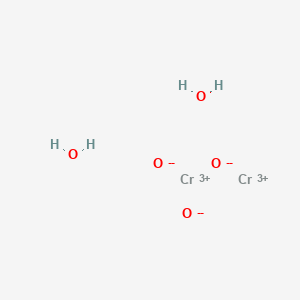
CAS 12001-99-9PubChem CID 22504267
C.I. Pigment Green 18
- IUPAC 名称
- bis(chromium(3+));tris(oxygen(2-));dihydrate
- 分子式
- Cr2H4O5
- 分子量
- 188.02 g/mol
- 精确质量
- 187.886883 Da
- 拓扑极性表面积
- 5.0 Ų
- 氢键供体
- 2
- 氢键受体
- 5
- 共价单元
- 7
- 已定义的立体中心
- 0
又称
Chromium hydroxide greenRV8FT8XF5RChromic oxide hydratedUNII-RV8FT8XF5R11958 GREENCHROME OXIDE (HYDRATED) GREENC.I. 77289Guignet'S green
另有 8 个已报告名称
RefChem:122490CHROMIUM HYDROXIDE GREEN [INCI]601-657-1chromium(3+);oxygen(2-);dihydrateHydrated chromium sesquioxideCI 77289Viridian 3BCYYGBBNBGCVXEL-UHFFFAOYSA-N
来自其他科学数据库的证据
NIH PubChem PUG-View
标识符精确匹配22504267
Attributed physical-property, hazard, environmental and use annotations.
- Physical Description: Dry Powder 来源: EPA Chemical Data Reporting (CDR)
- Physical Description: Light green finely divided powder; [MSDSonline] A brilliant emerald-green pigment called Guignet's green; [Ullmann] 来源: Haz-Map, Information on Hazardous Chemicals and Occupational Diseases
- Note: This chemical does not meet GHS hazard criteria for 91.7% (11 of 12) of all reports. 来源: European Chemicals Agency (ECHA)
- GHS Hazard Statements: Not Classified; Reported as not meeting GHS hazard criteria by 11 of 12 companies (only 8.3% companies provided GHS information). For more detailed information, please visit ECHA C&L website. 来源: European Chemicals Agency (ECHA)
- ECHA C&L Notifications Summary: Aggregated GHS information provided per 12 reports by companies from 2 notifications to the ECHA C&L Inventory.; Reported as not meeting GHS hazard criteria per 11 of 12 reports by companies.; There is 1 notification provided by 1 of 12 reports by companies with hazard statement code(s).; Information may vary between notifications depending on impurities, additives, and other factors. The percentage value in parenthesis indicates the notified classification ratio from companies that provide hazard codes. Only hazard codes with percentage values above 10% are shown. For more detailed information, please visit ECHA C&L website. 来源: European Chemicals Agency (ECHA)
- Industry Uses: Pigment 来源: EPA Chemical Data Reporting (CDR)
- Sources/Uses: A purified colorant used to color various foods, drugs, and cosmetics; [MSDSonline] Hydrated chromium oxide green is a pigment similar to Guignet's green; it is prepared differently and has less intense color; [Ullmann] 来源: Haz-Map, Information on Hazardous Chemicals and Occupational Diseases
映射方: Existing checksum-valid CAS to unique PubChem CID match. 检索时间: 2026-08-31. 打开来源记录
科学分类和危害注释仅提供背景信息,不能取代上方所示针对具体市场的监管决定。
其他来源的覆盖范围和匹配状态
| 来源 | 结果 | 已检查 |
|---|---|---|
| NIH PubChem PUG-View | 精确匹配 | 2026-08-31 |
已记录的无匹配结果是该来源已被检查的有效证据;这并不表示该物质在别处不存在。
于 2026-09-02 通过校验和有效的 CAS 匹配从美国国立卫生研究院 (NIH) PubChem 检索。化学性质不能取代本页的监管决定。
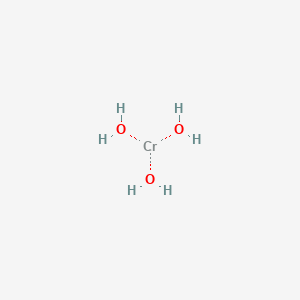
CAS 1308-14-1PubChem CID 14787
Chromium trihydroxide
Chromium trihydroxide is a hydroxide of chromium. Chromium is a chemical element which has the symbol Cr and atomic number 24. It is found naturally occuring in rocks, animals, plants, and soil, and is usually mined as chromite ore. Chromium is most toxic in its +6 oxidation state (chromium(VI)) due to its greater ability to enter cells and higher redox potential. Trivalent chromium (chromium(III)) however, is biologically necessary for sugar and lipid metabolism in humans. (L17) — Toxin and Toxin Target Database (T3DB)
- IUPAC 名称
- chromium;trihydrate
- 分子式
- CrH6O3
- 分子量
- 106.042 g/mol
- 精确质量
- 105.972199 Da
- 拓扑极性表面积
- 3.0 Ų
- 氢键供体
- 3
- 氢键受体
- 3
- 共价单元
- 4
- 已定义的立体中心
- 0
又称
Chromium hydroxide (Cr(OH)3)Chromic hydroxideChromic oxide gelDichromium trioxide hydrateChromic oxide, hydrousChromium(3+) hydroxideChromic (III) hydroxideChromic acid (H3CrO3)
另有 16 个已报告名称
HSDB 5796EINECS 215-158-8Chromium (III) hydroxideUNII-DX3N9U5Q97DX3N9U5Q97EC 215-158-8Chromic hydrateCHROMIUMTRIOLCHROMIUM HYDRATERefChem:576935CHROMIC(III) HYDROXIDE842-962-1CHROMIC HYDROXIDE [MI]Chromium(III) hydroxideCHROMIUM (III) HYDROXIDE N-HYDRATEChromium()Hydroxiden
外部数据库标识符
- EPA DTXSID:DTXSID0051651
来自其他科学数据库的证据
NIH PubChem PUG-View
标识符精确匹配14787
Attributed physical-property, hazard, environmental and use annotations.
- Color/Form: Green, gelatinous precipitate 来源: Hazardous Substances Data Bank (HSDB)
- Physical Description: Large Crystals; Wet Solid; Other Solid 来源: EPA Chemical Data Reporting (CDR)
- Physical Description: Blue to green solid; [ICSC] Practically insoluble in water; [Merck Index] 来源: Haz-Map, Information on Hazardous Chemicals and Occupational Diseases
- Physical Description: BLUE-TO-GREEN POWDER OR BLACK PARTICLES. 来源: ILO-WHO International Chemical Safety Cards (ICSCs)
- Solubility: In an experiment performed under inert gas atmosphere, the solubility /in water/ of freshly precipitated chromium(III) hydroxide was determined from under-saturation and from over-saturation at different pH. As an amphoteric hydroxide, the solubility curve of chromium(III) hydroxide is parabolic, depending on pH. The solubility is as follows: >pH 4: moderately soluble; pH 6.8 - 11.5: insoluble; > pH 11.5 - 14 slightly soluble ... at pH 4, the solubility was about 520 mg/L; at pH 6.8 to 11.8, the solubility was about 0.005 mg/L 来源: Hazardous Substances Data Bank (HSDB)
- Solubility: Insoluble in water 来源: Hazardous Substances Data Bank (HSDB)
- Solubility: Soluble in acids and strong alkalies 来源: Hazardous Substances Data Bank (HSDB)
- Solubility: Solubility in water: none 来源: ILO-WHO International Chemical Safety Cards (ICSCs)
- pH: Trivalent chromium compounds are amphoteric 来源: Hazardous Substances Data Bank (HSDB)
- Carcinogen Classification: 3, not classifiable as to its carcinogenicity to humans. (L135) 来源: Toxin and Toxin Target Database (T3DB)
- Exposure Routes: The substance can be absorbed into the body by inhalation and by ingestion. 来源: ILO-WHO International Chemical Safety Cards (ICSCs)
- Exposure Routes: Oral (L16) ; inhalation (L16) ; dermal (L16) 来源: Toxin and Toxin Target Database (T3DB)
- Note: This chemical does not meet GHS hazard criteria for 87.4% (208 of 238) of all reports. 来源: European Chemicals Agency (ECHA)
- GHS Hazard Statements: H412 (11.8%): Harmful to aquatic life with long lasting effects [Hazardous to the aquatic environment, long-term hazard] 来源: European Chemicals Agency (ECHA)
- Precautionary Statement Codes: P273, and P501 (click each P-code to see the statement) 来源: European Chemicals Agency (ECHA)
- ECHA C&L Notifications Summary: Aggregated GHS information provided per 238 reports by companies from 4 notifications to the ECHA C&L Inventory.; Reported as not meeting GHS hazard criteria per 208 of 238 reports by companies.; There are 2 notifications provided by 30 of 238 reports by companies with hazard statement code(s).; Information may vary between notifications depending on impurities, additives, and other factors. The percentage value in parenthesis indicates the notified classification ratio from companies that provide hazard codes. Only hazard codes with percentage values above 10% are shown. For more detailed information, please visit ECHA C&L website. 来源: European Chemicals Agency (ECHA)
- Note: This chemical does not meet GHS hazard criteria for 100% (37 of 37) of all reports. 来源: European Chemicals Agency (ECHA)
- GHS Hazard Statements: Not Classified; Reported as not meeting GHS hazard criteria by 37 of 37 companies. For more detailed information, please visit ECHA C&L website. 来源: European Chemicals Agency (ECHA)
- ECHA C&L Notifications Summary: Aggregated GHS information provided per 37 reports by companies from 1 notifications to the ECHA C&L Inventory.; Reported as not meeting GHS hazard criteria per 37 of 37 reports by companies.; There are 0 notifications provided by 0 of 37 reports by companies with hazard statement code(s).; Information may vary between notifications depending on impurities, additives, and other factors. The percentage value in parenthesis indicates the notified classification ratio from companies that provide hazard codes. Only hazard codes with percentage values above 10% are shown. For more detailed information, please visit ECHA C&L website. 来源: European Chemicals Agency (ECHA)
- Signal: Danger 来源: NITE-CMC
- GHS Hazard Statements: H317: May cause an allergic skin reaction [Warning Sensitization, Skin]; H334: May cause allergy or asthma symptoms or breathing difficulties if inhaled [Danger Sensitization, respiratory] 来源: NITE-CMC
- Precautionary Statement Codes: P233, P260, P261, P271, P272, P280, P284, P302+P352, P304+P340, P321, P333+P317, P342+P316, P362+P364, P403, and P501 (click each P-code to see the statement) 来源: NITE-CMC
- Health Effects: Chromium in its trivalent state is not very toxic. It may be oxidized to hexavalent chromium, a known carcinogen. Hexavalent chromium has also been shown to affect reproduction and development. (A12) 来源: Toxin and Toxin Target Database (T3DB)
- Toxicity Summary: IDENTIFICATION AND USE: Chromium trihydroxide (chromic acid) is a green, gelatinous precipitate. It is used as pigment, e.g. Guignet's green; in tanning industry; as a mordant, and as catalyst for organic reactions. HUMAN EXPOSURE AND TOXICITY: Fatal case was described involving 35-year-old woman who developed severe acidosis, massive gastrointestinal hemorrhage, acute renal failure, and hepatic injury following ingestion of chromic acid (50 mL) and died 12 hours after ingestion. Postmortem liver biopsy revealed a fatty degeneration with chromium concentration 3.6 umol/g. The kidney, with chromium concentration 2.6 umol/g, had extensive necrosis and ischemic lesions. Changes in renal function among ferrochromium workers in a ferroalloy facility in China were investigated (exposed to chromium compounds such a sodium-chromate and chromium-hydroxide). The results of this study suggest that long-term exposure to chromium produces chronic renal injury, mainly involving the proximal tubule. A urinary chromium concentration of greater than 15 ug/g of creatinine can be proposed as a threshold dosage for nephrotoxicity, and gamma-glutamyl-transferase, NAG and alkaline-phosphatase are all ea 来源: Hazardous Substances Data Bank (HSDB)
- Toxicity Summary: Trivalent chromium may also form complexes with peptides, proteins, and DNA, resulting in DNA-protein crosslinks, DNA strand breaks, DNA-DNA interstrand crosslinks, chromium-DNA adducts, chromosomal aberrations and alterations in cellular signaling pathways. It has been shown to induce carcinogenesis by overstimulating cellular regulatory pathways and increasing peroxide levels by activating certain mitogen-activated protein kinases. It can also cause transcriptional repression by cross-linking histone deacetylase 1-DNA methyltransferase 1 complexes to CYP1A1 promoter chromatin, inhibiting histone modification. Chromium may increase its own toxicity by modifying metal regulatory transcription factor 1, causing the inhibition of zinc-induced metallothionein transcription. (A12, L16, A34, A35, A36) 来源: Toxin and Toxin Target Database (T3DB)
- Environmental Bioconcentration: BCF values of soluble chromium(III) for bottom-feeding bivalves (oyster (Crassostrea virginica), blue mussel (Mytilus edulis), and soft shell clam (Mya arenaria)) range from 86 to 192(1). However, chromium trihydroxide is relatively insoluble between pH 6.8 and 11 (0.005 mg/L)(1). 来源: Hazardous Substances Data Bank (HSDB)
- Industry Uses: Other; Catalyst 来源: EPA Chemical Data Reporting (CDR)
- Sources/Uses: Used as a pigment, mordant, catalyst, and tanning chemical; [Merck Index #2225] 来源: Haz-Map, Information on Hazardous Chemicals and Occupational Diseases
- Industrial Processes with risk of exposure: Painting (Pigments, Binders, and Biocides) [Category: Paint]; Leather Tanning and Processing [Category: Industry]; Textiles (Printing, Dyeing, or Finishing) [Category: Industry] 来源: Haz-Map, Information on Hazardous Chemicals and Occupational Diseases
- Uses: Chromium(III) hydroxide hydrates are used for the production of chromium(III) salts by reaction with the corresponding acids. /Chromium(III) hydroxide hydrates/ 来源: Hazardous Substances Data Bank (HSDB)
- Uses: As pigment; in tanning industry; as mordant; as catalyst for organic reactions. 来源: Hazardous Substances Data Bank (HSDB)
- Uses: Guignet's green. 来源: Hazardous Substances Data Bank (HSDB)
- Uses: Useful as catalyst in dehydrogenation of alcohols and paraffins, hydrogenation of olefins. /Chromic hydroxide trihydrate/ 来源: Hazardous Substances Data Bank (HSDB)
- Uses: For more Uses (Complete) data for CHROMIUM TRIHYDROXIDE (10 total), please visit the HSDB record page. 来源: Hazardous Substances Data Bank (HSDB)
映射方: Existing checksum-valid CAS to unique PubChem CID match. 检索时间: 2026-08-31. 打开来源记录
科学分类和危害注释仅提供背景信息,不能取代上方所示针对具体市场的监管决定。
其他来源的覆盖范围和匹配状态
| 来源 | 结果 | 已检查 |
|---|---|---|
| NIH PubChem PUG-View | 精确匹配 | 2026-08-31 |
已记录的无匹配结果是该来源已被检查的有效证据;这并不表示该物质在别处不存在。
于 2026-08-31 通过校验和有效的 CAS 匹配从美国国立卫生研究院 (NIH) PubChem 检索。化学性质不能取代本页的监管决定。
官方来源与范围
导入自委员会实施决定 (EU) 2025/1175(数据集版本 EU 2025/1175)。词汇表为第 19(1)(g) 条所要求的成分表提供通用成分名称;它不是准许清单或安全清单。
打开官方决定