
欧盟官方标签名称词汇表条目 6468
CI 77288
本记录确认了用于欧盟化妆品标签标示的官方通用成分名称。它本身并不能确认该物质获准使用、不受限制或安全。
全球证据概览
所解析的身份在 13 个已索引市场数据集中的 2 个有匹配的监管证据:1 条国家记录和 1 条欧盟附件记录。下方列出每项结果和证据缺口。
已检查的市场
13
有证据的市场
2
证据缺口
11
已解析的标识符
2
全部 13 个市场的监管证据
打开每条匹配记录,查看其范围、浓度、条件、警示语和官方来源版本。
滑动或横向滚动以查看数据集覆盖范围和后续操作。
| 市场 | 结果 | 记录 | 数据集 | 含义 / 后续操作 |
|---|---|---|---|---|
| European Union EU | 有条件准用清单匹配 | 1打开记录 1 | Complete annex dataset Regulation (EC) 1223/2009 consolidated to 1 May 2026 | 请查看每条关联记录及其确切条件。 |
| Great Britain GB | 未找到匹配项 | 0 | Complete consolidated annex dataset GB retained Regulation 1223/2009 schedules, effective 15 August 2026 | No annex match is not approval and does not cover Northern Ireland, which follows the applicable EU framework. |
| Canada CA | 未找到匹配项 | 0 | Complete Hotlist snapshot Health Canada Cosmetic Ingredient Hotlist, 13 August 2025 | The Hotlist is an administrative compliance tool, not an exhaustive safety approval list. |
| New Zealand NZ | Permitted list with conditions | 1打开记录 1 | Complete schedules dataset Cosmetic Products Group Standard schedules effective 1 January 2026 | 请查看每条关联记录及其确切条件。 |
| ASEAN ASEAN | 未找到匹配项 | 0 | Complete regional annex dataset ASEAN Cosmetic Directive annexes 2026-1, 22 June 2026 | Regional annex coverage does not replace member-state implementation dates, notifications or national deviations. |
| China CN | 未找到匹配项 | 0 | Complete prohibited catalogues plus official-source workflow NMPA 2021 banned catalogues plus dynamic IECIC List I/List II system current since 2025 | IECIC listing is not blanket approval; absence may require the new cosmetic ingredient route, and restrictions are checked separately. |
| Japan JP | 未找到匹配项 | 0 | Complete Standards appendices dataset MHLW Standards for Cosmetics official English source and Japanese amendments checked for the imported snapshot | The Japanese text and subsequent notices are canonical; no local match is not a product-compliance conclusion. |
| South Korea KR | 未找到匹配项 | 0 | Complete current appendix dataset MFDS Notice 2026-19, effective 18 March 2026 | Korean source wording is canonical and other positive lists/notices may still apply to the formulation. |
| United States US | 未找到匹配项 | 0 | Complete enumerated federal ingredient rules eCFR Title 21 issue date 27 August 2026 | FDA has no general approved-cosmetic-ingredient catalogue; absence from these sections is not approval or proof of safety. |
| Australia AU | 未找到匹配项 | 0 | Complete cosmetic-relevant Poisons Standard subset plus official workflow Therapeutic Goods (Poisons Standard—June 2026) Instrument 2026 | An AICIS Inventory match is not cosmetic approval; no Inventory match can indicate a new, exempted, reported or confidential introduction. |
| Brazil BR | 未找到匹配项 | 0 | Complete prohibited dataset plus current restricted-list workflow ANVISA RDC 1.029/2026 and RDC 1.030/2026, published 15 June 2026 | RDC 1.030/2026 amends rather than replaces the prohibited baseline, and the second restricted-list revision was still under consultation in July 2026. |
| India IN | 未找到匹配项 | 0 | Complete current Part 2 dataset plus official workflow for Parts 1, 3 and 4 Cosmetics Rules 2020 plus current BIS IS 4707 parts (1:2020, 2:2025, 3:2025, 4:2022) | The standards are separate controlled publications; absence from a locally indexed excerpt is not permission. |
| Saudi Arabia SA | 未找到匹配项 | 0 | Complete official list index SFDA live prohibited/restricted lists, snapshot 30 August 2026 | No list match is not permission; Gulf/SFDA product, claim, notification and technical requirements still apply. |
没有与此筛选条件匹配的市场行。
匹配的市场记录和条件
New Zealand
Cosmetic Products Group Standard schedules effective 1 January 2026附件 II–VI 的精确证据
化学身份与性质
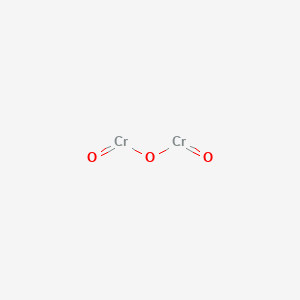
- IUPAC 名称
- oxo(oxochromiooxy)chromium
- 分子式
- Cr2O3
- 分子量
- 151.990 g/mol
- 精确质量
- 151.865753 Da
- 拓扑极性表面积
- 43.4 Ų
- 氢键供体
- 0
- 氢键受体
- 3
- 共价单元
- 1
- 已定义的立体中心
- 0
又称
Chromium(III) oxideDichromium trioxideCHROMIC OXIDEChrome oxideChrome GreenGreen chromium oxideGreen cinnabarChrome ochre
另有 16 个已报告名称
Chromium Oxide GreenAnadonis GreenCasalis GreenGreen rougeChrome OcherLeaf greenChromium(3+) oxideLevanox green gachromium (III) oxideOxide of chromiumGreen oxide of chromiumGreen chrome oxideChromic Acid GreenGreen chromic oxideChrome Green F 3Chromium oxide (Cr2O3)
外部数据库标识符
- ChEBI:CHEBI:48242
- EPA DTXSID:DTXSID4043721
- PubMed:26086747
- PubMed:24885771
- PubMed:21384495
- PubMed:15003702
- PubMed:12634122
- PubMed:1423875
来自其他科学数据库的证据
NIH PubChem PUG-View
标识符精确匹配517277
Attributed physical-property, hazard, environmental and use annotations.
- Boiling Point: 4000 °C 来源: Hazardous Substances Data Bank (HSDB)
- Boiling Point: 4000 °C 来源: ILO-WHO International Chemical Safety Cards (ICSCs)
- Color/Form: Light to dark green, fine, hexagonal crystals 来源: Hazardous Substances Data Bank (HSDB)
- Color/Form: Green powder 来源: Hazardous Substances Data Bank (HSDB)
- Color/Form: Bright-green, extremely hard crystals 来源: Hazardous Substances Data Bank (HSDB)
- Density: 5.22 at 25 °C 来源: Hazardous Substances Data Bank (HSDB)
- Density: 5.22 g/cm³ 来源: ILO-WHO International Chemical Safety Cards (ICSCs)
- Density: 5.22 @25 °C 来源: PAC Chemical Database, U.S. Department of Energy
- Melting Point: 2435 °C 来源: Hazardous Substances Data Bank (HSDB)
- Melting Point: 2435 °C 来源: ILO-WHO International Chemical Safety Cards (ICSCs)
- Melting Point: 2320 °C 来源: PAC Chemical Database, U.S. Department of Energy
- Physical Description: Dry Powder; Large Crystals; Dry Powder; Large Crystals; Liquid; Other Solid; Dry Powder; CBI; Large Crystals 来源: EPA Chemical Data Reporting (CDR)
- Physical Description: Green, hygroscopic solid; [CHEMINFO] Insoluble in water; [ACGIH] 来源: Haz-Map, Information on Hazardous Chemicals and Occupational Diseases
- Physical Description: LIGHT-TO-DARK-GREEN POWDER. 来源: ILO-WHO International Chemical Safety Cards (ICSCs)
- Refractive Index: Index of refraction: 2.551 来源: Hazardous Substances Data Bank (HSDB)
- Solubility: In water, 3.13 ug/L at 20 °C, pH 6; 2.96 ug/L at 20 °C, pH 8 来源: Hazardous Substances Data Bank (HSDB)
- Solubility: Practically insoluble in water 来源: Hazardous Substances Data Bank (HSDB)
- Solubility: Practically insoluble in alcohol, acetone; slightly soluble in acids, alkalies 来源: Hazardous Substances Data Bank (HSDB)
- Solubility: Insoluble in acids, and alkalies 来源: Hazardous Substances Data Bank (HSDB)
- Solubility: Solubility in water: none 来源: ILO-WHO International Chemical Safety Cards (ICSCs)
- pH: Trivalent chromium compounds are amphoteric 来源: Hazardous Substances Data Bank (HSDB)
- Carcinogen Classification: 3, not classifiable as to its carcinogenicity to humans. (L135) 来源: Toxin and Toxin Target Database (T3DB)
- Exposure Routes: Oral (L16) ; inhalation (L16) ; dermal (L16) 来源: Toxin and Toxin Target Database (T3DB)
- Note: This chemical does not meet GHS hazard criteria for 57.8% (1112 of 1924) of all reports. 来源: European Chemicals Agency (ECHA)
- Signal: Danger 来源: European Chemicals Agency (ECHA)
- GHS Hazard Statements: H302 (24%): Harmful if swallowed [Warning Acute toxicity, oral]; H317 (25.7%): May cause an allergic skin reaction [Warning Sensitization, Skin]; H319 (24.3%): Causes serious eye irritation [Warning Serious eye damage/eye irritation]; H360 (14.6%): May damage fertility or the unborn child [Danger Reproductive toxicity] 来源: European Chemicals Agency (ECHA)
- Precautionary Statement Codes: P203, P261, P264, P264+P265, P270, P272, P280, P301+P317, P302+P352, P305+P351+P338, P318, P321, P330, P333+P317, P337+P317, P362+P364, P405, and P501 (click each P-code to see the statement) 来源: European Chemicals Agency (ECHA)
- ECHA C&L Notifications Summary: Aggregated GHS information provided per 1924 reports by companies from 27 notifications to the ECHA C&L Inventory. Each notification may be associated with multiple companies.; Reported as not meeting GHS hazard criteria per 1112 of 1924 reports by companies.; There are 23 notifications provided by 812 of 1924 reports by companies with hazard statement code(s).; Information may vary between notifications depending on impurities, additives, and other factors. The percentage value in parenthesis indicates the notified classification ratio from companies that provide hazard codes. Only hazard codes with percentage values above 10% are shown. For more detailed information, please visit ECHA C&L website. 来源: European Chemicals Agency (ECHA)
- Signal: Danger 来源: NITE-CMC
- GHS Hazard Statements: H317: May cause an allergic skin reaction [Warning Sensitization, Skin]; H334: May cause allergy or asthma symptoms or breathing difficulties if inhaled [Danger Sensitization, respiratory]; H372: Causes damage to organs through prolonged or repeated exposure [Danger Specific target organ toxicity, repeated exposure] 来源: NITE-CMC
- Precautionary Statement Codes: P233, P260, P261, P264, P270, P271, P272, P280, P284, P302+P352, P304+P340, P319, P321, P333+P317, P342+P316, P362+P364, P403, and P501 (click each P-code to see the statement) 来源: NITE-CMC
- GHS Hazard Statements: H317: May cause an allergic skin reaction [Warning Sensitization, Skin]; H334: May cause allergy or asthma symptoms or breathing difficulties if inhaled [Danger Sensitization, respiratory] 来源: NITE-CMC
- Precautionary Statement Codes: P233, P260, P261, P271, P272, P280, P284, P302+P352, P304+P340, P321, P333+P317, P342+P316, P362+P364, P403, and P501 (click each P-code to see the statement) 来源: NITE-CMC
- Health Effects: Chromium in its trivalent state is not very toxic. It may be oxidized to hexavalent chromium, a known carcinogen. Hexavalent chromium has also been shown to affect reproduction and development. (A12) 来源: Toxin and Toxin Target Database (T3DB)
- Toxicity Summary: IDENTIFICATION AND USE: Chromic oxide (Cr(2)O(3)) is a green powder. It is not registered for current use in the U.S., but approved pesticide uses may change periodically and so federal, state and local authorities must be consulted for currently approved uses. It is used in abrasives and electric semiconductors; in alloys; in printing fabrics and banknotes. It is also used in dyeing polymers; colorant for latex paints, in manufacturing of chromium metal and aluminum-chromium master alloys. It's other uses include catalyst in organic synthesis, green granules in asphalt roofing, component of refractory brick. Chromic oxide is a color additive in drug use. HUMAN EXPOSURE AND TOXICITY: Fine chromic oxide particles were insoluble in the culture medium; on the contrary, Cr(2)O(3) nanoparticles released soluble hexavalent chromium into the culture medium. Human lung carcinoma A549 cells and human keratinocyte HaCaT cells showed an increase in intracellular reactive oxygen species (ROS) level and activation of antioxidant defense systems on exposure to Cr(2)O(3) nanoparticles. The cellular influences of Cr(2)O(3) nanoparticles matched those of hexavalent chromium. Human lung epithelial c 来源: Hazardous Substances Data Bank (HSDB)
- Toxicity Summary: Trivalent chromium may also form complexes with peptides, proteins, and DNA, resulting in DNA-protein crosslinks, DNA strand breaks, DNA-DNA interstrand crosslinks, chromium-DNA adducts, chromosomal aberrations and alterations in cellular signaling pathways. It has been shown to induce carcinogenesis by overstimulating cellular regulatory pathways and increasing peroxide levels by activating certain mitogen-activated protein kinases. It can also cause transcriptional repression by cross-linking histone deacetylase 1-DNA methyltransferase 1 complexes to CYP1A1 promoter chromatin, inhibiting histone modification. Chromium may increase its own toxicity by modifying metal regulatory transcription factor 1, causing the inhibition of zinc-induced metallothionein transcription. (A12, L16, A34, A35, A36) 来源: Toxin and Toxin Target Database (T3DB)
- Consumer Uses: Other; Processing aids not otherwise specified; Catalyst; Not Known or Reasonably Ascertainable; Corrosion inhibitor; Pigment 来源: EPA Chemical Data Reporting (CDR)
- Industry Uses: Abrasives; Other; Pigment; Dye; Catalyst; Not Known or Reasonably Ascertainable; Corrosion inhibitor 来源: EPA Chemical Data Reporting (CDR)
- Sources/Uses: Used in abrasives, refractory materials, semiconductors, pigments, alloys, textile printing inks, and catalysts; [Merck Index] Used as a pigment in polymers and latex paints; [HSDB] 来源: Haz-Map, Information on Hazardous Chemicals and Occupational Diseases
- Industrial Processes with risk of exposure: Semiconductor Manufacturing [Category: Industry]; Painting (Pigments, Binders, and Biocides) [Category: Paint]; Textiles (Printing, Dyeing, or Finishing) [Category: Industry] 来源: Haz-Map, Information on Hazardous Chemicals and Occupational Diseases
- Uses: For chromic oxide (USEPA/OPP Pesticide Code: 021103) there are 0 labels match. /SRP: Not registered for current use in the U.S., but approved pesticide uses may change periodically and so federal, state and local authorities must be consulted for currently approved uses./ 来源: Hazardous Substances Data Bank (HSDB)
- Uses: In abrasives, refractory materials, electric semiconductors; as pigment, particularly in coloring glass; in alloys; in printing fabrics and banknotes; catalyst for organic and inorganic reactions. 来源: Hazardous Substances Data Bank (HSDB)
- Uses: Used in dyeing polymers, ... colorant for latex paints. 来源: Hazardous Substances Data Bank (HSDB)
- Uses: In metallurgy in the manufacture of chromium metal and aluminum-chromium master alloys. 来源: Hazardous Substances Data Bank (HSDB)
- Uses: For more Uses (Complete) data for Chromium (III) oxide (11 total), please visit the HSDB record page. 来源: Hazardous Substances Data Bank (HSDB)
- Uses: Plastics -> Typical concentration range in plastic materials -> 1% 来源: NORMAN Suspect List Exchange
- Uses: Chromium(III) oxide is commonly used as pigment, under the name viridian, in paints, inks, and glasses. (L523) 来源: Toxin and Toxin Target Database (T3DB)
映射方: Existing checksum-valid CAS to unique PubChem CID match. 检索时间: 2026-08-31. 打开来源记录
科学分类和危害注释仅提供背景信息,不能取代上方所示针对具体市场的监管决定。
其他来源的覆盖范围和匹配状态
| 来源 | 结果 | 已检查 |
|---|---|---|
| NIH PubChem PUG-View | 精确匹配 | 2026-08-31 |
已记录的无匹配结果是该来源已被检查的有效证据;这并不表示该物质在别处不存在。
于 2026-09-02 通过校验和有效的 CAS 匹配从美国国立卫生研究院 (NIH) PubChem 检索。化学性质不能取代本页的监管决定。
官方来源与范围
导入自委员会实施决定 (EU) 2025/1175(数据集版本 EU 2025/1175)。词汇表为第 19(1)(g) 条所要求的成分表提供通用成分名称;它不是准许清单或安全清单。
打开官方决定