
CAS
1 条记录
CAS 124-87-8
CAS 124-87-8 与法规 1223/2009 附件 II–VI 中的 1 条欧盟附件记录相匹配。
CAS 124-87-8 的记录
1 共化学身份与性质
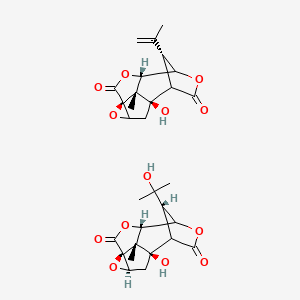
CAS 124-87-8PubChem CID 31304
Picrotoxin
Cocculus appears as a poisonous berry, the dried fruit of Anamirta cocculus L. Contains several substances including about one percent picrotoxin. Pure picrotoxin occurs as shiny leaflets with an intensely bitter taste or as a microcrystalline powder. Very poisonous!. Used in medicine as a central nervous system stimulant and antidote for barbiturate poisoning. Not currently regarded as a useful therapeutic agent. — CAMEO Chemicals
- IUPAC 名称
- (1R,3R,5S,8S,13R,14S)-1-hydroxy-14-(2-hydroxypropan-2-yl)-13-methyl-4,7,10-trioxapentacyclo[6.4.1.19,12.03,5.05,13]tetradecane-6,11-dione;(1R,5S,8S,13R,14R)-1-hydroxy-13-methyl-14-prop-1-en-2-yl-4,7,10-trioxapentacyclo[6.4.1.19,12.03,5.05,13]tetradecane-6,11-dione
- 分子式
- C30H34O13
- 分子量
- 602.6 g/mol
- 精确质量
- 602.19994113 Da
- 拓扑极性表面积
- 191.0 Ų
- 氢键供体
- 3
- 氢键受体
- 13
- 共价单元
- 2
- 已定义的立体中心
- 11
又称
CocculinCocculusPicrotoxinumOriental berryIndian berryPicrotoxinePicrotoxCoques du levant
另有 16 个已报告名称
Picrotin, compound with picrotoxinin (1:1)EPA Pesticide Chemical Code 002301AI3-17689ZLT174DL7UNSC-403139RefChem:174201CHEBI:134126204-716-6Coques du levant [French]Caswell No. 663APicrotoxinin - picrotinPicrotoxin [NF]HSDB 6385EINECS 204-716-6UNII-ZLT174DL7UNSC 403139
外部数据库标识符
来自其他科学数据库的证据
NIH PubChem PUG-View
标识符精确匹配31304
Attributed physical-property, hazard, environmental and use annotations.
- Color/Form: Shiny rhomboid leaflets 来源: Hazardous Substances Data Bank (HSDB)
- Color/Form: Colorless, shining, prismatic crystals or white or nearly white microcrystalline powder 来源: Hazardous Substances Data Bank (HSDB)
- LogP: -2.229 来源: DrugBank
- Melting Point: 397 °F (EPA, 1998) 来源: CAMEO Chemicals
- Melting Point: 203.5 °C 来源: DrugBank
- Melting Point: 203 °C 来源: Hazardous Substances Data Bank (HSDB)
- Odor: Odorless 来源: Hazardous Substances Data Bank (HSDB)
- Physical Description: Cocculus appears as a poisonous berry, the dried fruit of Anamirta cocculus L. Contains several substances including about one percent picrotoxin. Pure picrotoxin occurs as shiny leaflets with an intensely bitter taste or as a microcrystalline powder. Very poisonous!. Used in medicine as a central nervous system stimulant and antidote for barbiturate poisoning. Not currently regarded as a useful therapeutic agent. 来源: CAMEO Chemicals
- Solubility: 4100 mg/L 来源: DrugBank
- Solubility: 1 g in 350 ml water 来源: Hazardous Substances Data Bank (HSDB)
- Solubility: 1 g in 5 ml boiling water (approx) 来源: Hazardous Substances Data Bank (HSDB)
- Solubility: 1 g in 13.5 ml 95% ethanol 来源: Hazardous Substances Data Bank (HSDB)
- Solubility: 1 g in 3 ml boiling alcohol (approx) 来源: Hazardous Substances Data Bank (HSDB)
- Solubility: For more Solubility (Complete) data for PICROTOXIN (7 total), please visit the HSDB record page. 来源: Hazardous Substances Data Bank (HSDB)
- Vapor Pressure: 0.00001 [mm Hg] @25 °C 来源: PAC Chemical Database, U.S. Department of Energy
- pH: A saturated solution in water is neutral to litmus 来源: Hazardous Substances Data Bank (HSDB)
- First Aid: Warning: Picrotoxin is a powerful stimulant and affects all portions of the central nervous system. Picrotoxin is a highly toxic alkaloid convulsant poison. Epileptics may be more sensitive to picrotoxin.; Signs and Symptoms of Picrotoxin Exposure: Signs and symptoms of acute exposure to picrotoxin may include slowing of pulse followed by increased pulse rate, tachycardia, and arrhythmias. Headache, salivation, sweating, dilation of pupils, loss of vision, muscle rigidity, excitement, hyperactivity, delirium, hallucinations, and convulsions may be observed. Nausea, vomiting, diarrhea, hyperpnea (excessive respiration), pulmonary edema, respiratory failure, and coma may also be noted.; Emergency Life-Support Procedures: Acute exposure to picrotoxin may require decontamination and life support for the victims. Emergency personnel should wear protective clothing appropriate to the type and degree of contamination. Air-purifying or supplied-air respiratory equipment should also be worn, as necessary. Rescue vehicles should carry supplies such as plastic sheeting and disposable plastic bags to assist in preventing spread of contamination.; Inhalation Exposure:; 1. Move victims to fresh 来源: CAMEO Chemicals
- Signal: Danger 来源: European Chemicals Agency (ECHA)
- GHS Hazard Statements: H300 (100%): Fatal if swallowed [Danger Acute toxicity, oral] 来源: European Chemicals Agency (ECHA)
- Precautionary Statement Codes: P264, P270, P301+P316, P321, P330, P405, and P501 (click each P-code to see the statement) 来源: European Chemicals Agency (ECHA)
- ECHA C&L Notifications Summary: Aggregated GHS information provided per 43 reports by companies from 1 notifications to the ECHA C&L Inventory.; Information may vary between notifications depending on impurities, additives, and other factors. The percentage value in parenthesis indicates the notified classification ratio from companies that provide hazard codes. Only hazard codes with percentage values above 10% are shown. For more detailed information, please visit ECHA C&L website. 来源: European Chemicals Agency (ECHA)
- Uses: MEDICATION (VET) 来源: Hazardous Substances Data Bank (HSDB)
- Uses: MEDICATION 来源: Hazardous Substances Data Bank (HSDB)
映射方: Existing checksum-valid CAS to unique PubChem CID match. 检索时间: 2026-08-31. 打开来源记录
科学分类和危害注释仅提供背景信息,不能取代上方所示针对具体市场的监管决定。
其他来源的覆盖范围和匹配状态
| 来源 | 结果 | 已检查 |
|---|---|---|
| NIH PubChem PUG-View | 精确匹配 | 2026-08-31 |
已记录的无匹配结果是该来源已被检查的有效证据;这并不表示该物质在别处不存在。
于 2026-09-02 通过校验和有效的 CAS 匹配从美国国立卫生研究院 (NIH) PubChem 检索。化学性质不能取代本页的监管决定。
本站如何使用 CAS 124-87-8
CAS 124-87-8 是化学文摘社 (Chemical Abstracts Service) 的标识符,用于将本页对应到特定物质。在当前数据集中,有 1 条欧盟附件记录共用该标识符,可帮助您交叉核对同一物质是出现在一种还是多种监管情境中。
当供应商规格书、SDS 或原料档案给出 CAS 124-87-8,而您需要在一处查看所有关联的附件 II–VI 记录时,请使用本页。上方的条目卡片是查看浓度限值、警示语、附件归属和产品类型条件的最快途径。
常见问题
以 CAS 124-87-8 标识的物质,如果在不同情境下适用不同条件,可能出现在欧盟化妆品法规的多个附件中。例如,某物质可能在附件 III 中按特定条件受到限制,同一 CAS 也可能在附件 IV 中作为准用着色剂按另行规定的条件出现。每个条目都必须单独审查。
将 CAS 编号与您的原料规格书和 CoA 文件进行交叉核对。当该 CAS 出现在附件 II 时,应核实其不存在。当其出现在附件 III 时,应核实您的配方满足浓度限值和产品类型条件。共用此 CAS 编号的所有附件条目均列于上方。
CAS 编号由美国化学文摘社 (Chemical Abstracts Service) 分配,全球通用。EC 编号是来自 EINECS、ELINCS 或 NLP 清单等名录的欧盟委员会标识符。两种标识符都可能出现在欧盟化妆品附件条目中。有些物质两者都有,有些只有其一,一些较旧的条目可能两者都没有。
INCI 检查器接受成分名称、CAS 编号和 EC 编号。可直接检查此 CAS 编号,然后对照供应商规格书和所有关联的附件条件核实结果。