
CAS
기록 1건
CAS 124-87-8
CAS 124-87-8은(는) 규정 1223/2009의 부속서 II–VI에 걸쳐 EU 부속서 기록 1건과 일치합니다.
CAS 124-87-8의 기록
1 총화학적 정체 및 특성
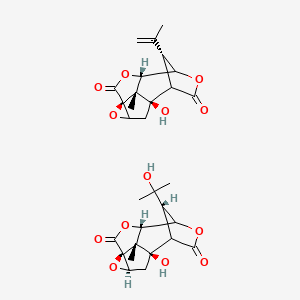
CAS 124-87-8PubChem CID 31304
Picrotoxin
Cocculus appears as a poisonous berry, the dried fruit of Anamirta cocculus L. Contains several substances including about one percent picrotoxin. Pure picrotoxin occurs as shiny leaflets with an intensely bitter taste or as a microcrystalline powder. Very poisonous!. Used in medicine as a central nervous system stimulant and antidote for barbiturate poisoning. Not currently regarded as a useful therapeutic agent. — CAMEO Chemicals
- IUPAC 명칭
- (1R,3R,5S,8S,13R,14S)-1-hydroxy-14-(2-hydroxypropan-2-yl)-13-methyl-4,7,10-trioxapentacyclo[6.4.1.19,12.03,5.05,13]tetradecane-6,11-dione;(1R,5S,8S,13R,14R)-1-hydroxy-13-methyl-14-prop-1-en-2-yl-4,7,10-trioxapentacyclo[6.4.1.19,12.03,5.05,13]tetradecane-6,11-dione
- 분자식
- C30H34O13
- 분자량
- 602.6 g/mol
- 정확한 질량
- 602.19994113 Da
- 위상 극성 표면적
- 191.0 Ų
- 수소 결합 공여체
- 3
- 수소 결합 수용체
- 13
- 공유결합 단위
- 2
- 정의된 입체중심
- 11
다른 이름
CocculinCocculusPicrotoxinumOriental berryIndian berryPicrotoxinePicrotoxCoques du levant
보고된 명칭 16개 더 보기
Picrotin, compound with picrotoxinin (1:1)EPA Pesticide Chemical Code 002301AI3-17689ZLT174DL7UNSC-403139RefChem:174201CHEBI:134126204-716-6Coques du levant [French]Caswell No. 663APicrotoxinin - picrotinPicrotoxin [NF]HSDB 6385EINECS 204-716-6UNII-ZLT174DL7UNSC 403139
외부 데이터베이스 식별자
추가 과학 데이터베이스의 근거
NIH PubChem PUG-View
식별자 정확히 일치31304
Attributed physical-property, hazard, environmental and use annotations.
- Color/Form: Shiny rhomboid leaflets 출처: Hazardous Substances Data Bank (HSDB)
- Color/Form: Colorless, shining, prismatic crystals or white or nearly white microcrystalline powder 출처: Hazardous Substances Data Bank (HSDB)
- LogP: -2.229 출처: DrugBank
- Melting Point: 397 °F (EPA, 1998) 출처: CAMEO Chemicals
- Melting Point: 203.5 °C 출처: DrugBank
- Melting Point: 203 °C 출처: Hazardous Substances Data Bank (HSDB)
- Odor: Odorless 출처: Hazardous Substances Data Bank (HSDB)
- Physical Description: Cocculus appears as a poisonous berry, the dried fruit of Anamirta cocculus L. Contains several substances including about one percent picrotoxin. Pure picrotoxin occurs as shiny leaflets with an intensely bitter taste or as a microcrystalline powder. Very poisonous!. Used in medicine as a central nervous system stimulant and antidote for barbiturate poisoning. Not currently regarded as a useful therapeutic agent. 출처: CAMEO Chemicals
- Solubility: 4100 mg/L 출처: DrugBank
- Solubility: 1 g in 350 ml water 출처: Hazardous Substances Data Bank (HSDB)
- Solubility: 1 g in 5 ml boiling water (approx) 출처: Hazardous Substances Data Bank (HSDB)
- Solubility: 1 g in 13.5 ml 95% ethanol 출처: Hazardous Substances Data Bank (HSDB)
- Solubility: 1 g in 3 ml boiling alcohol (approx) 출처: Hazardous Substances Data Bank (HSDB)
- Solubility: For more Solubility (Complete) data for PICROTOXIN (7 total), please visit the HSDB record page. 출처: Hazardous Substances Data Bank (HSDB)
- Vapor Pressure: 0.00001 [mm Hg] @25 °C 출처: PAC Chemical Database, U.S. Department of Energy
- pH: A saturated solution in water is neutral to litmus 출처: Hazardous Substances Data Bank (HSDB)
- First Aid: Warning: Picrotoxin is a powerful stimulant and affects all portions of the central nervous system. Picrotoxin is a highly toxic alkaloid convulsant poison. Epileptics may be more sensitive to picrotoxin.; Signs and Symptoms of Picrotoxin Exposure: Signs and symptoms of acute exposure to picrotoxin may include slowing of pulse followed by increased pulse rate, tachycardia, and arrhythmias. Headache, salivation, sweating, dilation of pupils, loss of vision, muscle rigidity, excitement, hyperactivity, delirium, hallucinations, and convulsions may be observed. Nausea, vomiting, diarrhea, hyperpnea (excessive respiration), pulmonary edema, respiratory failure, and coma may also be noted.; Emergency Life-Support Procedures: Acute exposure to picrotoxin may require decontamination and life support for the victims. Emergency personnel should wear protective clothing appropriate to the type and degree of contamination. Air-purifying or supplied-air respiratory equipment should also be worn, as necessary. Rescue vehicles should carry supplies such as plastic sheeting and disposable plastic bags to assist in preventing spread of contamination.; Inhalation Exposure:; 1. Move victims to fresh 출처: CAMEO Chemicals
- Signal: Danger 출처: European Chemicals Agency (ECHA)
- GHS Hazard Statements: H300 (100%): Fatal if swallowed [Danger Acute toxicity, oral] 출처: European Chemicals Agency (ECHA)
- Precautionary Statement Codes: P264, P270, P301+P316, P321, P330, P405, and P501 (click each P-code to see the statement) 출처: European Chemicals Agency (ECHA)
- ECHA C&L Notifications Summary: Aggregated GHS information provided per 43 reports by companies from 1 notifications to the ECHA C&L Inventory.; Information may vary between notifications depending on impurities, additives, and other factors. The percentage value in parenthesis indicates the notified classification ratio from companies that provide hazard codes. Only hazard codes with percentage values above 10% are shown. For more detailed information, please visit ECHA C&L website. 출처: European Chemicals Agency (ECHA)
- Uses: MEDICATION (VET) 출처: Hazardous Substances Data Bank (HSDB)
- Uses: MEDICATION 출처: Hazardous Substances Data Bank (HSDB)
매핑 기준: Existing checksum-valid CAS to unique PubChem CID match. 가져온 시각: 2026-08-31. 출처 기록 열기
과학적 분류와 유해성 주석은 맥락을 제공할 뿐이며, 위에 표시된 시장별 규제 판단을 대체하지 않습니다.
추가 출처 적용 범위 및 일치 상태
| 출처 | 결과 | 확인됨 |
|---|---|---|
| NIH PubChem PUG-View | 정확히 일치 | 2026-08-31 |
기록된 불일치는 출처를 확인했다는 유용한 근거이며, 해당 물질이 다른 곳에 존재하지 않는다는 주장이 아닙니다.
체크섬이 유효한 CAS 일치를 통해 2026-09-02에 NIH PubChem에서 가져왔습니다. 화학적 특성은 이 페이지의 규제 판단을 대체하지 않습니다.
이 사이트에서 CAS 124-87-8을(를) 사용하는 방식
CAS 124-87-8은(는) 이 페이지를 특정 물질에 고정하는 데 사용하는 Chemical Abstracts Service 식별자입니다. 현재 데이터세트에서는 EU 부속서 기록 1건이 이 식별자를 공유하며, 같은 물질이 하나의 규제 맥락에 나타나는지 여러 맥락에 나타나는지 교차 확인하는 데 도움이 됩니다.
공급업체 규격서, SDS 또는 원료 문서에 CAS 124-87-8이(가) 제시되어 있고 연결된 모든 부속서 II–VI 기록을 한곳에서 확인해야 할 때 이 페이지를 이용하세요. 위의 항목 카드는 농도 한도, 경고 문구, 부속서 위치 및 제품 유형 조건을 가장 빠르게 확인하는 방법입니다.
자주 묻는 질문
CAS 124-87-8로 식별되는 물질은 맥락에 따라 다른 조건이 적용되는 경우 EU 화장품 규정의 여러 부속서에 나타날 수 있습니다. 예를 들어 어떤 물질이 부속서 III에서 특정 조건으로 사용제한될 수 있고, 같은 CAS가 부속서 IV에서 별도의 항목 조건에 따라 허용 색소로 나타날 수도 있습니다. 각 항목은 개별적으로 검토해야 합니다.
CAS 번호를 원료 규격서 및 CoA 문서와 대조하세요. CAS가 부속서 II에 있으면 해당 물질이 없는지 확인하세요. 부속서 III에 있으면 처방에서 농도 한도와 제품 유형 조건이 충족되는지 확인하세요. 이 CAS 번호를 공유하는 모든 부속서 항목이 위에 나열되어 있습니다.
CAS 번호는 미국의 Chemical Abstracts Service가 부여하며 전 세계적으로 통용됩니다. EC 번호는 EINECS, ELINCS 또는 NLP 목록 같은 목록에 수록된 유럽연합 집행위원회 식별자입니다. 두 식별자 모두 EU 화장품 부속서 항목에 나타날 수 있습니다. 두 가지를 모두 가진 물질도 있고, 하나만 가진 물질도 있으며, 일부 오래된 항목은 둘 다 없을 수도 있습니다.
INCI 검사기는 원료명, CAS 번호 및 EC 번호를 받습니다. 이 CAS 번호를 직접 확인한 다음, 결과를 공급업체 규격서 및 연결된 모든 부속서 조건과 대조하세요.