
Benzene in Cosmetics: Safety, EU Ban & CosIng
Find benzene’s EU regulatory context and learn what to record when checking a specific batch, product notice or source document.
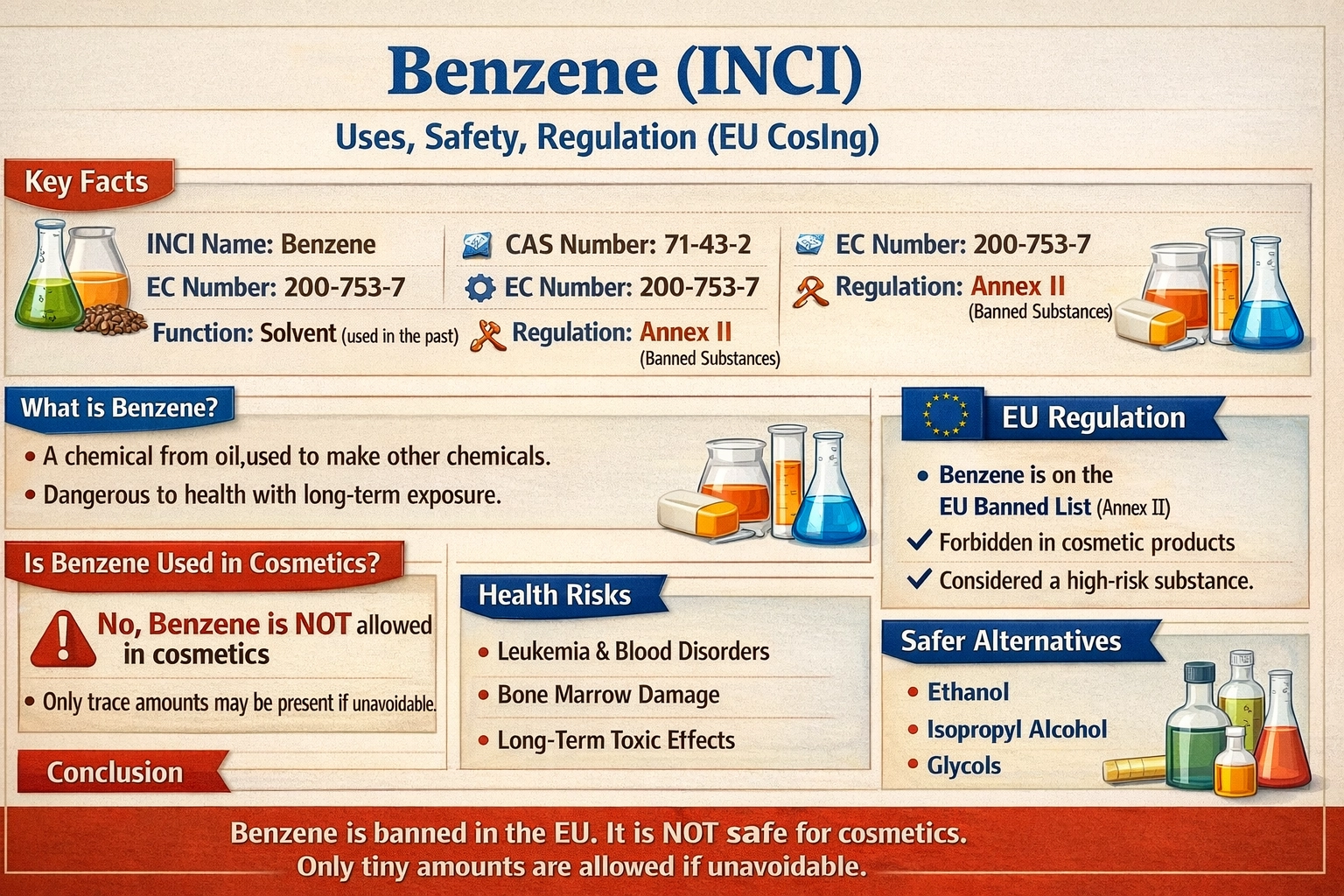
Benzene (INCI). Uses, Safety, Regulation (EU CosIng)
Benzene is a chemical that is used in industry. It is not something you want in the things you put on your skin. Benzene is known to be bad for your health.
In the European Union, Benzene is not allowed in cosmetic products.
Key facts
- INCI Name: Benzene
- CAS Number: 71-43-2
- EC Number: 200-753-7
- Function: Solvent (used in the past)
- Regulation: Annex II (list of substances that are not allowed)
What is Benzene?
Benzene is a chemical that comes from oil. It is used to make other chemicals.
Benzene had uses in the past. Now people are more aware of the dangers of Benzene than its benefits.
It is very bad for your health if you are around Benzene for a long time.
What is Benzene used for in products?
Benzene is not used in cosmetics anymore.
In the past, Benzene was used as a solvent. Now it is not acceptable to use it.
Today:
- Benzene is not added to the things you put on your skin
- It can only be found in very small amounts
- Only if it cannot be avoided
- The amount must be controlled
Is Benzene safe?
No, Benzene is not safe.
It can:
- Cause cancer
- Damage your genes
This is why it is not allowed in cosmetic products.
EU Regulation
Benzene is listed in the European Union list of banned substances (Annex II).
This means:
- It cannot be used in cosmetic products
- It is considered a high-risk substance
There are strict rules:
- Benzene cannot be used as an ingredient
- It may only be present in very small amounts if unavoidable
- There are also limits in chemical laws (for example, 0.1% in some mixtures)
Side effects and risks
Being around Benzene can cause serious health problems:
- Blood cancers such as leukemia
- Damage to bone marrow
- Long-term toxic effects
Even small amounts over time can be harmful.
Alternatives
There are safer ingredients used instead of Benzene:
- Ethanol
- Isopropyl alcohol
- Glycols
These are commonly used and approved for cosmetic products.
FAQs
Is Benzene allowed in cosmetics in the European Union? No, it is banned.
Why is Benzene banned? Because it can cause cancer and damage genetic material.
Can it still be found in products? Only in very small amounts if it cannot be avoided.
What does Benzene cosing mean? It means Benzene is listed as not allowed in the CosIng database.
Is Benzene safe? No, it is not safe.
Conclusion
Benzene is a substance that should not be used in the things you put on your skin.
The European Union rules are very clear: Benzene is banned.
The only acceptable presence is a very small amount that cannot be avoided. To stay safe and follow the law, Benzene must be strictly controlled.
What to collect if you are checking a particular batch
Record the exact product, variant, batch code, country of purchase and the reason for checking it. If the concern comes from a notice or a test, retain that document and compare the batch and product scope. A product-specific notice can help answer a traceability question alongside the regulatory reference.
Example: check whether an alert covers your specific product
Suppose a notice names a single type and lot but several products share the same brand. Copy the affected variant and lot code from the notice and photograph your package, including the batch marking. Check the country, dates and scope of the official notice. If the marking is unclear, take the notice number and package details to the company or retailer. Do not generalize a notice for one product or lot to an entire brand.
For a different kind of question, look up the EU regulatory record using the exact substance identity. Keep an ingredient declaration, an impurity test or finding and any recall notice in separate fields, attributing each observation to its source. Record which information applies to your item and which still needs confirmation. Follow the official instructions for any notice you confirm applies to your product.
Related records and guides: EU Annex II directory · Cosmetic ingredient lookup.
关于本文
本文属于 CosIng Checker 博客,我们在此发布有关欧盟化妆品成分、附件 II–VI 限制、警示语、防腐剂、紫外线过滤剂、着色剂及相关合规主题的指南、笔记和实用解读。