
How to Compare Skincare Ingredient Lists After a Reformulation
Compare two versions of a skincare formula, identify added and reordered names, and distinguish what the label confirms from what it leaves unknown.
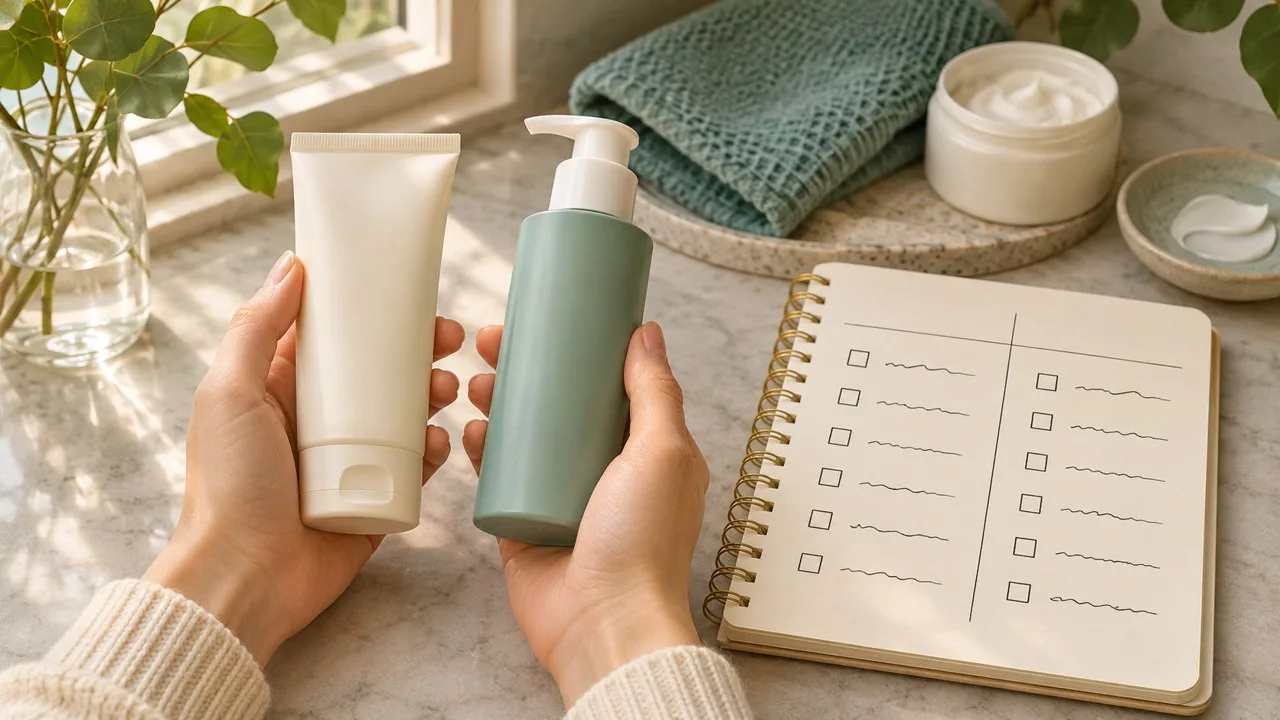
Keep a photo or transcription of both ingredient panels. Record the brand, variant, country and date. When comparing what you bought with an online listing, ask the seller which version the listing describes. A different variant or market can look like a reformulation.
Use an example to read the results
Suppose label A reads Aqua, Glycerin, Panthenol and label B reads Aqua, Glycerin, Allantoin. The names Aqua and Glycerin are shared. Panthenol appears only in A and Allantoin only in B. These invented lists give two shared names out of four distinct names, or 50% name overlap. That number measures the labels you copied.
Treat a name change as a lead
Compare the spelling, punctuation and complete names. If the name itself contains a comma, paste one ingredient per line. Check records in ingredient search (https://cosingchecker.com/search/) before treating two similar terms as the same. If the same names appear in a different order, report the printed order and leave concentrations unknown.
Make the comparison useful to someone else
In a review or support request, note which package or market changed and list the added and removed names separately. Keep your experience of the product in its own sentence. If you are tracing an ingredient you were advised to check, confirm the latest label and ask the manufacturer about any uncertainty.
Try it on your two labels
Open the INCI list comparison tool (https://cosingchecker.com/formula-compare/) For the EU label rules that affect how to interpret order, see Article 19 of Regulation 1223/2009 (https://eur-lex.europa.eu/legal-content/EN/TXT/?uri=CELEX%3A32009R1223)
Report an added ingredient without overstating it
Instead of inferring a performance change, record both package dates, whether the variant and market match, and which name appears only in the later label. If a product has a new size or scent, confirm that it belongs in the comparison. Save the ingredient records for the different names with the source photos.
Example: tell a formula difference from a spelling or package difference
Suppose your current bottle lists Allantoin, while a previous web listing shows Panthenol. Copy both complete lists, check the variant and market, and identify where and when each entry was obtained. An old listing may reflect a previous formula, a different product, or a copied description. Ask the brand to confirm which suite of names belongs to the current package.
With two verified lists, compare names and order independently. Keep any changed positions as observations and any confirmed additions or removals in a separate field. If an ingredient name is unfamiliar, follow its exact record. State what you observed without using the text comparison to estimate concentrations or claim a change in product performance.
Related records and guides: Compare two ingredient lists · How the EU ingredient order works.
Example: added, removed and moved are three different results
An older moisturizer lists Aqua, Glycerin, Panthenol and Citric Acid. A new carton retains Aqua and Glycerin, drops Panthenol and adds Allantoin. Record the surfaces, dates and full lists, then use the ingredient list comparison tool to see the added and removed names. If only shared ingredients change position, use the EU ingredient order guide before interpreting the change. A change in the printed list does not tell you whether the amount of a shared material or the supplier grade changed. If the evidence is an online photo, confirm it belongs to the same market and package as the item you bought.
What to ask the manufacturer
Give the size, variant and lot references from each pack. Ask whether both copies correspond to the current formula or whether the manufacturer can identify distinct versions. If the lists differ between a retailer page and your carton, preserve both images and consult the guide to checking an ingredient list against EU rules.
When the ingredient lists match but the products feel different
An exact text match tells you that the two copies show the same declared names. Two packages can still come from different lots, use different proportions or rely on different raw material grades. If the new product feels different, write down when you noticed the change, how each container dispenses and which label you followed. Keep “same declared names” and “different feel in use” as two findings. The comparison tool compares labels as text. For a claim about why the texture changed, ask the maker whether the formula, the raw materials or the dispenser changed between those particular versions.
关于本文
本文属于 CosIng Checker 博客,我们在此发布有关欧盟化妆品成分、附件 II–VI 限制、警示语、防腐剂、紫外线过滤剂、着色剂及相关合规主题的指南、笔记和实用解读。