
Methyl 2-Octynoate
Methyl 2-Octynoate 列于附件 III,只能在本记录所示条件下使用。 本记录中的最大浓度:(b) 0.01% when used alone When present in combination with methyl octine carbonate, the combined level in the finished product shall not exceed 0,01 % (of which methyl octine carbonate shall not be more than 0,002 %)。
该物质列于欧盟香料致敏原清单:在驻留类产品中超过 0.001%、在淋洗类产品中超过 0.01% 时,必须在成分表中单独列名,而不能仅以“parfum”一词涵盖。
标示是第 19 条规定的标签义务,而不是对使用的限制。 查看致敏原记录
记录详情
最大浓度
(b) 0.01% when used alone When present in combination with methyl octine carbonate, the combined level in the finished product shall not exceed 0,01 % (of which methyl octine carbonate shall not be more than 0,002 %)
其他限制
(a)(b)
The presence of the substance must be indicated in the list of ingredients referred to in Article 19(1)(g) when its concentration exceeds:
- 0.001% in leave-on products
- 0.01% in rinse-off products
化学名称
Methyl 2-Octynoate
化学名称 / IUPAC 名称
Methyl Oct-2-ynoate; Methyl heptine carbonate
监管信息
SCCS 意见
- Opinion concerning Essential Oils
- Opinion concerning Fragrance Allergy in Consumers - A Review of the Problem - Analysis of the need for appropriate Consumer Information and Identification of Consumer Allergens
- Opinion concerning the Interim Position on Fragrance Allergy
- Memorandum on the SCCNFP Opinion concerning Fragrance Allergy
- An Initial List of Perfumery Materials which must not form part of Cosmetic products except subject to the restrictions and conditions laid down
- Opinion on Clarifications to SCCNFP/0392/00 "An initial List of Perfumery Materials which must not form part of Cosmetic Products except subject to the Restrictions and Conditions laid down"
已识别的成分
关键数据
化学身份与性质
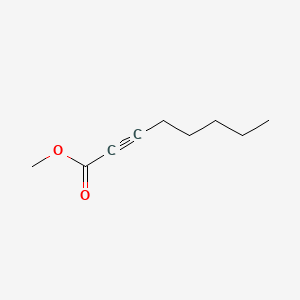
- IUPAC 名称
- methyl oct-2-ynoate
- 分子式
- C9H14O2
- 分子量
- 154.21 g/mol
- 精确质量
- 154.099379685 Da
- XLogP3
- 3.2
- 拓扑极性表面积
- 26.3 Ų
- 氢键供体
- 0
- 氢键受体
- 2
- 共价单元
- 1
- 已定义的立体中心
- 0
又称
另有 16 个已报告名称
外部数据库标识符
- ChEBI:CHEBI:168485
- ChEMBL:CHEMBL3185035
- EPA DTXSID:DTXSID9047093
- PubMed:26795242
- PubMed:22023385
- PubMed:20495907
- PubMed:20136892
- PubMed:17162413
- PubMed:12010023
来自其他科学数据库的证据
NIH PubChem PUG-View
Attributed physical-property, hazard, environmental and use annotations.
- Boiling Point: 217.00 to 220.00 °C. @ 760.00 mm Hg 来源: Human Metabolome Database (HMDB)
- Boiling Point: 215-217 °C 来源: Joint FAO/WHO Expert Committee on Food Additives (JECFA)
- Density: 0.919-0.924 来源: Joint FAO/WHO Expert Committee on Food Additives (JECFA)
- Physical Description: Colourless to slightly yellow liquid; Powerful, unpleasant odour. Violet like when diluted. 来源: Joint FAO/WHO Expert Committee on Food Additives (JECFA)
- Refractive Index: 1.443-1.449 来源: Joint FAO/WHO Expert Committee on Food Additives (JECFA)
- Solubility: Soluble in most fixed oils; Slightly soluble in propylene glycol; Insoluble in water, glycerin 来源: Joint FAO/WHO Expert Committee on Food Additives (JECFA)
- Solubility: Soluble (in ethanol) 来源: Joint FAO/WHO Expert Committee on Food Additives (JECFA)
- Signal: Warning 来源: European Chemicals Agency (ECHA)
- GHS Hazard Statements: H302 (97.3%): Harmful if swallowed [Warning Acute toxicity, oral]; H317 (97.4%): May cause an allergic skin reaction [Warning Sensitization, Skin] 来源: European Chemicals Agency (ECHA)
- Precautionary Statement Codes: P261, P264, P270, P272, P280, P301+P317, P302+P352, P321, P330, P333+P317, P362+P364, and P501 (click each P-code to see the statement) 来源: European Chemicals Agency (ECHA)
- ECHA C&L Notifications Summary: Aggregated GHS information provided per 1763 reports by companies from 10 notifications to the ECHA C&L Inventory. Each notification may be associated with multiple companies.; Information may vary between notifications depending on impurities, additives, and other factors. The percentage value in parenthesis indicates the notified classification ratio from companies that provide hazard codes. Only hazard codes with percentage values above 10% are shown. For more detailed information, please visit ECHA C&L website. 来源: European Chemicals Agency (ECHA)
- Signal: Warning 来源: Hazardous Chemical Information System (HCIS), Safe Work Australia
- GHS Hazard Statements: H317: May cause an allergic skin reaction [Warning Sensitization, Skin] 来源: Hazardous Chemical Information System (HCIS), Safe Work Australia
- Precautionary Statement Codes: P261, P272, P280, P302+P352, P321, P333+P317, P362+P364, and P501 (click each P-code to see the statement) 来源: Hazardous Chemical Information System (HCIS), Safe Work Australia
映射方: Existing checksum-valid CAS to unique PubChem CID match. 检索时间: 2026-08-31. 打开来源记录
科学分类和危害注释仅提供背景信息,不能取代上方所示针对具体市场的监管决定。
其他来源的覆盖范围和匹配状态
| 来源 | 结果 | 已检查 |
|---|---|---|
| NIH PubChem PUG-View | 精确匹配 | 2026-08-31 |
已记录的无匹配结果是该来源已被检查的有效证据;这并不表示该物质在别处不存在。
于 2026-09-02 通过校验和有效的 CAS 匹配从美国国立卫生研究院 (NIH) PubChem 检索。化学性质不能取代本页的监管决定。
Methyl 2-Octynoate 的清单链接
Methyl 2-Octynoate 的相关记录
POTASSIUM CHLORATE / SODIUM CHLORATE
附件 III 对 Methyl 2-Octynoate 意味着什么
Methyl 2-Octynoate 是欧盟化妆品法规 1223/2009 附件 III 中的限用物质。其在化妆品中的使用仅限于上方条目所列的特定条件,包括适用的浓度限值、产品类型限制和必须标示的警示语。
在配方中使用该物质时,必须同时满足所有条件——最大浓度、产品范围和警示标签。满足其中一项条件并不能免除其他条件。
本记录与 1 个 CosIng 清单成分相关联,便于名称和标识符的交叉引用。 本页还显示 12 条相关附件记录,其标识符、附件逻辑或命名模式存在重叠。
合规核查清单
- 确保配方浓度不超过:(b) 0.01% when used alone When present in combination with methyl octine carbonate, the combined level in the finished product shall not exceed 0,01 % (of which methyl octine carbonate shall not be more than 0,002 %)
- 确认产品类型相符:(a) Oral products (b) Other products
- 将使用条件记录在产品信息档案 (PIF) 中。
- 该物质是受监管的香料致敏原。在驻留类产品中高于 0.001%、在淋洗类产品中高于 0.01% 时,须以 INCI 名称在标签上标示。