
Citronellol
Citronellol/ (±) 3,7-Dimethyl-6-octen-1-ol; (3R)-3,7-dimethyloct-6-en-1-ol; (3S)-3,7-dimethyloct-6-en-1-ol;
Citronellol 列于附件 III,只能在本记录所示条件下使用。
该物质列于欧盟香料致敏原清单:在驻留类产品中超过 0.001%、在淋洗类产品中超过 0.01% 时,必须在成分表中单独列名,而不能仅以“parfum”一词涵盖。
标示是第 19 条规定的标签义务,而不是对使用的限制。 查看致敏原记录
记录详情
其他限制
The presence of the substance shall be indicated in the list of ingredients referred to in Article 19(1), point (g), when its concentration exceeds:
— 0,001 % in leave-on products
— 0,01 % in rinse-off products.
INCI 词汇表名称
Citronellol
化学名称
Citronellol/ (±) 3,7-Dimethyl-6-octen-1-ol; (3R)-3,7-dimethyloct-6-en-1-ol; (3S)-3,7-dimethyloct-6-en-1-ol;
监管信息
已识别的成分
关键数据
化学身份与性质
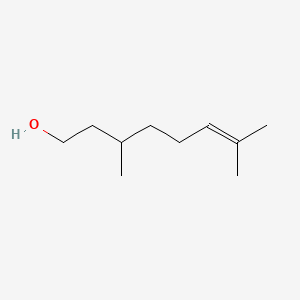
Citronellol
(±)-β-citronellol has been reported in Ambrosiozyma monospora, Artemisia princeps, and other organisms with data available. — LOTUS - the natural products occurrence database
- IUPAC 名称
- 3,7-dimethyloct-6-en-1-ol
- 分子式
- C10H20O
- 分子量
- 156.26 g/mol
- 精确质量
- 156.151415257 Da
- XLogP3
- 3.2
- 拓扑极性表面积
- 20.2 Ų
- 氢键供体
- 1
- 氢键受体
- 1
- 共价单元
- 1
- 已定义的立体中心
- 0
又称
另有 16 个已报告名称
外部数据库标识符
- ChEBI:CHEBI:50462
- ChEMBL:CHEMBL395827
- EPA DTXSID:DTXSID3026726
- PubMed:32513280
- PubMed:31926054
- PubMed:29445768
- PubMed:27607409
- PubMed:26944432
- PubMed:26795242
- PubMed:26456648
- PubMed:26141506
- PubMed:25414073
- PubMed:23449869
- PubMed:22945026
- PubMed:21819085
来自其他科学数据库的证据
EMBL-EBI ChEBI
citronellol
A monoterpenoid that is oct-6-ene substituted by a hydroxy group at position 1 and methyl groups at positions 3 and 7.
- 配方
- C10H20O
- 平均质量
- 156.269 g/mol
- 单同位素质量
- 156.15142 Da
- 形式电荷
- 0
- monoterpenoid — is a (CHEBI:25409)
- plant metabolite — has role (CHEBI:76924)
- plant metabolite — has role (CHEBI:76924)
- monoterpenoid — is a (CHEBI:25409)
- 20964319 来源: PubMed
其他整理的名称
来自此来源的交叉引用
- CAS: 106-22-9 — ChemIDplus
- CAS: 106-22-9 — NIST Chemistry WebBook
- REGISTRY_NUMBER: 1362474 — Reaxys
- MANUAL_X_REF: Citronellol — Wikipedia
映射方: Exact CAS cross-reference in the ChEBI compound record. 来源更新: 2015-08-17. 检索时间: 2026-08-31. 打开来源记录
NIH PubChem PUG-View
Attributed physical-property, hazard, environmental and use annotations.
- Boiling Point: 224 °C 来源: Hazardous Substances Data Bank (HSDB)
- Boiling Point: BP: 108-109 °C at 10 mm Hg; specific gravity: 1.4576 at 18/4 °C /(-)-Form/ 来源: Hazardous Substances Data Bank (HSDB)
- Boiling Point: 225 °C 来源: Joint FAO/WHO Expert Committee on Food Additives (JECFA)
- Color/Form: Colorless oily liquid 来源: Hazardous Substances Data Bank (HSDB)
- Density: 0.8550 g/cu cm at 20 °C 来源: Hazardous Substances Data Bank (HSDB)
- Density: 0.850-0.860 来源: Joint FAO/WHO Expert Committee on Food Additives (JECFA)
- LogP: log Kow = 3.91 来源: Hazardous Substances Data Bank (HSDB)
- Melting Point: <-20 °C 来源: Hazardous Substances Data Bank (HSDB)
- Odor: Fresh rosy odor 来源: Hazardous Substances Data Bank (HSDB)
- Odor: Rose odor 来源: Hazardous Substances Data Bank (HSDB)
- Physical Description: CBI; Liquid; Dry Powder; Liquid 来源: EPA Chemical Data Reporting (CDR)
- Physical Description: Colorless to pale yellow liquid with a sweet floral odor; [EPA BRADs] Colorless liquid with a rose-like odor; [Acros Organics MSDS] 来源: Haz-Map, Information on Hazardous Chemicals and Occupational Diseases
- Physical Description: colourless oily liquid; rose-like aroma 来源: Joint FAO/WHO Expert Committee on Food Additives (JECFA)
- Refractive Index: Index of refraction: 1.4559 at 20 °C 来源: Hazardous Substances Data Bank (HSDB)
- Refractive Index: 1.454-1.462 来源: Joint FAO/WHO Expert Committee on Food Additives (JECFA)
- Solubility: In water, 200 mg/L at 25 °C 来源: Hazardous Substances Data Bank (HSDB)
- Solubility: In water, 307 mg/L at 25 °C; 300 mg/L at 20 °C 来源: Hazardous Substances Data Bank (HSDB)
- Solubility: Soluble in fixed oils, propylene glycol; insoluble in glycerin 来源: Hazardous Substances Data Bank (HSDB)
- Solubility: Miscible in ethanol and ether /(+)-citronellol/; very soluble in ethanol and ether /(-)-citronellol/ 来源: Hazardous Substances Data Bank (HSDB)
- Solubility: Insoluble in glycerol; slightly soluble in water; soluble in most fixed oils, propylene glycol 来源: Joint FAO/WHO Expert Committee on Food Additives (JECFA)
- Solubility: soluble (in ethanol) 来源: Joint FAO/WHO Expert Committee on Food Additives (JECFA)
- Vapor Pressure: 0.04 [mmHg] 来源: Haz-Map, Information on Hazardous Chemicals and Occupational Diseases
- Vapor Pressure: 0.02 mm Hg at 25 °C 来源: Hazardous Substances Data Bank (HSDB)
- Viscosity: 11.1 mPa s (dynamic) at 20 °C; 5.33 mPa s (dynamic) at 40 °C 来源: Hazardous Substances Data Bank (HSDB)
- Signal: Warning 来源: European Chemicals Agency (ECHA)
- GHS Hazard Statements: H315 (95.7%): Causes skin irritation [Warning Skin corrosion/irritation]; H317 (99.6%): May cause an allergic skin reaction [Warning Sensitization, Skin]; H319 (65.1%): Causes serious eye irritation [Warning Serious eye damage/eye irritation]; H411 (15.8%): Toxic to aquatic life with long lasting effects [Hazardous to the aquatic environment, long-term hazard] 来源: European Chemicals Agency (ECHA)
- Precautionary Statement Codes: P261, P264, P264+P265, P272, P273, P280, P302+P352, P305+P351+P338, P321, P332+P317, P333+P317, P337+P317, P362+P364, P391, and P501 (click each P-code to see the statement) 来源: European Chemicals Agency (ECHA)
- ECHA C&L Notifications Summary: Aggregated GHS information provided per 1657 reports by companies from 29 notifications to the ECHA C&L Inventory. Each notification may be associated with multiple companies.; Information may vary between notifications depending on impurities, additives, and other factors. The percentage value in parenthesis indicates the notified classification ratio from companies that provide hazard codes. Only hazard codes with percentage values above 10% are shown. For more detailed information, please visit ECHA C&L website. 来源: European Chemicals Agency (ECHA)
- GHS Hazard Statements: H315 (100%): Causes skin irritation [Warning Skin corrosion/irritation]; H317 (100%): May cause an allergic skin reaction [Warning Sensitization, Skin]; H319 (17.5%): Causes serious eye irritation [Warning Serious eye damage/eye irritation] 来源: European Chemicals Agency (ECHA)
- Precautionary Statement Codes: P261, P264, P264+P265, P272, P280, P302+P352, P305+P351+P338, P321, P332+P317, P333+P317, P337+P317, P362+P364, and P501 (click each P-code to see the statement) 来源: European Chemicals Agency (ECHA)
- ECHA C&L Notifications Summary: Aggregated GHS information provided per 103 reports by companies from 4 notifications to the ECHA C&L Inventory. Each notification may be associated with multiple companies.; Information may vary between notifications depending on impurities, additives, and other factors. The percentage value in parenthesis indicates the notified classification ratio from companies that provide hazard codes. Only hazard codes with percentage values above 10% are shown. For more detailed information, please visit ECHA C&L website. 来源: European Chemicals Agency (ECHA)
- Signal: Warning 来源: Hazardous Substances Data Bank (HSDB)
- GHS Hazard Statements: H315: Causes skin irritation [Warning Skin corrosion/irritation]; H317: May cause an allergic skin reaction [Warning Sensitization, Skin]; H319: Causes serious eye irritation [Warning Serious eye damage/eye irritation]; H401: Toxic to aquatic life [Hazardous to the aquatic environment, acute hazard] 来源: Hazardous Substances Data Bank (HSDB)
- Precautionary Statement Codes: P261, P264, P264+P265, P272, P273, P280, P302+P352, P305+P351+P338, P321, P332+P317, P333+P317, P337+P317, P362+P364, and P501 (click each P-code to see the statement) 来源: Hazardous Substances Data Bank (HSDB)
- Toxicity Summary: IDENTIFICATION AND USE: Citronellol has been found in nature, and it has been reported in about 70 essential oils. It is registered for pesticide use in the USA but approved pesticide uses may change periodically and so federal, state and local authorities must be consulted for currently approved uses. It is also used in perfumery. HUMAN EXPOSURE AND TOXICITY: Adult male volunteers with no known allergic reactions were patch-tested on their back for 48 hr with 32% citronellol. After 48 hr, patches were removed and the skin was cleaned of any residual test material. Moderate irritation was observed. A patch test using a 1% concentration of citronellol in acetone gave a positive reaction in subjects allergic to citronella oil. ANIMAL STUDIES: Citronellol applied full strength to intact or abraded rabbit skin for 24 hr under occlusion was moderately irritating. Severe irritation was observed in rabbits and guinea pigs exposed to 100% compound (unoccluded) for 24, 48 or 72 hr. Citronellol was not mutagenic when tested in Salmonella typhimurium strains TA98 and TA100 in the presence and absence of metabolic activation. ECOTOXICITY STUDIES: Golden Orfe (Leuciscus idus) were exposed to th 来源: Hazardous Substances Data Bank (HSDB)
- Environmental Bioconcentration: An estimated BCF of 177 was calculated in fish for citronellol(SRC), using a log Kow of 3.91(1) and a regression-derived equation(2). According to a classification scheme(3), this BCF suggests the potential for bioconcentration in aquatic organisms is high(SRC), provided the compound is not metabolized by the organism(SRC). 来源: Hazardous Substances Data Bank (HSDB)
- Environmental Fate: TERRESTRIAL FATE: Based on a classification scheme(1), an estimated Koc value of 94(SRC), determined from a structure estimation method(2), indicates that citronellol is expected to have high mobility in soil(SRC). Volatilization of citronellol from moist soil surfaces is expected to be an important fate process(SRC) given an estimated Henry's Law constant of 2.1X10⁻⁵ atm-cu m/mole(SRC), derived from its vapor pressure, 0.02 mm Hg(3), and water solubility, 200 mg/L(4). Even though the vapor pressure is low environmentally at standard temperature and pressure, there is a detectable odor; therefore, citronellol may volatilize from dry soil(SRC). An 80-90% of Theoretical BOD using activated sludge in the OECD 301F test(5) suggests that biodegradation is an important environmental fate process in soil(SRC). Citronellol was also classified as readily biodegradable by the results of the OECD 301C test (modified MITI) with 65% degradation in 4 weeks(6) and by a DOC Method F test (100% biodegradation in 15 days)(6). Citronellol absorbs at wavelengths >290 nm(7) and, therefore, may be susceptible to direct photolysis on soil surfaces exposed to sunlight(SRC). 来源: Hazardous Substances Data Bank (HSDB)
- Environmental Fate: AQUATIC FATE: Based on a classification scheme(1), an estimated Koc value of 94(SRC), determined from a structure estimation method(2), indicates that citronellol is not expected to adsorb to suspended solids and sediment(SRC). Volatilization from water surfaces is expected(3) based upon an estimated Henry's Law constant of 2.1X10⁻⁵ atm-cu m/mole(SRC), derived from its vapor pressure, 0.02 mm Hg(4), and water solubility, 200 mg/L(5). Using this Henry's Law constant and an estimation method(3), volatilization half-lives for a model river and model lake are 2.4 and 21 days, respectively(SRC). According to a classification scheme(6), an estimated BCF of 177(SRC), from its log Kow of 3.91(7) and a regression-derived equation(2), suggests the potential for bioconcentration in aquatic organisms is high(SRC). An 80-90% of Theoretical BOD using activated sludge in the OECD 301F test(8) suggests that biodegradation is an important environmental fate process in water(SRC). Citronellol was also classified as readily biodegradable by the results of the OECD 301C test (modified MITI) with 65% degradation in 4 weeks(9) and by a DOC Method F test (100% biodegradation in 15 days)(9). Citronellol i 来源: Hazardous Substances Data Bank (HSDB)
- Environmental Fate: ATMOSPHERIC FATE: According to a model of gas/particle partitioning of semivolatile organic compounds in the atmosphere(1), citronellol, which has a vapor pressure of 0.02 mm Hg at 25 °C(2), is expected to exist solely as a vapor in the ambient atmosphere. Vapor-phase citronellol is degraded in the atmosphere by reaction with photochemically-produced hydroxyl radicals(SRC); the half-life for this reaction in air is estimated to be 2.3 hours(SRC), calculated from its rate constant of 1.70X10⁻¹⁰ cu cm/molecule-sec at 24 deg(3). Citronellol is also degraded in the atmosphere by reaction with ozone and nitrate radicals. The half-life for the reaction with ozone is estimated to be 1.1 hours(SRC), calculated from its rate constant of 2.4X10⁻¹⁶ cu cm/molecule-sec at 24 °C(3). The half-life for the reaction with nitrate radicals is estimated to be 4 minutes(SRC), calculated from its rate constant of 1.21X10⁻¹¹ cu cm/molecule-sec at 24 °C(4). The nitrate radical (NO3) is the dominant atmospheric oxidant during the night-time in most atmospheric environments(5), therefore, night-time degradation appears to be a major fate process for citronellol(SRC). Citronellol absorbs at wavelengths >290 来源: Hazardous Substances Data Bank (HSDB)
- Consumer Uses: Fragrance; Odor agents 来源: EPA Chemical Data Reporting (CDR)
- Industry Uses: Other; Intermediate; Odor agents; Fragrance 来源: EPA Chemical Data Reporting (CDR)
- Sources/Uses: l-Form: in rose and geranium oils; d-Form: in Ceylon and Java citronella oils; Used in perfumery; [Merck Index] Permitted for use as an inert ingredient in non-food pesticide products; [EPA] Present in over 30 essential oils, fruits, edible plants, wine, beer, and black tea; Active ingredient in pesticide used to control mites on agricultural crops, ornamentals, and landscapes; Also extensively used as fragrance (detergents, soaps, lotions, perfumes, etc.), as a flavoring agent, and component of citronella oil (used in candles, sprays, oils, and insect repellents); [EPA BRADs] 来源: Haz-Map, Information on Hazardous Chemicals and Occupational Diseases
- Industrial Processes with risk of exposure: Farming (Pesticides) [Category: Industry] 来源: Haz-Map, Information on Hazardous Chemicals and Occupational Diseases
- Uses: For citronellol (USEPA/OPP Pesticide Code: 167004) ACTIVE products with label matches. /SRP: Registered for use in the USA but approved pesticide uses may change periodically and so federal, state and local authorities must be consulted for currently approved uses./ 来源: Hazardous Substances Data Bank (HSDB)
- Uses: Reported uses (ppm):; Table: Reported uses (ppm): (Flavor and Extract Manufacturers' Association, 1994) [Table#6302] 来源: Hazardous Substances Data Bank (HSDB)
- Uses: In perfumery 来源: Hazardous Substances Data Bank (HSDB)
- Uses: Citronellol is one of the components responsible for the insect repellent properties of citronella oil ... Citronellol finds extensive use in floral fragrances and in flavors for citrus and other fruit notes. Its stability makes it particularly useful in fragrances for soaps, detergents, and other household products. Citronellol is also important as an intermediate in the synthesis of a number of other aroma chemicals ... Citronellol is the key feedstock for the synthesis of rose oxide. 来源: Hazardous Substances Data Bank (HSDB)
- Uses: Citronellol is one of the most widely used fragrance materials, particularly for rose notes and for floral compositions in general. As flavor material, citronellol is added for bouquetting purposes to citrus compositions. It is the starting material for numerous citronellyl esters and for hydroxydihydrocitronellol, an intermediate in the production of hydroxydihydrocitronellal. 来源: Hazardous Substances Data Bank (HSDB)
映射方: Existing checksum-valid CAS to unique PubChem CID match. 检索时间: 2026-08-31. 打开来源记录
科学分类和危害注释仅提供背景信息,不能取代上方所示针对具体市场的监管决定。
其他来源的覆盖范围和匹配状态
| 来源 | 结果 | 已检查 |
|---|---|---|
| EMBL-EBI ChEBI | 精确匹配 | 2026-08-31 |
| NIH PubChem PUG-View | 精确匹配 | 2026-08-31 |
已记录的无匹配结果是该来源已被检查的有效证据;这并不表示该物质在别处不存在。
于 2026-09-02 通过校验和有效的 CAS 匹配从美国国立卫生研究院 (NIH) PubChem 检索。化学性质不能取代本页的监管决定。
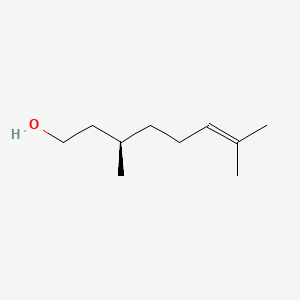
beta-CITRONELLOL, (R)-
(R)-(+)-citronellol is a citronellol that is oct-6-ene substituted by a hydroxy group at position 1 and methyl groups at positions 3 and 7 (the 3R-enantiomer). It is an enantiomer of a (S)-(-)-citronellol. — ChEBI
- IUPAC 名称
- (3R)-3,7-dimethyloct-6-en-1-ol
- 分子式
- C10H20O
- 分子量
- 156.26 g/mol
- 精确质量
- 156.151415257 Da
- XLogP3
- 3.2
- 拓扑极性表面积
- 20.2 Ų
- 氢键供体
- 1
- 氢键受体
- 1
- 共价单元
- 1
- 已定义的立体中心
- 1
又称
另有 16 个已报告名称
外部数据库标识符
- ChEBI:CHEBI:10360
- ChEMBL:CHEMBL1907993
- EPA DTXSID:DTXSID00880647
- PubMed:23074914
- PubMed:23030436
- PubMed:22945026
- PubMed:22816268
- PubMed:22805839
- PubMed:22675581
- PubMed:22606039
- PubMed:22553389
- PubMed:22510493
- PubMed:22493851
- PubMed:22408409
- PubMed:22393330
来自其他科学数据库的证据
NIH PubChem PUG-View
Attributed physical-property, hazard, environmental and use annotations.
- Boiling Point: 221.00 to 224.00 °C. @ 760.00 mm Hg 来源: Human Metabolome Database (HMDB)
- Physical Description: Liquid 来源: EPA Chemical Data Reporting (CDR)
- Physical Description: Colorless viscous liquid; [Sigma-Aldrich MSDS] 来源: Haz-Map, Information on Hazardous Chemicals and Occupational Diseases
- Vapor Pressure: 0.02 [mmHg] 来源: Haz-Map, Information on Hazardous Chemicals and Occupational Diseases
- Signal: Warning 来源: European Chemicals Agency (ECHA)
- GHS Hazard Statements: H315 (100%): Causes skin irritation [Warning Skin corrosion/irritation]; H317 (86%): May cause an allergic skin reaction [Warning Sensitization, Skin]; H319 (36.2%): Causes serious eye irritation [Warning Serious eye damage/eye irritation]; H335 (14%): May cause respiratory irritation [Warning Specific target organ toxicity, single exposure; Respiratory tract irritation] 来源: European Chemicals Agency (ECHA)
- Precautionary Statement Codes: P261, P264, P264+P265, P271, P272, P280, P302+P352, P304+P340, P305+P351+P338, P319, P321, P332+P317, P333+P317, P337+P317, P362+P364, P403+P233, P405, and P501 (click each P-code to see the statement) 来源: European Chemicals Agency (ECHA)
- ECHA C&L Notifications Summary: Aggregated GHS information provided per 279 reports by companies from 6 notifications to the ECHA C&L Inventory. Each notification may be associated with multiple companies.; Information may vary between notifications depending on impurities, additives, and other factors. The percentage value in parenthesis indicates the notified classification ratio from companies that provide hazard codes. Only hazard codes with percentage values above 10% are shown. For more detailed information, please visit ECHA C&L website. 来源: European Chemicals Agency (ECHA)
- Consumer Uses: Odor agents 来源: EPA Chemical Data Reporting (CDR)
- Industry Uses: Odor agents 来源: EPA Chemical Data Reporting (CDR)
映射方: Existing checksum-valid CAS to unique PubChem CID match. 检索时间: 2026-08-31. 打开来源记录
科学分类和危害注释仅提供背景信息,不能取代上方所示针对具体市场的监管决定。
其他来源的覆盖范围和匹配状态
| 来源 | 结果 | 已检查 |
|---|---|---|
| NIH PubChem PUG-View | 精确匹配 | 2026-08-31 |
已记录的无匹配结果是该来源已被检查的有效证据;这并不表示该物质在别处不存在。
于 2026-09-02 通过校验和有效的 CAS 匹配从美国国立卫生研究院 (NIH) PubChem 检索。化学性质不能取代本页的监管决定。
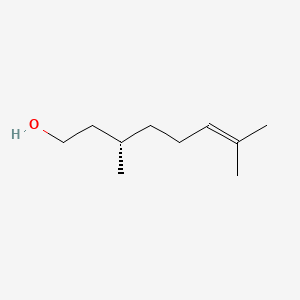
Beta-citronellol, (S)-
(S)-(-)-citronellol is a citronellol that is oct-6-ene substituted by a hydroxy group at position 1 and methyl groups at positions 3 and 7 (the 3S-enantiomer). It is an enantiomer of a (R)-(+)-citronellol. — ChEBI
- IUPAC 名称
- (3S)-3,7-dimethyloct-6-en-1-ol
- 分子式
- C10H20O
- 分子量
- 156.26 g/mol
- 精确质量
- 156.151415257 Da
- XLogP3
- 3.2
- 拓扑极性表面积
- 20.2 Ų
- 氢键供体
- 1
- 氢键受体
- 1
- 共价单元
- 1
- 已定义的立体中心
- 1
又称
另有 16 个已报告名称
外部数据库标识符
于 2026-09-02 通过校验和有效的 CAS 匹配从美国国立卫生研究院 (NIH) PubChem 检索。化学性质不能取代本页的监管决定。
Citronellol 的清单链接
CITRONELLOL
Citronellol 的相关记录
该记录的直接匹配结果有限,因此同时显示附件 III 中的相邻条目。
Limonene
附件 III 对 Citronellol 意味着什么
Citronellol 是欧盟化妆品法规 1223/2009 附件 III 中的限用物质。其在化妆品中的使用仅限于上方条目所列的特定条件,包括适用的浓度限值、产品类型限制和必须标示的警示语。
在配方中使用该物质时,必须同时满足所有条件——最大浓度、产品范围和警示标签。满足其中一项条件并不能免除其他条件。
本记录与 3 个 CosIng 清单成分相关联,便于名称和标识符的交叉引用。 本页还显示 12 条相关附件记录,其标识符、附件逻辑或命名模式存在重叠。
合规核查清单
- 将使用条件记录在产品信息档案 (PIF) 中。
- 该物质是受监管的香料致敏原。在驻留类产品中高于 0.001%、在淋洗类产品中高于 0.01% 时,须以 INCI 名称在标签上标示。