
CHLORINE DIOXIDE
Chlorine Dioxide is the inorganic compound.
CHLORINE DIOXIDE 列于欧盟 CosIng 清单,但本页尚未关联任何直接的附件记录。
按市场划分的监管证据
此处跟踪的 13 个市场均未导入该成分的规则。
这描述的是本清单,而非法律。没有已导入的规则并不能证明某成分获准使用:规则可能以其他名称或标识符存在,或存在于尚未在此导入的数据集中。
CHLORINE DIOXIDE 的清单详情
INCI 名称
CHLORINE DIOXIDE
说明
Chlorine Dioxide is the inorganic compound.
CHLORINE DIOXIDE 的附件记录
关键数据
- ANTIMICROBIAL
Preventing and/or slowing down microbial growth.
- DEODORANT
Reducing and/or eliminating unpleasant odour. Contributing against the formation of malodour on body surfaces.
化学身份与性质
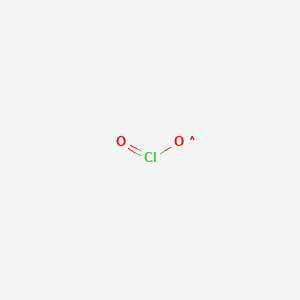
- 分子式
- ClO2
- 分子量
- 67.45 g/mol
- 精确质量
- 66.9586819 Da
- XLogP3
- 1.4
- 拓扑极性表面积
- 18.1 Ų
- 氢键供体
- 0
- 氢键受体
- 1
- 共价单元
- 1
- 已定义的立体中心
- 0
又称
另有 16 个已报告名称
外部数据库标识符
- ChEBI:CHEBI:29415
- EPA DTXSID:DTXSID5023958
- PubMed:30395996
- PubMed:23591108
- PubMed:15016528
来自其他科学数据库的证据
EMBL-EBI ChEBI
dioxidochlorine(•)
- 配方
- ClO2
- 平均质量
- 67.451 g/mol
- 单同位素质量
- 66.95868 Da
- 形式电荷
- 0
- chlorine dioxide — is a (CHEBI:52357)
- chlorine dioxide — is a (CHEBI:52357)
其他整理的名称
来自此来源的交叉引用
- CAS: 10049-04-4 — NIST Chemistry WebBook
- CAS: 10049-04-4 — KEGG COMPOUND
- REGISTRY_NUMBER: 1265 — Gmelin
- MANUAL_X_REF: C18368 — KEGG COMPOUND
映射方: Exact CAS cross-reference in the ChEBI compound record. 来源更新: 2014-08-03. 检索时间: 2026-08-31. 打开来源记录
NIH PubChem PUG-View
Attributed physical-property, hazard, environmental and use annotations.
- Boiling Point: 52 °F at 760 mmHg (NIOSH, 2024) 来源: CAMEO Chemicals
- Boiling Point: 11 °C 来源: Hazardous Substances Data Bank (HSDB)
- Boiling Point: 11 °C 来源: ILO-WHO International Chemical Safety Cards (ICSCs)
- Boiling Point: 52 °F 来源: Occupational Safety and Health Administration (OSHA)
- Boiling Point: 11 °C @760 [mm Hg] 来源: PAC Chemical Database, U.S. Department of Energy
- Boiling Point: 52 °F 来源: The National Institute for Occupational Safety and Health (NIOSH)
- Color/Form: Yellowish-brown gas 来源: Hazardous Substances Data Bank (HSDB)
- Color/Form: Yellow to reddish-yellow gas at room temperature 来源: Hazardous Substances Data Bank (HSDB)
- Color/Form: Solid chlorine dioxide is a yellowish-red crystalline mass; liquid is reddish-brown 来源: Hazardous Substances Data Bank (HSDB)
- Color/Form: Yellow to red gas or a red-brown liquid (below 52 degrees F) ... 来源: Hazardous Substances Data Bank (HSDB)
- Color/Form: For more Color/Form (Complete) data for Chlorine dioxide (6 total), please visit the HSDB record page. 来源: Hazardous Substances Data Bank (HSDB)
- Density: 1.6 (Liquid at 32 °F) (NIOSH, 2024) - Denser than water; will sink 来源: CAMEO Chemicals
- Density: 1.77 g/cu cm 来源: Hazardous Substances Data Bank (HSDB)
- Density: Density: 1.642 at 0 °C (liq) 来源: Hazardous Substances Data Bank (HSDB)
- Density: Relative density (water = 1): 1.6 (liquid, 0 °C) 来源: ILO-WHO International Chemical Safety Cards (ICSCs)
- Density: 1.6 (liquid at 32 °F) 来源: Occupational Safety and Health Administration (OSHA)
- Density: 3.09 @ 11°C 来源: PAC Chemical Database, U.S. Department of Energy
- Density: 1.6 (Liquid at 32 °F) 来源: The National Institute for Occupational Safety and Health (NIOSH)
- Density: 2.33(relative gas density) 来源: The National Institute for Occupational Safety and Health (NIOSH)
- Flash Point: NA (Gas) ? (Liquid) 来源: The National Institute for Occupational Safety and Health (NIOSH)
- Melting Point: -74 °F (NIOSH, 2024) 来源: CAMEO Chemicals
- Melting Point: -59 °C 来源: Hazardous Substances Data Bank (HSDB)
- Melting Point: -59 °C 来源: Human Metabolome Database (HMDB)
- Melting Point: -59 °C 来源: ILO-WHO International Chemical Safety Cards (ICSCs)
- Melting Point: -74 °F 来源: Occupational Safety and Health Administration (OSHA)
- Melting Point: -59 °C 来源: PAC Chemical Database, U.S. Department of Energy
- Melting Point: -74 °F 来源: The National Institute for Occupational Safety and Health (NIOSH)
- Odor: ... Unpleasant odor similar to chlorine and nitric acid. 来源: Hazardous Substances Data Bank (HSDB)
- Physical Description: Chlorine dioxide hydrate, frozen is an orange colored solid, appearing as a block of ice, with a faint odor of chlorine. It may only be shipped in the frozen state and then only by private or contract motor carrier. The melting point of the hydrate is around 30 °F. If it should thaw and further warm up, chlorine dioxide gas is given off. The gas is toxic by inhalation. The gas and liquid are violently decomposed by organic materials. The gas will decompose explosively at temperatures below the boiling point of water. It is used to bleach wood pulp, fats and oils; in processing flour, and for water purification. Chlorine dioxide is a yellow to reddish gas or a red-brown liquid below 52 deg. F. with an unpleasant odor similar to chlorine. 来源: CAMEO Chemicals
- Physical Description: Liquid; Gas Vapor 来源: EPA Chemical Data Reporting (CDR)
- Physical Description: Yellow to red gas or a red-brown liquid (below 52 degrees F) with an unpleasant odor similar to chlorine and nitric acid; [NIOSH] Vapor density = 2.3 (heavier than air); [ACGIH] 来源: Haz-Map, Information on Hazardous Chemicals and Occupational Diseases
- Physical Description: Liquid 来源: Human Metabolome Database (HMDB)
- Physical Description: RED-YELLOW GAS WITH PUNGENT ODOUR. 来源: ILO-WHO International Chemical Safety Cards (ICSCs)
- Physical Description: Yellow to red gas or a red-brown liquid (below 52 °F) with an unpleasant odor similar to chlorine and nitric acid. 来源: Occupational Safety and Health Administration (OSHA)
- Physical Description: Yellow to red gas or a red-brown liquid (below 52 °F) with an unpleasant odor similar to chlorine and nitric acid. 来源: The National Institute for Occupational Safety and Health (NIOSH)
- Solubility: 0.3 % at 77 °F (NIOSH, 2024) 来源: CAMEO Chemicals
- Solubility: In water, 3.01 g/L at 25 °C and 34.5 mm Hg 来源: Hazardous Substances Data Bank (HSDB)
- Solubility: 2000 cc (gas) in 100 cc cold water 来源: Hazardous Substances Data Bank (HSDB)
- Solubility: In water, 1.823X10⁻² at 298.15 K 来源: Hazardous Substances Data Bank (HSDB)
- Solubility: Soluble in water 来源: Hazardous Substances Data Bank (HSDB)
- Solubility: Soluble in alkaline and sulfuric acid solutions 来源: Hazardous Substances Data Bank (HSDB)
- Solubility: Solubility in water, g/100ml at 20 °C: 0.8 来源: ILO-WHO International Chemical Safety Cards (ICSCs)
- Solubility: (77 °F): 0.3% 来源: The National Institute for Occupational Safety and Health (NIOSH)
- Vapor Pressure: greater than 1 atm (NIOSH, 2024) 来源: CAMEO Chemicals
- Vapor Pressure: 101 kPa at 20 °C /758 mm Hg at 20 °C/ 来源: Hazardous Substances Data Bank (HSDB)
- Vapor Pressure: Vapor pressure, kPa at 20 °C: 101 来源: ILO-WHO International Chemical Safety Cards (ICSCs)
- Vapor Pressure: >1 atm 来源: Occupational Safety and Health Administration (OSHA)
- Vapor Pressure: >1 atm 来源: The National Institute for Occupational Safety and Health (NIOSH)
- Exposure Routes: The substance can be absorbed into the body by inhalation. 来源: ILO-WHO International Chemical Safety Cards (ICSCs)
- Exposure Routes: inhalation, ingestion (liquid), skin and/or eye contact 来源: The National Institute for Occupational Safety and Health (NIOSH)
- First Aid: Excerpt from NIOSH Pocket Guide for Chlorine dioxide:; Eye: IRRIGATE IMMEDIATELY (LIQUID) - If this chemical in liquid form contacts the eyes, immediately wash (irrigate) the eyes with large amounts of water, occasionally lifting the lower and upper lids. Get medical attention immediately.; Skin: SOAP WASH IMMEDIATELY (LIQUID) - If this chemical in liquid form contacts the skin, immediately wash the contaminated skin with soap and water. If this chemical penetrates the clothing, immediately remove the clothing, wash the skin with soap and water, and get medical attention promptly.; Breathing: RESPIRATORY SUPPORT - If a person breathes large amounts of this chemical, move the exposed person to fresh air at once. If breathing has stopped, perform artificial respiration. Keep the affected person warm and at rest. Get medical attention as soon as possible.; Swallow: MEDICAL ATTENTION IMMEDIATELY (LIQUID) - If this chemical in liquid form has been swallowed, get medical attention immediately. (NIOSH, 2024) 来源: CAMEO Chemicals
- First Aid: (General first aid procedures); Eye: Irrigate immediately (liquid); Skin: Soap wash immediately (liquid); Breathing: Respiratory support; Swallow: Medical attention immediately (liquid) 来源: The National Institute for Occupational Safety and Health (NIOSH)
- Signal: Danger 来源: Regulation (EC) No 1272/2008 of the European Parliament and of the Council
- GHS Hazard Statements: H270: May cause or intensify fire; oxidizer [Danger Oxidizing gases]; H314: Causes severe skin burns and eye damage [Danger Skin corrosion/irritation]; H330: Fatal if inhaled [Danger Acute toxicity, inhalation]; H400: Very toxic to aquatic life [Warning Hazardous to the aquatic environment, acute hazard] 来源: Regulation (EC) No 1272/2008 of the European Parliament and of the Council
- Precautionary Statement Codes: P220, P244, P260, P264, P271, P273, P280, P284, P301+P330+P331, P302+P361+P354, P304+P340, P305+P354+P338, P316, P320, P321, P363, P370+P376, P391, P403, P403+P233, P405, and P501 (click each P-code to see the statement) 来源: Regulation (EC) No 1272/2008 of the European Parliament and of the Council
- GHS Hazard Statements: H301: Toxic if swallowed [Danger Acute toxicity, oral]; H314: Causes severe skin burns and eye damage [Danger Skin corrosion/irritation]; H400: Very toxic to aquatic life [Warning Hazardous to the aquatic environment, acute hazard] 来源: Regulation (EC) No 1272/2008 of the European Parliament and of the Council
- Precautionary Statement Codes: P260, P264, P270, P273, P280, P301+P316, P301+P330+P331, P302+P361+P354, P304+P340, P305+P354+P338, P316, P321, P330, P363, P391, P405, and P501 (click each P-code to see the statement) 来源: Regulation (EC) No 1272/2008 of the European Parliament and of the Council
- Signal: Danger 来源: European Chemicals Agency (ECHA)
- GHS Hazard Statements: H270 (29.9%): May cause or intensify fire; oxidizer [Danger Oxidizing gases]; H280 (29.2%): Contains gas under pressure; may explode if heated [Warning Gases under pressure]; H301 (72.1%): Toxic if swallowed [Danger Acute toxicity, oral]; H314 (76.2%): Causes severe skin burns and eye damage [Danger Skin corrosion/irritation]; H318 (46.3%): Causes serious eye damage [Danger Serious eye damage/eye irritation]; H319 (24%): Causes serious eye irritation [Warning Serious eye damage/eye irritation]; H330 (29.9%): Fatal if inhaled [Danger Acute toxicity, inhalation]; H332 (15.9%): Harmful if inhaled [Warning Acute toxicity, inhalation]; H400 (76.2%): Very toxic to aquatic life [Warning Hazardous to the aquatic environment, acute hazard] 来源: European Chemicals Agency (ECHA)
- Precautionary Statement Codes: P220, P244, P260, P261, P264, P264+P265, P270, P271, P273, P280, P284, P301+P316, P301+P330+P331, P302+P361+P354, P304+P340, P305+P351+P338, P305+P354+P338, P316, P317, P320, P321, P330, P337+P317, P363, P370+P376, P391, P403, P403+P233, P405, P410+P403, and P501 (click each P-code to see the statement) 来源: European Chemicals Agency (ECHA)
- ECHA C&L Notifications Summary: Aggregated GHS information provided per 542 reports by companies from 16 notifications to the ECHA C&L Inventory. Each notification may be associated with multiple companies.; Information may vary between notifications depending on impurities, additives, and other factors. The percentage value in parenthesis indicates the notified classification ratio from companies that provide hazard codes. Only hazard codes with percentage values above 10% are shown. For more detailed information, please visit ECHA C&L website. 来源: European Chemicals Agency (ECHA)
- Signal: Danger 来源: NITE-CMC
- GHS Hazard Statements: H314: Causes severe skin burns and eye damage [Danger Skin corrosion/irritation] 来源: NITE-CMC
- Precautionary Statement Codes: P260, P264, P280, P301+P330+P331, P302+P361+P354, P304+P340, P305+P354+P338, P316, P321, P363, P405, and P501 (click each P-code to see the statement) 来源: NITE-CMC
- Target Organs: Developmental (effects while organs are developing), Gastrointestinal (Stomach and Intestines, part of the digestive system), Respiratory (From the Nose to the Lungs) 来源: Agency for Toxic Substances and Disease Registry (ATSDR)
- Target Organs: Cardiovascular; Developmental; Nervous; Respiratory 来源: EPA Integrated Risk Information System (IRIS)
- Target Organs: Eyes, respiratory system 来源: The National Institute for Occupational Safety and Health (NIOSH)
- Toxicity Summary: IDENTIFICATION AND USE: Chlorine dioxide is a yellowish-brown gas with unpleasant odor similar to chlorine and nitric acid. Its uses include bleaching cellulose, paper-pulp, flour, leather, fats and oils, textiles, and beeswax. It is also used for purification of water, taste and odor control of water, cleaning and detanning leather, in the manufacture of chloride salts, and as an oxidizing agent, bactericide, antiseptic and deodorizer. Chlorine dioxide was found to be highly effective against various microorganisms tested at very low concentrations in a minimum contact time of 30 to 60 seconds. HUMAN STUDIES: Potential symptoms of overexposure are irritation of eyes, nose, and throat, as well as coughing, wheezing, bronchitis, and pulmonary edema. Workers industrially exposed to low concentrations of the gas in air have been noted occasionally to suffer from irritation of the eyes and to see haloes about lights, but these effects have been minor compared to respiratory irritation. Bronchoscopy and biopsy revealed slight chronic bronchitis in 7 of 12 workers. Only two workers who had been exposed just prior to examination showed physical signs of respiratory effects. Workers acutel 来源: Hazardous Substances Data Bank (HSDB)
- Environmental Fate: Hydrogen peroxide (H2O2), chlorite, chlorate, Cl2O3, oxygen (O2), and chlorine have all been reported as intermediates or products /of chlorine dioxide breakdown/. Presumably chlorine dioxide will not persist in open basins or reservoirs, although it can remain for days in clean distribution systems. 来源: Hazardous Substances Data Bank (HSDB)
- Environmental Fate: It is generally accepted that the predominant reaction product of chlorine dioxide in water treatment is chlorite and that chlorate and other ions are produced in minor amounts ... an approximately 50% conversion of chlorine dioxide to chlorite was reported ... /in/ water containing natural humic acids. 来源: Hazardous Substances Data Bank (HSDB)
- Environmental Fate: Chlorine dioxide does not cause formation of trihalomethanes, does not react with ammonia, and does not cause formation of chloramines. It can ... disproportionate to chlorate and chlorite ... by raising pH to 11 or 12 ... this is not believed to be an important reaction in water undergoing treatment. 来源: Hazardous Substances Data Bank (HSDB)
- Environmental Fate: /Products formed during oxidative treatment of water/: both oxygenated and chlorinated products may be formed, the latter being found most prominently in connection with reactions of phenolic substances. Other products that might affect health are quinones and 1,2-epoxy compounds. 来源: Hazardous Substances Data Bank (HSDB)
- Industry Uses: Processing aids not otherwise specified; Bleaching agent; Sealant (barrier); Oxidizing agent 来源: EPA Chemical Data Reporting (CDR)
- Sources/Uses: Used in bleaching wood pulp (95% of use); Also used in bleaching textiles; disinfecting hospital equipment; disinfecting fruits, vegetables, and meats; and treating municipal water; [ACGIH] 来源: Haz-Map, Information on Hazardous Chemicals and Occupational Diseases
- Industrial Processes with risk of exposure: Pulp and Paper Processing [Category: Industry]; Textiles (Fiber & Fabric Manufacturing) [Category: Industry]; Using Disinfectants or Biocides [Category: Clean]; Sewer and Wastewater Treatment [Category: Industry]; Toxic Gas from Spilling Chemical in Water [Category: Other] 来源: Haz-Map, Information on Hazardous Chemicals and Occupational Diseases
- Uses: For chlorine dioxide (USEPA/OPP Pesticide Code: 020503) ACTIVE products with label matches. /SRP: Registered for use in the U.S. but approved pesticide uses may change periodically and so federal, state and local authorities must be consulted for currently approved uses./ 来源: Hazardous Substances Data Bank (HSDB)
- Uses: Bleaching cellulose, paper-pulp, flour, leather, fats and oils, textiles, beeswax; purification of water; taste and odor control of water; cleaning and detanning leather; manufacture of chloride salts; oxidizing agent; bactericide, antiseptic and deodorizer. 来源: Hazardous Substances Data Bank (HSDB)
- Uses: The agricultural premises and equipment uses include the disinfection of hard surfaces and equipment (such as hatching facilities and mushroom houses) and water systems (such as chiller water and humidification water in poultry houses). 来源: Hazardous Substances Data Bank (HSDB)
- Uses: Commercial, industrial, and medical uses include disinfection of ventilation systems, hard surfaces (e.g., floors, walls, and laboratory equipment), water systems, pulp/paper mills, and food rinses. 来源: Hazardous Substances Data Bank (HSDB)
- Uses: For more Uses (Complete) data for Chlorine dioxide (7 total), please visit the HSDB record page. 来源: Hazardous Substances Data Bank (HSDB)
映射方: Existing checksum-valid CAS to unique PubChem CID match. 检索时间: 2026-08-31. 打开来源记录
科学分类和危害注释仅提供背景信息,不能取代上方所示针对具体市场的监管决定。
其他来源的覆盖范围和匹配状态
| 来源 | 结果 | 已检查 |
|---|---|---|
| EMBL-EBI ChEBI | 精确匹配 | 2026-08-31 |
| NIH PubChem PUG-View | 精确匹配 | 2026-08-31 |
已记录的无匹配结果是该来源已被检查的有效证据;这并不表示该物质在别处不存在。
于 2026-08-31 通过校验和有效的 CAS 匹配从美国国立卫生研究院 (NIH) PubChem 检索。化学性质不能取代本页的监管决定。
欧盟官方成分名称证据
该成分名称与 2025 年欧盟官方通用成分名称词汇表完全匹配。
相关清单证据
配方功能重叠的成分
其他官方和科学来源
11 个可用于核查此身份的外部数据库
每个链接都会在该来源中搜索此身份。 各来源是什么及其法律效力
CHLORINE DIOXIDE 在 CosIng 清单中的呈现方式
CosIng 清单将 CHLORINE DIOXIDE 列为化妆品成分,本页将其关联到 0 条附件记录。清单条目记录名称和标识符,而附件记录显示该物质在欧盟化妆品法规中被禁用、限用或列入准用清单的情况。
在官方数据中,CHLORINE DIOXIDE 还被标记了 2 项化妆品功能。功能标识描述预期用途,但不能取代在配方或标签工作之前对关联附件记录的监管审查。