
CETYLPYRIDINIUM CHLORIDE
1-Hexadecylpyridinium chloride
CETYLPYRIDINIUM CHLORIDE 列于欧盟 CosIng 清单,但本页尚未关联任何直接的附件记录。
按市场划分的监管证据
此矩阵将已核实的成分规则与已映射但尚未导入的来源区分开。没有已导入的规则并不意味着该成分获准使用。
滑动或横向滚动以查看所有列。
| 市场 | 证据状态 | 记录 | 来源语言 |
|---|---|---|---|
| European Union | 来源已映射 Inventory entry; no linked annex rule | 0 | English and EU languages |
| Great Britain | 来源已映射 Official source mapped; ingredient rule not imported | 0 | English |
| Canada | 来源已映射 Official source mapped; ingredient rule not imported | 0 | English and French |
| New Zealand | 来源已映射 Official source mapped; ingredient rule not imported | 0 | English |
| ASEAN | 来源已映射 Official source mapped; ingredient rule not imported | 0 | English and national languages |
| China | 来源已映射 Official source mapped; ingredient rule not imported | 0 | Chinese with selected English material |
| Japan | 已关联证据 Restricted 打开此证据 | 1 | Japanese; official English translation available |
| South Korea | 已关联证据 Restricted 打开此证据 | 1 | Korean with some English names |
| United States | 来源已映射 Official source mapped; ingredient rule not imported | 0 | English |
| Australia | 来源已映射 Official source mapped; ingredient rule not imported | 0 | English |
| Brazil | 来源已映射 Official source mapped; ingredient rule not imported | 0 | Portuguese with INCI crosswalks |
| India | 来源已映射 Official source mapped; ingredient rule not imported | 0 | English and Hindi |
| Saudi Arabia | 来源已映射 Official source mapped; ingredient rule not imported | 0 | Arabic and English |
CETYLPYRIDINIUM CHLORIDE 的清单详情
INCI 名称
CETYLPYRIDINIUM CHLORIDE
INN 名称
cetylpyridinium chloride
Ph. Eur. 名称
cetylpyridinii chloridum
说明
1-Hexadecylpyridinium chloride
CETYLPYRIDINIUM CHLORIDE 的附件记录
关键数据
- ANTIMICROBIAL
Preventing and/or slowing down microbial growth.
- ANTISTATIC
Preventing and/or reducing static electricity by neutralising electrical charge on surfaces.
- DEODORANT
Reducing and/or eliminating unpleasant odour. Contributing against the formation of malodour on body surfaces.
- HAIR CONDITIONING
Enhancing the appearance and feel of hair. Leaving the hair easy to comb, supple, soft and shiny and/or imparting volume, lightness, gloss, texture, etc.
- ORAL CARE
Providing cosmetic effects to the oral cavity, e.g. cleansing, deodorising, protecting.
- SURFACTANT - CLEANSING
Wetting body surfaces, emulsifying or solubilizing oils, and suspending soil (generally, such ingredients contribute to the foaming and lathering properties of cleansing products).
- SURFACTANT - EMULSIFYING
Helping suspensions or dispersions of liquids in a second liquid by reducing the surface tension of the substances to be emulsified.
化学身份与性质
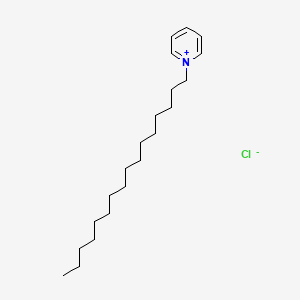
Cetylpyridinium Chloride
Cetylpyridinium chloride is a pyridinium salt that has N-hexadecylpyridinium as the cation and chloride as the anion. It has antiseptic properties and is used in solutions or lozenges for the treatment of minor infections of the mouth and throat. It has a role as a surfactant and an antiseptic drug. It is a chloride salt and an organic chloride salt. It contains a cetylpyridinium. — ChEBI
- IUPAC 名称
- 1-hexadecylpyridin-1-ium chloride
- 分子式
- C21H38ClN
- 分子量
- 340.0 g/mol
- 精确质量
- 339.2692779 Da
- 拓扑极性表面积
- 3.9 Ų
- 氢键供体
- 0
- 氢键受体
- 1
- 共价单元
- 2
- 已定义的立体中心
- 0
又称
另有 16 个已报告名称
外部数据库标识符
- ChEBI:CHEBI:32915
- ChEMBL:CHEMBL34833
- EPA DTXSID:DTXSID6041761
来自其他科学数据库的证据
NIH PubChem PUG-View
Attributed physical-property, hazard, environmental and use annotations.
- Color/Form: White powder 来源: Hazardous Substances Data Bank (HSDB)
- LogP: log Kow= 1.71 来源: Hazardous Substances Data Bank (HSDB)
- Melting Point: 80 °C 来源: Hazardous Substances Data Bank (HSDB)
- Physical Description: Dry Powder 来源: EPA Chemical Data Reporting (CDR)
- Physical Description: White solid; [HSDB] 来源: Haz-Map, Information on Hazardous Chemicals and Occupational Diseases
- Refractive Index: INDEX OF REFRACTION (@ 20 °C): MONOCLINIC 1.509; TRICLINIC 1.566; ORTHORHOMBIC 1.613 来源: Hazardous Substances Data Bank (HSDB)
- Solubility: Very soluble in water, chloroform 来源: Hazardous Substances Data Bank (HSDB)
- Note: This chemical does not meet GHS hazard criteria for 19.3% (36 of 187) of reports. 来源: European Chemicals Agency (ECHA)
- Signal: Danger 来源: European Chemicals Agency (ECHA)
- GHS Hazard Statements: H301 (33.7%): Toxic if swallowed [Danger Acute toxicity, oral]; H302 (46%): Harmful if swallowed [Warning Acute toxicity, oral]; H315 (80.7%): Causes skin irritation [Warning Skin corrosion/irritation]; H318 (72.7%): Causes serious eye damage [Danger Serious eye damage/eye irritation]; H330 (80.2%): Fatal if inhaled [Danger Acute toxicity, inhalation]; H335 (78.6%): May cause respiratory irritation [Warning Specific target organ toxicity, single exposure; Respiratory tract irritation]; H400 (79.7%): Very toxic to aquatic life [Warning Hazardous to the aquatic environment, acute hazard]; H410 (13.9%): Very toxic to aquatic life with long lasting effects [Warning Hazardous to the aquatic environment, long-term hazard] 来源: European Chemicals Agency (ECHA)
- Precautionary Statement Codes: P260, P261, P264, P264+P265, P270, P271, P273, P280, P284, P301+P316, P301+P317, P302+P352, P304+P340, P305+P354+P338, P316, P317, P319, P320, P321, P330, P332+P317, P362+P364, P391, P403+P233, P405, and P501 (click each P-code to see the statement) 来源: European Chemicals Agency (ECHA)
- ECHA C&L Notifications Summary: Aggregated GHS information provided per 187 reports by companies from 27 notifications to the ECHA C&L Inventory. Each notification may be associated with multiple companies.; Reported as not meeting GHS hazard criteria per 36 of 187 reports by companies.; There are 26 notifications provided by 151 of 187 reports by companies with hazard statement code(s).; Information may vary between notifications depending on impurities, additives, and other factors. The percentage value in parenthesis indicates the notified classification ratio from companies that provide hazard codes. Only hazard codes with percentage values above 10% are shown. For more detailed information, please visit ECHA C&L website. 来源: European Chemicals Agency (ECHA)
- Signal: Danger 来源: NITE-CMC
- GHS Hazard Statements: H301: Toxic if swallowed [Danger Acute toxicity, oral]; H315: Causes skin irritation [Warning Skin corrosion/irritation]; H318: Causes serious eye damage [Danger Serious eye damage/eye irritation]; H330: Fatal if inhaled [Danger Acute toxicity, inhalation]; H400: Very toxic to aquatic life [Warning Hazardous to the aquatic environment, acute hazard]; H410: Very toxic to aquatic life with long lasting effects [Warning Hazardous to the aquatic environment, long-term hazard] 来源: NITE-CMC
- Precautionary Statement Codes: P260, P264, P264+P265, P270, P271, P273, P280, P284, P301+P316, P302+P352, P304+P340, P305+P354+P338, P316, P317, P320, P321, P330, P332+P317, P362+P364, P391, P403+P233, P405, and P501 (click each P-code to see the statement) 来源: NITE-CMC
- GHS Hazard Statements: H301: Toxic if swallowed [Danger Acute toxicity, oral]; H319: Causes serious eye irritation [Warning Serious eye damage/eye irritation]; H330: Fatal if inhaled [Danger Acute toxicity, inhalation]; H335: May cause respiratory irritation [Warning Specific target organ toxicity, single exposure; Respiratory tract irritation] 来源: NITE-CMC
- Precautionary Statement Codes: P260, P261, P264, P264+P265, P270, P271, P280, P284, P301+P316, P304+P340, P305+P351+P338, P316, P319, P320, P321, P330, P337+P317, P403+P233, P405, and P501 (click each P-code to see the statement) 来源: NITE-CMC
- Environmental Bioconcentration: Whole body BCF values of 21, 22, and 13, were measured for clams, fathead minnows, and tadpoles, respectively, under flow-through conditions over a 7-day period, for a structurally-similar compound, cetylpyridinium bromide(1). An estimated BCF of 2 was calculated for cetylpyridinium chloride(SRC), using a log Kow of 1.71(2) and a regression-derived equation(3). According to a classification scheme(4), these BCF values suggest the potential for bioconcentration in aquatic organisms is low(SRC). 来源: Hazardous Substances Data Bank (HSDB)
- Environmental Fate: TERRESTRIAL FATE: Based on a classification scheme(1), an estimated Koc value of 200(SRC), determined from a log Kow of 1.71(2) and a regression-derived equation(3), indicates that cetylpyridinium chloride is expected to have moderate mobility in soil(SRC). However, quaternary ammonium compounds are known to sorb strongly and rapidly in well-mixed systems, to a wide variety of materials (such as sewage sludge, sediment, clay)(4) and the mobility of cetylpyridinium bromide in soil may be considerably less than estimated. Volatilization of cetylpyridinium chloride from moist soil surfaces is not expected as this compound is a salt(SRC). Cetylpyridinium chloride is also not expected to volatilize from dry soil surfaces(SRC) as ions do not volatilize. Cetylpyridinium chloride is expected to biodegrade rapidly in soil(SRC) based on sewage studies for structurally-similar compounds. Dodecyl and tetradecylpyridinium chloride, were biodegraded in the Spanish official test (93 and 94%, respectively) and in the OECD Confirmatory test (91 and 92%, respectively)(4). 来源: Hazardous Substances Data Bank (HSDB)
- Environmental Fate: AQUATIC FATE: Based on a classification scheme(1), an estimated Koc value of 200(SRC), determined from a log Kow of 1.71(2) and a regression-derived equation(3), indicates that cetylpyridinium chloride is not expected to adsorb to suspended solids and sediment(SRC). However, quaternary ammonium compounds are known to sorb strongly, and rapidly in well-mixed systems, to a wide variety of materials (such as sewage sludge, sediment, clay)(7); therefore, cetylpyridinium bromide should be strongly adsorbed to suspended solids and sediment in water. This compound is expected to exist in the dissociated form in the environment and therefore volatilization from water surfaces will not be an important fate process(SRC). According to a classification scheme(5), an estimated BCF of 2(SRC), from its log Kow(2) and a regression-derived equation(6), suggests the potential for bioconcentration in aquatic organisms is low(SRC). Cetylpyridinium chloride is expected to biodegrade rapidly in water(SRC) based on sewage studies for structurally-similar compounds. Dodecyl and tetradecylpyridinium chloride, were biodegraded in the Spanish official test (93 and 94%, respectively) and in the OECD Confirmat 来源: Hazardous Substances Data Bank (HSDB)
- Environmental Fate: ATMOSPHERIC FATE: Cetylpyridinium chloride will exist as the ion in the environment and, thus, will be present solely in the particulate phase in the atmosphere. Particulate-phase cetylpyridinium chloride may be removed from the air by wet and dry deposition. (SRC) 来源: Hazardous Substances Data Bank (HSDB)
- Consumer Uses: Other; Preservative 来源: EPA Chemical Data Reporting (CDR)
- Industry Uses: Preservative; Other 来源: EPA Chemical Data Reporting (CDR)
- Sources/Uses: Used as a preservative/antibacterial agent in cosmetics, pharmaceuticals, cough lozenges, mouthwashes, deodorants, and antiseptics; [HSDB] Quarternary ammonium compounds are used as algaecides/slimicides (swimming pools, industrial water reservoirs, and farm ponds), antiseptics for cleaning wounds, antistatic agents for textiles, softeners for paper products, and pigment dispersers; [IPCS-PIMs] 来源: Haz-Map, Information on Hazardous Chemicals and Occupational Diseases
- Industrial Processes with risk of exposure: Using Disinfectants or Biocides [Category: Clean] 来源: Haz-Map, Information on Hazardous Chemicals and Occupational Diseases
- Uses: For Cetylpyridinium chloride (USEPA/OPP Pesticide Code: 069160) there are 0 labels match. /SRP: Not registered for current use in the U.S., but approved pesticide uses may change periodically and so federal, state and local authorities must be consulted for currently approved uses./ 来源: Hazardous Substances Data Bank (HSDB)
- Uses: The active ingredient is no longer contained in any registered pesticide products ... "cancelled." 来源: Hazardous Substances Data Bank (HSDB)
- Uses: Pharmaceutic aid (preservative), antiseptic; disinfectant/monohydrate/ 来源: Hazardous Substances Data Bank (HSDB)
- Uses: Antiseptic; preservative(cosmetics, pharmaceuticals) 来源: Hazardous Substances Data Bank (HSDB)
- Uses: For more Uses (Complete) data for CETYLPYRIDINIUM CHLORIDE (9 total), please visit the HSDB record page. 来源: Hazardous Substances Data Bank (HSDB)
映射方: Existing checksum-valid CAS to unique PubChem CID match. 检索时间: 2026-08-31. 打开来源记录
科学分类和危害注释仅提供背景信息,不能取代上方所示针对具体市场的监管决定。
其他来源的覆盖范围和匹配状态
| 来源 | 结果 | 已检查 |
|---|---|---|
| NIH PubChem PUG-View | 精确匹配 | 2026-08-31 |
已记录的无匹配结果是该来源已被检查的有效证据;这并不表示该物质在别处不存在。
于 2026-09-02 通过校验和有效的 CAS 匹配从美国国立卫生研究院 (NIH) PubChem 检索。化学性质不能取代本页的监管决定。
欧盟官方成分名称证据
该成分名称与 2025 年欧盟官方通用成分名称词汇表完全匹配。
相关清单证据
配方功能重叠的成分
其他官方和科学来源
11 个可用于核查此身份的外部数据库
每个链接都会在该来源中搜索此身份。 各来源是什么及其法律效力
CETYLPYRIDINIUM CHLORIDE 在 CosIng 清单中的呈现方式
CosIng 清单将 CETYLPYRIDINIUM CHLORIDE 列为化妆品成分,本页将其关联到 0 条附件记录。清单条目记录名称和标识符,而附件记录显示该物质在欧盟化妆品法规中被禁用、限用或列入准用清单的情况。
在官方数据中,CETYLPYRIDINIUM CHLORIDE 还被标记了 7 项化妆品功能。功能标识描述预期用途,但不能取代在配方或标签工作之前对关联附件记录的监管审查。