
MANGANESE CITRATE
1,2,3-Propanetricarboxylic acid, 2-hydroxy-, manganese salt (1:?); Citric acid, manganese salt
MANGANESE CITRATE 列于欧盟 CosIng 清单,但本页尚未关联任何直接的附件记录。
按市场划分的监管证据
此处跟踪的 13 个市场均未导入该成分的规则。
这描述的是本清单,而非法律。没有已导入的规则并不能证明某成分获准使用:规则可能以其他名称或标识符存在,或存在于尚未在此导入的数据集中。
MANGANESE CITRATE 的清单详情
INCI 名称
MANGANESE CITRATE
说明
1,2,3-Propanetricarboxylic acid, 2-hydroxy-, manganese salt (1:?); Citric acid, manganese salt
MANGANESE CITRATE 的附件记录
关键数据
化学身份与性质
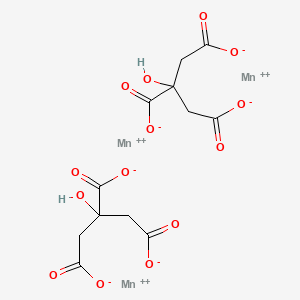
Manganese Citrate
Manganese citrate is a chemical compound of manganese. Manganese is a naturally occurring metal with the symbol Mn and the atomic number 25. It does not occur naturally in its pure form, but is found in many types of rocks in combination with other substances such as oxygen, sulfur, or chlorine. Manganese occurs naturally in most foods and small amounts are needed to stay healthy, as manganese ions act as cofactors for a number of enzymes. (L228, L229) — Toxin and Toxin Target Database (T3DB)
- IUPAC 名称
- bis(2-hydroxypropane-1,2,3-tricarboxylate);tris(manganese(2+))
- 分子式
- C12H10Mn3O14
- 分子量
- 543.01 g/mol
- 精确质量
- 542.821184 Da
- 拓扑极性表面积
- 281.0 Ų
- 氢键供体
- 2
- 氢键受体
- 14
- 共价单元
- 5
- 已定义的立体中心
- 0
又称
另有 16 个已报告名称
外部数据库标识符
- EPA DTXSID:DTXSID301360797
- EPA DTXSID:DTXSID6047496
来自其他科学数据库的证据
NIH PubChem PUG-View
Attributed physical-property, hazard, environmental and use annotations.
- Color/Form: White powder 来源: Hazardous Substances Data Bank (HSDB)
- Physical Description: White solid; [Hawley] 来源: Haz-Map, Information on Hazardous Chemicals and Occupational Diseases
- Solubility: Soluble in water in presence of sodium citrate 来源: Hazardous Substances Data Bank (HSDB)
- Carcinogen Classification: No indication of carcinogenicity to humans (not listed by IARC). 来源: Toxin and Toxin Target Database (T3DB)
- Exposure Routes: Oral (L228) ; inhalation (L228) 来源: Toxin and Toxin Target Database (T3DB)
- GHS Hazard Statements: Not Classified; Reported as not meeting GHS hazard criteria by 1 of 1 companies. For more detailed information, please visit ECHA C&L website. 来源: European Chemicals Agency (ECHA)
- Health Effects: Manganese mainly affects the nervous system and may cause behavioral changes and other nervous system effects, which include movements that may become slow and clumsy. This combination of symptoms when sufficiently severe is referred to as 来源: Toxin and Toxin Target Database (T3DB)
- Cosmetic Ingredient Review Finding(s): Safe in the present practices of use and concentration. Ingredient, concentration, and use information are available in documents discoverable at https://cir-reports.cir-safety.org 来源: Cosmetic Ingredient Review (CIR)
- Toxicity Summary: Manganese is a cellular toxicant that can impair transport systems, enzyme activities, and receptor functions. It primarily targets the central nervous system, particularily the globus pallidus of the basal ganglia. It is believed that the manganese ion, Mn(II), enhances the autoxidation or turnover of various intracellular catecholamines, leading to increased production of free radicals, reactive oxygen species, and other cytotoxic metabolites, along with a depletion of cellular antioxidant defense mechanisms, leading to oxidative damage and selective destruction of dopaminergic neurons. In addition to dopamine, manganese is thought to perturbations other neurotransmitters, such as GABA and glutamate. In order to produce oxidative damage, manganese must first overwhelm the antioxidant enzyme manganese superoxide dismutase. The neurotoxicity of Mn(II) has also been linked to its ability to substitute for Ca(II) under physiological conditions. It can enter mitochondria via the calcium uniporter and inhibit mitochondrial oxidative phosphorylation. It may also inhibit the efflux of Ca(II), which can result in a loss of mitochondrial membrane integrity. Mn(II) has been shown to inhibit 来源: Toxin and Toxin Target Database (T3DB)
- Cosmetic Ingredient Review Link: CIR ingredient: Manganese Citrate 来源: Cosmetic Ingredient Review (CIR)
- Sources/Uses: Used as feed and food additive and dietary supplement; [Hawley] 来源: Haz-Map, Information on Hazardous Chemicals and Occupational Diseases
- Industrial Processes with risk of exposure: Farming (Feed Additives) [Category: Industry] 来源: Haz-Map, Information on Hazardous Chemicals and Occupational Diseases
- Uses: Feed additive, food additive, and dietary supplement 来源: Hazardous Substances Data Bank (HSDB)
映射方: Existing checksum-valid CAS to unique PubChem CID match. 检索时间: 2026-08-31. 打开来源记录
科学分类和危害注释仅提供背景信息,不能取代上方所示针对具体市场的监管决定。
其他来源的覆盖范围和匹配状态
| 来源 | 结果 | 已检查 |
|---|---|---|
| EMBL-EBI ChEBI | 无精确记录 | 2026-08-31 |
| NIH PubChem PUG-View | 精确匹配 | 2026-08-31 |
已记录的无匹配结果是该来源已被检查的有效证据;这并不表示该物质在别处不存在。
于 2026-08-31 通过校验和有效的 CAS 匹配从美国国立卫生研究院 (NIH) PubChem 检索。化学性质不能取代本页的监管决定。
欧盟官方成分名称证据
该成分名称与 2025 年欧盟官方通用成分名称词汇表完全匹配。
相关清单证据
配方功能重叠的成分
其他官方和科学来源
11 个可用于核查此身份的外部数据库
每个链接都会在该来源中搜索此身份。 各来源是什么及其法律效力
MANGANESE CITRATE 在 CosIng 清单中的呈现方式
CosIng 清单将 MANGANESE CITRATE 列为化妆品成分,本页将其关联到 0 条附件记录。清单条目记录名称和标识符,而附件记录显示该物质在欧盟化妆品法规中被禁用、限用或列入准用清单的情况。
在官方数据中,MANGANESE CITRATE 还被标记了 1 项化妆品功能。功能标识描述预期用途,但不能取代在配方或标签工作之前对关联附件记录的监管审查。