跳至主要内容
欧盟官方标签名称词汇表条目 29685

UREA PEROXIDE

本记录确认了用于欧盟化妆品标签标示的官方通用成分名称。它本身并不能确认该物质获准使用、不受限制或安全。

全球证据概览

所解析的身份在 13 个已索引市场数据集中的 1 个有匹配的监管证据:2 条国家记录和 0 条欧盟附件记录。下方列出每项结果和证据缺口。

1 个市场有证据
已检查的市场
13
有证据的市场
1
证据缺口
12
已解析的标识符
7

已解析的物质身份

CAS:124-43-61305-79-97722-84-11335-26-87632-04-41314-22-3
EC:204-701-4
成分索引记录:
UREA PEROXIDE
化妆品功能: OXIDISING

Hydrogen peroxide-urea

清单限制备注: III/12

4 个匹配或报告的名称
UREA PEROXIDEcarbamide peroxidePeroxide and peroxide-generating compoundsUrea (carbamide) peroxide

全部 13 个市场的监管证据

打开每条匹配记录,查看其范围、浓度、条件、警示语和官方来源版本。

滑动或横向滚动以查看数据集覆盖范围和后续操作。

市场结果记录数据集含义 / 后续操作
European Union
EU
未找到匹配项0
Complete annex dataset
Regulation (EC) 1223/2009 consolidated to 1 May 2026
No annex match only means that these five annexes did not return a match; CosIng identity data and other EU obligations still need review.
Great Britain
GB
未找到匹配项0
Complete consolidated annex dataset
GB retained Regulation 1223/2009 schedules, effective 15 August 2026
No annex match is not approval and does not cover Northern Ireland, which follows the applicable EU framework.
Canada
CA
Restricted2打开记录 1打开记录 2
Complete Hotlist snapshot
Health Canada Cosmetic Ingredient Hotlist, 13 August 2025
请查看每条关联记录及其确切条件。
New Zealand
NZ
未找到匹配项0
Complete schedules dataset
Cosmetic Products Group Standard schedules effective 1 January 2026
The searchable spreadsheet is an aid; the legal Group Standard and incorporated notices remain authoritative.
ASEAN
ASEAN
未找到匹配项0
Complete regional annex dataset
ASEAN Cosmetic Directive annexes 2026-1, 22 June 2026
Regional annex coverage does not replace member-state implementation dates, notifications or national deviations.
China
CN
未找到匹配项0
Complete prohibited catalogues plus official-source workflow
NMPA 2021 banned catalogues plus dynamic IECIC List I/List II system current since 2025
IECIC listing is not blanket approval; absence may require the new cosmetic ingredient route, and restrictions are checked separately.
Japan
JP
未找到匹配项0
Complete Standards appendices dataset
MHLW Standards for Cosmetics official English source and Japanese amendments checked for the imported snapshot
The Japanese text and subsequent notices are canonical; no local match is not a product-compliance conclusion.
South Korea
KR
未找到匹配项0
Complete current appendix dataset
MFDS Notice 2026-19, effective 18 March 2026
Korean source wording is canonical and other positive lists/notices may still apply to the formulation.
United States
US
未找到匹配项0
Complete enumerated federal ingredient rules
eCFR Title 21 issue date 27 August 2026
FDA has no general approved-cosmetic-ingredient catalogue; absence from these sections is not approval or proof of safety.
Australia
AU
未找到匹配项0
Complete cosmetic-relevant Poisons Standard subset plus official workflow
Therapeutic Goods (Poisons Standard—June 2026) Instrument 2026
An AICIS Inventory match is not cosmetic approval; no Inventory match can indicate a new, exempted, reported or confidential introduction.
Brazil
BR
未找到匹配项0
Complete prohibited dataset plus current restricted-list workflow
ANVISA RDC 1.029/2026 and RDC 1.030/2026, published 15 June 2026
RDC 1.030/2026 amends rather than replaces the prohibited baseline, and the second restricted-list revision was still under consultation in July 2026.
India
IN
未找到匹配项0
Complete current Part 2 dataset plus official workflow for Parts 1, 3 and 4
Cosmetics Rules 2020 plus current BIS IS 4707 parts (1:2020, 2:2025, 3:2025, 4:2022)
The standards are separate controlled publications; absence from a locally indexed excerpt is not permission.
Saudi Arabia
SA
未找到匹配项0
Complete official list index
SFDA live prohibited/restricted lists, snapshot 30 August 2026
No list match is not permission; Gulf/SFDA product, claim, notification and technical requirements still apply.
没有与此筛选条件匹配的市场行。

匹配的市场记录和条件

化学身份与性质

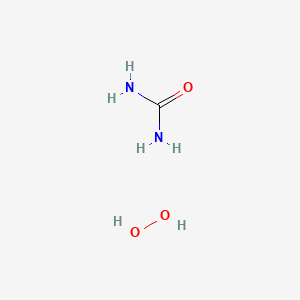
CAS 124-43-6 的 PubChem 二维化学结构
CAS 124-43-6PubChem CID 31294

Carbamide Peroxide

Urea hydrogen peroxide is a mixture obtained by combining equimolar amounts of hydrogen peroxide and urea. It has a role as a reagent, a disinfectant and an oxidising agent. It contains a urea and a hydrogen peroxide. — ChEBI

IUPAC 名称
hydrogen peroxide;urea
分子式
CH6N2O3
分子量
94.07 g/mol
精确质量
94.03784206 Da
拓扑极性表面积
110.0 Ų
氢键供体
4
氢键受体
3
共价单元
2
已定义的立体中心
0

又称

Urea hydrogen peroxidePercarbamideUrea peroxideUrea dioxideUrea hydroperoxideHydroperitHydroperitePercarbamid
另有 16 个已报告名称
HyperolOrtizonPerhydritThenardolPerhydrol-UreaHydrogen peroxide ureaHydrogen peroxide carbamideMurine Ear DropsDebroxGly-oxideUrea compound with hydrogen peroxide (1:1)31PZ2VAU81NSC-24852Carbamide peroxide (USP)Carbamide peroxide [USP]CHEBI:75178
外部数据库标识符

来自其他科学数据库的证据

NIH PubChem PUG-View
标识符精确匹配31294

Attributed physical-property, hazard, environmental and use annotations.

  • Autoignition Temperature: greater than 680 °F (USCG, 1999) 来源: CAMEO Chemicals
  • Melting Point: 167 to 185 °F (decomposes) (NTP, 1992) 来源: CAMEO Chemicals
  • Melting Point: 75-85 来源: DrugBank
  • Solubility: greater than or equal to 100 mg/mL at 68 °F (NTP, 1992) 来源: CAMEO Chemicals
  • Solubility: 500 g/L at °C 来源: DrugBank
  • First Aid: EYES: First check the victim for contact lenses and remove if present. Flush victim's eyes with water or normal saline solution for 20 to 30 minutes while simultaneously calling a hospital or poison control center. Do not put any ointments, oils, or medication in the victim's eyes without specific instructions from a physician. IMMEDIATELY transport the victim after flushing eyes to a hospital even if no symptoms (such as redness or irritation) develop.; SKIN: IMMEDIATELY flood affected skin with water while removing and isolating all contaminated clothing. Gently wash all affected skin areas thoroughly with soap and water. If symptoms such as redness or irritation develop, IMMEDIATELY call a physician and be prepared to transport the victim to a hospital for treatment.; INHALATION: IMMEDIATELY leave the contaminated area; take deep breaths of fresh air. If symptoms (such as wheezing, coughing, shortness of breath, or burning in the mouth, throat, or chest) develop, call a physician and be prepared to transport the victim to a hospital. Provide proper respiratory protection to rescuers entering an unknown atmosphere. Whenever possible, Self-Contained Breathing Apparatus (SCBA) shou 来源: CAMEO Chemicals
  • ERG2024, Guide 140 (Urea hydrogen peroxide): General First Aid:; · Call 911 or emergency medical service.; · Ensure that medical personnel are aware of the material(s) involved, take precautions to protect themselves and avoid contamination.; · Move victim to fresh air if it can be done safely.; · Administer oxygen if breathing is difficult.; · If victim is not breathing:; -- DO NOT perform mouth-to-mouth resuscitation; the victim may have ingested or inhaled the substance.; -- If equipped and pulse detected, wash face and mouth, then give artificial respiration using a proper respiratory medical device (bag-valve mask, pocket mask equipped with a one-way valve or other device).; -- If no pulse detected or no respiratory medical device available, provide continuous compressions. Conduct a pulse check every two minutes or monitor for any signs of spontaneous respirations.; · Remove and isolate contaminated clothing and shoes.; · For minor skin contact, avoid spreading material on unaffected skin.; · In case of contact with substance, remove immediately by flushing skin or eyes with running water for at least 20 minutes.; · For severe burns, immediate medical attention is required.; · Effects of exposure (inhalation, ingestion, 来源: Emergency Response Guidebook (ERG)
  • Signal: Danger 来源: European Chemicals Agency (ECHA)
  • GHS Hazard Statements: H272 (94.9%): May intensify fire; oxidizer [Danger Oxidizing liquids; Oxidizing solids]; H314 (83.1%): Causes severe skin burns and eye damage [Danger Skin corrosion/irritation]; H315 (16.9%): Causes skin irritation [Warning Skin corrosion/irritation]; H318 (18.6%): Causes serious eye damage [Danger Serious eye damage/eye irritation] 来源: European Chemicals Agency (ECHA)
  • Precautionary Statement Codes: P210, P220, P260, P264, P264+P265, P280, P301+P330+P331, P302+P352, P302+P361+P354, P304+P340, P305+P354+P338, P316, P317, P321, P332+P317, P362+P364, P363, P370+P378, P405, and P501 (click each P-code to see the statement) 来源: European Chemicals Agency (ECHA)
  • ECHA C&L Notifications Summary: Aggregated GHS information provided per 59 reports by companies from 12 notifications to the ECHA C&L Inventory. Each notification may be associated with multiple companies.; Information may vary between notifications depending on impurities, additives, and other factors. The percentage value in parenthesis indicates the notified classification ratio from companies that provide hazard codes. Only hazard codes with percentage values above 10% are shown. For more detailed information, please visit ECHA C&L website. 来源: European Chemicals Agency (ECHA)
  • Signal: Danger 来源: NITE-CMC
  • GHS Hazard Statements: H272: May intensify fire; oxidizer [Danger Oxidizing liquids; Oxidizing solids]; H315: Causes skin irritation [Warning Skin corrosion/irritation]; H318: Causes serious eye damage [Danger Serious eye damage/eye irritation] 来源: NITE-CMC
  • Precautionary Statement Codes: P210, P220, P264, P264+P265, P280, P302+P352, P305+P354+P338, P317, P321, P332+P317, P362+P364, P370+P378, and P501 (click each P-code to see the statement) 来源: NITE-CMC
  • GHS Hazard Statements: H272: May intensify fire; oxidizer [Danger Oxidizing liquids; Oxidizing solids]; H314: Causes severe skin burns and eye damage [Danger Skin corrosion/irritation]; H318: Causes serious eye damage [Danger Serious eye damage/eye irritation]; H335: May cause respiratory irritation [Warning Specific target organ toxicity, single exposure; Respiratory tract irritation] 来源: NITE-CMC
  • Precautionary Statement Codes: P210, P220, P260, P261, P264, P264+P265, P271, P280, P301+P330+P331, P302+P361+P354, P304+P340, P305+P354+P338, P316, P317, P319, P321, P363, P370+P378, P403+P233, P405, and P501 (click each P-code to see the statement) 来源: NITE-CMC
  • Signal: Danger 来源: Hazardous Chemical Information System (HCIS), Safe Work Australia
  • GHS Hazard Statements: H302: Harmful if swallowed [Warning Acute toxicity, oral]; H315: Causes skin irritation [Warning Skin corrosion/irritation]; H318: Causes serious eye damage [Danger Serious eye damage/eye irritation]; H335: May cause respiratory irritation [Warning Specific target organ toxicity, single exposure; Respiratory tract irritation] 来源: Hazardous Chemical Information System (HCIS), Safe Work Australia
  • Precautionary Statement Codes: P261, P264, P264+P265, P270, P271, P280, P301+P317, P302+P352, P304+P340, P305+P354+P338, P317, P319, P321, P330, P332+P317, P362+P364, P403+P233, P405, and P501 (click each P-code to see the statement) 来源: Hazardous Chemical Information System (HCIS), Safe Work Australia

映射方: Existing checksum-valid CAS to unique PubChem CID match. 检索时间: 2026-08-31. 打开来源记录

科学分类和危害注释仅提供背景信息,不能取代上方所示针对具体市场的监管决定。

其他来源的覆盖范围和匹配状态
来源结果已检查
NIH PubChem PUG-View精确匹配2026-08-31

已记录的无匹配结果是该来源已被检查的有效证据;这并不表示该物质在别处不存在。

于 2026-08-31 通过校验和有效的 CAS 匹配从美国国立卫生研究院 (NIH) PubChem 检索。化学性质不能取代本页的监管决定。

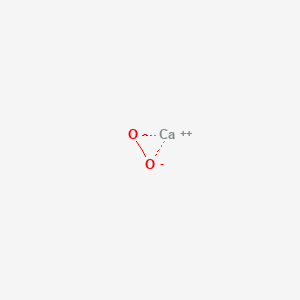
CAS 1305-79-9 的 PubChem 二维化学结构
CAS 1305-79-9PubChem CID 14779

Calcium peroxide

Calcium peroxide is a member of calcium oxides. — ChEBI

IUPAC 名称
calcium peroxide
分子式
CaO2
分子量
72.08 g/mol
精确质量
71.9524201 Da
拓扑极性表面积
46.1 Ų
氢键供体
0
氢键受体
2
共价单元
2
已定义的立体中心
0

又称

Calcium dioxideCalperCalper GCalcium peroxide (Ca(O2))7FRO2ENO91CHEBI:48233RefChem:122888215-139-4
另有 13 个已报告名称
684-873-9calcium;peroxideUNII-7FRO2ENO91peroxidocalciumCalciumperoxidKalziumperoxidHSDB 965cyc-CaO2EINECS 215-139-4UN1457Ca(O2)(eta~2~-Dioxidanediido)calciumCalcium peroxide [UN1457] [Oxidizer]
外部数据库标识符

来自其他科学数据库的证据

NIH PubChem PUG-View
标识符精确匹配14779

Attributed physical-property, hazard, environmental and use annotations.

  • First Aid: INHALATION: remove to fresh air.; EYES: flush with water for 15 min. and consult physician.; SKIN: flush with water.; INGESTION: give large amounts of water. (USCG, 1999) 来源: CAMEO Chemicals
  • ERG2024, Guide 140 (Calcium peroxide): General First Aid:; · Call 911 or emergency medical service.; · Ensure that medical personnel are aware of the material(s) involved, take precautions to protect themselves and avoid contamination.; · Move victim to fresh air if it can be done safely.; · Administer oxygen if breathing is difficult.; · If victim is not breathing:; -- DO NOT perform mouth-to-mouth resuscitation; the victim may have ingested or inhaled the substance.; -- If equipped and pulse detected, wash face and mouth, then give artificial respiration using a proper respiratory medical device (bag-valve mask, pocket mask equipped with a one-way valve or other device).; -- If no pulse detected or no respiratory medical device available, provide continuous compressions. Conduct a pulse check every two minutes or monitor for any signs of spontaneous respirations.; · Remove and isolate contaminated clothing and shoes.; · For minor skin contact, avoid spreading material on unaffected skin.; · In case of contact with substance, remove immediately by flushing skin or eyes with running water for at least 20 minutes.; · For severe burns, immediate medical attention is required.; · Effects of exposure (inhalation, ingestion, 来源: Emergency Response Guidebook (ERG)
  • Signal: Danger 来源: European Chemicals Agency (ECHA)
  • GHS Hazard Statements: H272 (97.1%): May intensify fire; oxidizer [Danger Oxidizing liquids; Oxidizing solids]; H315 (94.3%): Causes skin irritation [Warning Skin corrosion/irritation]; H319 (94.3%): Causes serious eye irritation [Warning Serious eye damage/eye irritation]; H335 (94.3%): May cause respiratory irritation [Warning Specific target organ toxicity, single exposure; Respiratory tract irritation] 来源: European Chemicals Agency (ECHA)
  • Precautionary Statement Codes: P210, P220, P261, P264, P264+P265, P271, P280, P302+P352, P304+P340, P305+P351+P338, P319, P321, P332+P317, P337+P317, P362+P364, P370+P378, P403+P233, P405, and P501 (click each P-code to see the statement) 来源: European Chemicals Agency (ECHA)
  • ECHA C&L Notifications Summary: Aggregated GHS information provided per 140 reports by companies from 7 notifications to the ECHA C&L Inventory. Each notification may be associated with multiple companies.; Information may vary between notifications depending on impurities, additives, and other factors. The percentage value in parenthesis indicates the notified classification ratio from companies that provide hazard codes. Only hazard codes with percentage values above 10% are shown. For more detailed information, please visit ECHA C&L website. 来源: European Chemicals Agency (ECHA)
  • GHS Hazard Statements: H272 (100%): May intensify fire; oxidizer [Danger Oxidizing liquids; Oxidizing solids]; H315 (100%): Causes skin irritation [Warning Skin corrosion/irritation]; H319 (100%): Causes serious eye irritation [Warning Serious eye damage/eye irritation]; H335 (100%): May cause respiratory irritation [Warning Specific target organ toxicity, single exposure; Respiratory tract irritation] 来源: European Chemicals Agency (ECHA)
  • ECHA C&L Notifications Summary: Aggregated GHS information provided per 38 reports by companies from 1 notifications to the ECHA C&L Inventory. Each notification may be associated with multiple companies.; Information may vary between notifications depending on impurities, additives, and other factors. The percentage value in parenthesis indicates the notified classification ratio from companies that provide hazard codes. Only hazard codes with percentage values above 10% are shown. For more detailed information, please visit ECHA C&L website. 来源: European Chemicals Agency (ECHA)
  • Signal: Danger 来源: NITE-CMC
  • GHS Hazard Statements: H272: May intensify fire; oxidizer [Danger Oxidizing liquids; Oxidizing solids]; H318: Causes serious eye damage [Danger Serious eye damage/eye irritation] 来源: NITE-CMC
  • Precautionary Statement Codes: P210, P220, P264+P265, P280, P305+P354+P338, P317, P370+P378, and P501 (click each P-code to see the statement) 来源: NITE-CMC
  • Signal: Danger 来源: Hazardous Chemical Information System (HCIS), Safe Work Australia
  • GHS Hazard Statements: H302: Harmful if swallowed [Warning Acute toxicity, oral]; H314: Causes severe skin burns and eye damage [Danger Skin corrosion/irritation]; H335: May cause respiratory irritation [Warning Specific target organ toxicity, single exposure; Respiratory tract irritation] 来源: Hazardous Chemical Information System (HCIS), Safe Work Australia
  • Precautionary Statement Codes: P260, P261, P264, P270, P271, P280, P301+P317, P301+P330+P331, P302+P361+P354, P304+P340, P305+P354+P338, P316, P319, P321, P330, P363, P403+P233, P405, and P501 (click each P-code to see the statement) 来源: Hazardous Chemical Information System (HCIS), Safe Work Australia
  • Toxicity Summary: IDENTIFICATION AND USE: Calcium peroxide is white or yellowish powder. It is used as a stabilizer for rubber. Other uses including seed disinfectant, dentifrices, dough conditioners, antiseptic, bleaching of oils, modification of starches, high temperature oxidation. An important application of calcium peroxide is for curing the polysulfide sealants used in double glazing window units. Calcium peroxide is also used at several gold mines in Australia to increase recovery of gold and reduce the consumption of cyanide. Calcium peroxide has been identified as being used in hydraulic fracturing as a breaker. HUMAN EXPOSURE AND TOXICITY: Contact with calcium peroxide can severely irritate and may burn the skin and eyes. Exposure can irritate the eyes, nose, and throat. Prolonged exposure can damage the skin. Higher levels of calcium peroxide can irritate the lungs causing coughing and/or shortness of breath. Still higher exposures may cause a buildup of fluid in the lungs (pulmonary edema). This can cause death. ANIMAL STUDIES: Experiments with calcium peroxide revealed that the compound is not toxic to dogs treated orally. ECOTOXICITY STUDIES: New method was proposed for increasing the 来源: Hazardous Substances Data Bank (HSDB)
  • Sources/Uses: Used as a rubber stabilizer, antiseptic, seed disinfectant, starch modifier, sewage deodorizer, and wastewater dechlorinator; Also used for dentifrices; in dough conditioners; for bleaching of oils; in high temperature oxidations; for curing the polysulfide sealants used in double glazing window units; to increase recovery of gold and reduce the consumption of cyanide (at gold mines); to improve the bioremediation of soils contaminated with creosote or kerosene; for removing metal ions from acidic waste streams such as coal ash leachate and acid mine drainage; in the cultivation of tomatoes, cucumbers, tobacco, and prawns (Japan); [HSDB] Used as a flour treatment agent; [JECFA] 来源: Haz-Map, Information on Hazardous Chemicals and Occupational Diseases
  • Industrial Processes with risk of exposure: Using Disinfectants or Biocides [Category: Clean]; Farming (Pesticides) [Category: Industry]; Sewer and Wastewater Treatment [Category: Industry]; Metal Extraction and Refining [Category: Industry] 来源: Haz-Map, Information on Hazardous Chemicals and Occupational Diseases
  • Uses: Stabilizer for rubber. 来源: Hazardous Substances Data Bank (HSDB)
  • Uses: Seed disinfectant, dentifrices, dough conditioners, antiseptic, bleaching of oils, modification of starches, high temperature oxidation. 来源: Hazardous Substances Data Bank (HSDB)
  • Uses: Calcium peroxide is used as oxygen source in the leaching of gold and silver ores with cyanide to improve precious metal recovery and leaching kinetics. A relatively new application for CaO2 is as a peroxide source in toothpaste and dental chewing gum products. Calcium peroxide is also used in limited quantities as a hardening accelerator for sulfide rubber, as dough conditioner in the baking industry, and as a nontoxic disinfectant for seed and grain. 来源: Hazardous Substances Data Bank (HSDB)
  • Uses: An important application of calcium peroxide is for curing the polysulfide sealants used in double glazing window units. Calcium peroxide is also used at several gold mines in Australia to increase recovery of gold and reduce the consumption of cyanide. Calcium peroxide (PermeOx) is also used to improve the bioremediation of soils contaminated with creosote or kerosene, to deodorize sewage sludges and wastewater, and to dechlorinate wastewater and effluents. A special formulation of calcium peroxide ... is used for removing metal ions from acidic waste streams such as coal ash leachate and acid mine drainage. 来源: Hazardous Substances Data Bank (HSDB)
  • Uses: For more Uses (Complete) data for CALCIUM PEROXIDE (7 total), please visit the HSDB record page. 来源: Hazardous Substances Data Bank (HSDB)

映射方: Existing checksum-valid CAS to unique PubChem CID match. 检索时间: 2026-08-31. 打开来源记录

科学分类和危害注释仅提供背景信息,不能取代上方所示针对具体市场的监管决定。

其他来源的覆盖范围和匹配状态
来源结果已检查
NIH PubChem PUG-View精确匹配2026-08-31

已记录的无匹配结果是该来源已被检查的有效证据;这并不表示该物质在别处不存在。

于 2026-08-31 通过校验和有效的 CAS 匹配从美国国立卫生研究院 (NIH) PubChem 检索。化学性质不能取代本页的监管决定。

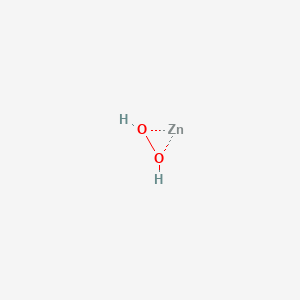
CAS 1314-22-3 的 PubChem 二维化学结构
CAS 1314-22-3PubChem CID 14809

Zinc Peroxide

Zinc peroxide appears as a white powder. — CAMEO Chemicals

IUPAC 名称
hydrogen peroxide;zinc
分子式
H2O2Zn
分子量
99.4 g/mol
精确质量
97.934621 Da
拓扑极性表面积
40.5 Ų
氢键供体
2
氢键受体
2
共价单元
2
已定义的立体中心
0

又称

Zinc superoxideZinc dioxideZinc peroxide, medicinalZinc peroxide (Zn(O2))AI3-03965Zinc peroxide, medicinal [USP]HSDB 10580I969DVM77
另有 16 个已报告名称
EINECS 215-226-7UN1516ZINC PEROXIDE (MART.)ZINC PEROXIDE [MART.]Zinc peroxide, medicinal (USP)peroxol zincZinc bioxideZEONET ZPRefChem:904988ZINC PEROXIDE [MI]ZINC OXIDE (ZNO2)STRUKTOL ZP 1014ZINC PEROXIDE [HSDB]ZINC PEROXIDE [INCI]ZINC PEROXIDE (Zn(O2)ZINC PEROXIDE [WHO-DD]
外部数据库标识符

于 2026-09-02 通过校验和有效的 CAS 匹配从美国国立卫生研究院 (NIH) PubChem 检索。化学性质不能取代本页的监管决定。

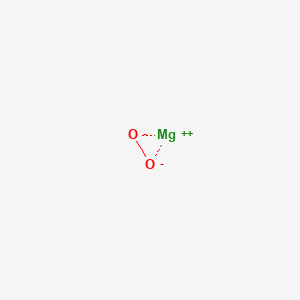
CAS 1335-26-8 的 PubChem 二维化学结构
CAS 1335-26-8PubChem CID 61745

Magnesium peroxide (Mg(O2))

Magnesium peroxide appears as a white powder. Noncombustible but accelerates the burning of combustible material, if the combustible material is finely divided the mixture may be explosive. Mixtures of combustible material and the peroxide can be ignited by friction or contact with moisture. Used in medicine, and as a bleaching agent. — CAMEO Chemicals

IUPAC 名称
magnesium peroxide
分子式
MgO2
分子量
56.304 g/mol
精确质量
55.9748709 Da
拓扑极性表面积
46.1 Ų
氢键供体
0
氢键受体
2
共价单元
2
已定义的立体中心
0

又称

PeromagMagnesium perhydrolDrillox MMagnesium superoxolX8YVJ0TN96EktomorRefChem:58182215-627-7
另有 11 个已报告名称
238-438-1Magnesium dioxidemagnesium;peroxideMagnesiumperoxydUNII-X8YVJ0TN96Magnesium peroxide (Mg(O2)a)HSDB 7986(eta~2~-Dioxidanediido)magnesiumEINECS 238-438-1UN1476Magnesium peroxide [UN1476] [Oxidizer]
外部数据库标识符

于 2026-09-02 通过校验和有效的 CAS 匹配从美国国立卫生研究院 (NIH) PubChem 检索。化学性质不能取代本页的监管决定。

CAS 7722-84-1 的 PubChem 二维化学结构
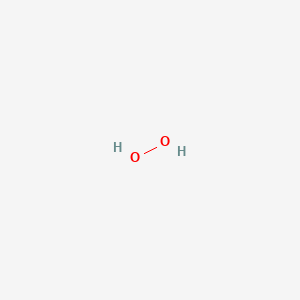
CAS 7722-84-1PubChem CID 784

Hydrogen Peroxide

Peroxides is compounds of structure ROOR'. It has a role as an oxidising agent. It contains a peroxy group. — ChEBI

IUPAC 名称
hydrogen peroxide
分子式
H2O2
分子量
34.015 g/mol
精确质量
34.005479302 Da
XLogP3
-0.9
拓扑极性表面积
40.5 Ų
氢键供体
2
氢键受体
2
共价单元
1
已定义的立体中心
0

又称

oxydolperhydrolSuperoxolInteroxHydrogen dioxideInhibinePeroxaanAlbone
另有 16 个已报告名称
HioxylKastoneH2O2Albone 35Albone DSDihydrogen dioxideT-StuffElawoxLenseptPeroneAlbone 35CGAlbone 50Albone 50CGAlbone 70Albone 70CGPerone 50
外部数据库标识符

于 2026-08-31 通过校验和有效的 CAS 匹配从美国国立卫生研究院 (NIH) PubChem 检索。化学性质不能取代本页的监管决定。

进一步查看此记录

在配方中筛查打开独立对比

官方来源与范围

导入自委员会实施决定 (EU) 2025/1175(数据集版本 EU 2025/1175)。词汇表为第 19(1)(g) 条所要求的成分表提供通用成分名称;它不是准许清单或安全清单。

打开官方决定