
BEHENTRIMONIUM CHLORIDE (1) / CETRIMONIUM BROMIDE / CETRIMONIUM CHLORIDE (2)/ LAURTRIMONIUM BROMIDE / LAURTRIMONIUM CHLORIDE / STEARTRIMONIUM BROMIDE / STEARTRIMONIUM CHLORIDE (2)
Alkyl (C12-C22) trimethyl ammonium bromide and chloride
BEHENTRIMONIUM CHLORIDE (1) / CETRIMONIUM BROMIDE / CETRIMONIUM CHLORIDE (2)/ LAURTRIMONIUM BROMIDE / LAURTRIMONIUM CHLORIDE / STEARTRIMONIUM BROMIDE / STEARTRIMONIUM CHLORIDE (2) 作为欧盟化妆品准用清单防腐剂条目出现在附件 V 中。 本记录中的最大浓度:0.1%。
记录详情
最大浓度
0.1%
INCI 词汇表名称
BEHENTRIMONIUM CHLORIDE (1) / CETRIMONIUM BROMIDE / CETRIMONIUM CHLORIDE (2)/ LAURTRIMONIUM BROMIDE / LAURTRIMONIUM CHLORIDE / STEARTRIMONIUM BROMIDE / STEARTRIMONIUM CHLORIDE (2)
化学名称
Alkyl (C12-C22) trimethyl ammonium bromide and chloride
监管信息
SCCS 意见
已识别的成分
- BEHENTRIMONIUM CHLORIDE
- CETEARTRIMONIUM CHLORIDE
- CETRIMONIUM BROMIDE
- CETRIMONIUM CHLORIDE
- COCOTRIMONIUM CHLORIDE
- HYDROGENATED PALMTRIMONIUM CHLORIDE
- HYDROGENATED TALLOWTRIMONIUM CHLORIDE
- LAURTRIMONIUM BROMIDE
- LAURTRIMONIUM CHLORIDE
- MYRTRIMONIUM BROMIDE
- SOYTRIMONIUM CHLORIDE
- STEARTRIMONIUM BROMIDE
- STEARTRIMONIUM CHLORIDE
- TALLOWTRIMONIUM CHLORIDE
关键数据
化学身份与性质
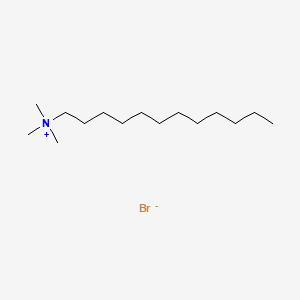
Dodecyltrimethylammonium bromide
Dodecyltrimethylammonium bromide is a bromide salt and a quaternary ammonium salt. It has a role as a surfactant. It contains a dodecyltrimethylammonium ion. — ChEBI
- IUPAC 名称
- dodecyl(trimethyl)azanium bromide
- 分子式
- C15H34BrN
- 分子量
- 308.34 g/mol
- 精确质量
- 307.18746 Da
- 拓扑极性表面积
- 0.0 Ų
- 氢键供体
- 0
- 氢键受体
- 1
- 共价单元
- 2
- 已定义的立体中心
- 0
又称
另有 16 个已报告名称
外部数据库标识符
- ChEBI:CHEBI:282662
- ChEMBL:CHEMBL109873
- EPA DTXSID:DTXSID5044366
来自其他科学数据库的证据
NIH PubChem PUG-View
Attributed physical-property, hazard, environmental and use annotations.
- Physical Description: Dry Powder 来源: EPA Chemical Data Reporting (CDR)
- Physical Description: White to light yellow odorless powder; Hygroscopic; [Acros Organics MSDS] 来源: Haz-Map, Information on Hazardous Chemicals and Occupational Diseases
- Note: This chemical does not meet GHS hazard criteria for 2.2% (2 of 89) of reports. 来源: European Chemicals Agency (ECHA)
- Signal: Danger 来源: European Chemicals Agency (ECHA)
- GHS Hazard Statements: H301 (20.2%): Toxic if swallowed [Danger Acute toxicity, oral]; H302 (53.9%): Harmful if swallowed [Warning Acute toxicity, oral]; H315 (96.6%): Causes skin irritation [Warning Skin corrosion/irritation]; H317 (23.6%): May cause an allergic skin reaction [Warning Sensitization, Skin]; H319 (96.6%): Causes serious eye irritation [Warning Serious eye damage/eye irritation]; H335 (62.9%): May cause respiratory irritation [Warning Specific target organ toxicity, single exposure; Respiratory tract irritation]; H400 (69.7%): Very toxic to aquatic life [Warning Hazardous to the aquatic environment, acute hazard]; H410 (66.3%): Very toxic to aquatic life with long lasting effects [Warning Hazardous to the aquatic environment, long-term hazard] 来源: European Chemicals Agency (ECHA)
- Precautionary Statement Codes: P261, P264, P264+P265, P270, P271, P272, P273, P280, P301+P316, P301+P317, P302+P352, P304+P340, P305+P351+P338, P319, P321, P330, P332+P317, P333+P317, P337+P317, P362+P364, P391, P403+P233, P405, and P501 (click each P-code to see the statement) 来源: European Chemicals Agency (ECHA)
- ECHA C&L Notifications Summary: Aggregated GHS information provided per 89 reports by companies from 18 notifications to the ECHA C&L Inventory. Each notification may be associated with multiple companies.; Reported as not meeting GHS hazard criteria per 2 of 89 reports by companies.; There are 17 notifications provided by 87 of 89 reports by companies with hazard statement code(s).; Information may vary between notifications depending on impurities, additives, and other factors. The percentage value in parenthesis indicates the notified classification ratio from companies that provide hazard codes. Only hazard codes with percentage values above 10% are shown. For more detailed information, please visit ECHA C&L website. 来源: European Chemicals Agency (ECHA)
- Signal: Danger 来源: NITE-CMC
- GHS Hazard Statements: H301: Toxic if swallowed [Danger Acute toxicity, oral]; H315: Causes skin irritation [Warning Skin corrosion/irritation]; H400: Very toxic to aquatic life [Warning Hazardous to the aquatic environment, acute hazard]; H410: Very toxic to aquatic life with long lasting effects [Warning Hazardous to the aquatic environment, long-term hazard] 来源: NITE-CMC
- Precautionary Statement Codes: P264, P270, P273, P280, P301+P316, P302+P352, P321, P330, P332+P317, P362+P364, P391, P405, and P501 (click each P-code to see the statement) 来源: NITE-CMC
- Signal: Danger 来源: Hazardous Chemical Information System (HCIS), Safe Work Australia
- GHS Hazard Statements: H302: Harmful if swallowed [Warning Acute toxicity, oral]; H312: Harmful in contact with skin [Warning Acute toxicity, dermal]; H314: Causes severe skin burns and eye damage [Danger Skin corrosion/irritation] 来源: Hazardous Chemical Information System (HCIS), Safe Work Australia
- Precautionary Statement Codes: P260, P264, P270, P280, P301+P317, P301+P330+P331, P302+P352, P302+P361+P354, P304+P340, P305+P354+P338, P316, P317, P321, P330, P362+P364, P363, P405, and P501 (click each P-code to see the statement) 来源: Hazardous Chemical Information System (HCIS), Safe Work Australia
- Cosmetic Ingredient Review Conclusion: The CIR Expert Panel concluded the following ingredients are safe in the present practices of use and concentration described in the safety assessment when formulated to be non-irritating...Laurtrimonium Bromide... 来源: Cosmetic Ingredient Review (CIR)
- Cosmetic Ingredient Review Finding(s): Safe for use in cosmetics, with qualifications 来源: Cosmetic Ingredient Review (CIR)
- Industry Uses: Defoamer 来源: EPA Chemical Data Reporting (CDR)
- Cosmetic Ingredient Review Link: CIR ingredient: Laurtrimonium Bromide 来源: Cosmetic Ingredient Review (CIR)
映射方: Existing checksum-valid CAS to unique PubChem CID match. 检索时间: 2026-08-31. 打开来源记录
科学分类和危害注释仅提供背景信息,不能取代上方所示针对具体市场的监管决定。
其他来源的覆盖范围和匹配状态
| 来源 | 结果 | 已检查 |
|---|---|---|
| NIH PubChem PUG-View | 精确匹配 | 2026-08-31 |
已记录的无匹配结果是该来源已被检查的有效证据;这并不表示该物质在别处不存在。
于 2026-08-31 通过校验和有效的 CAS 匹配从美国国立卫生研究院 (NIH) PubChem 检索。化学性质不能取代本页的监管决定。
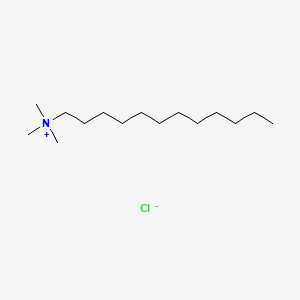
Dodecyltrimethylammonium chloride
The CIR Expert Panel concluded the following ingredients are safe in the present practices of use and concentration described in the safety assessment when formulated to be non-irritating...Laurtrimonium Chloride... — Cosmetic Ingredient Review (CIR)
- IUPAC 名称
- dodecyl(trimethyl)azanium chloride
- 分子式
- C15H34ClN
- 分子量
- 263.89 g/mol
- 精确质量
- 263.2379778 Da
- 拓扑极性表面积
- 0.0 Ų
- 氢键供体
- 0
- 氢键受体
- 1
- 共价单元
- 2
- 已定义的立体中心
- 0
又称
另有 16 个已报告名称
外部数据库标识符
- ChEMBL:CHEMBL1884887
- EPA DTXSID:DTXSID1026900
来自其他科学数据库的证据
NIH PubChem PUG-View
Attributed physical-property, hazard, environmental and use annotations.
- Physical Description: CBI; Liquid 来源: EPA Chemical Data Reporting (CDR)
- Physical Description: Solid; [EPA ChAMP: Initial Risk-Based Prioritization Document] White to light yellow powder and chunks; Hygroscopic; [Acros Organics MSDS] 来源: Haz-Map, Information on Hazardous Chemicals and Occupational Diseases
- Vapor Pressure: 0.00000001 [mmHg] 来源: Haz-Map, Information on Hazardous Chemicals and Occupational Diseases
- Note: This chemical does not meet GHS hazard criteria for 2.5% (12 of 476) of reports. 来源: European Chemicals Agency (ECHA)
- Signal: Danger 来源: European Chemicals Agency (ECHA)
- GHS Hazard Statements: H302 (87.2%): Harmful if swallowed [Warning Acute toxicity, oral]; H314 (31.1%): Causes severe skin burns and eye damage [Danger Skin corrosion/irritation]; H315 (64.1%): Causes skin irritation [Warning Skin corrosion/irritation]; H318 (28.8%): Causes serious eye damage [Danger Serious eye damage/eye irritation]; H319 (54%): Causes serious eye irritation [Warning Serious eye damage/eye irritation]; H335 (30%): May cause respiratory irritation [Warning Specific target organ toxicity, single exposure; Respiratory tract irritation]; H400 (80.3%): Very toxic to aquatic life [Warning Hazardous to the aquatic environment, acute hazard]; H410 (27.9%): Very toxic to aquatic life with long lasting effects [Warning Hazardous to the aquatic environment, long-term hazard]; H411 (10.1%): Toxic to aquatic life with long lasting effects [Hazardous to the aquatic environment, long-term hazard] 来源: European Chemicals Agency (ECHA)
- Precautionary Statement Codes: P260, P261, P264, P264+P265, P270, P271, P273, P280, P301+P317, P301+P330+P331, P302+P352, P302+P361+P354, P304+P340, P305+P351+P338, P305+P354+P338, P316, P317, P319, P321, P330, P332+P317, P337+P317, P362+P364, P363, P391, P403+P233, P405, and P501 (click each P-code to see the statement) 来源: European Chemicals Agency (ECHA)
- ECHA C&L Notifications Summary: Aggregated GHS information provided per 476 reports by companies from 28 notifications to the ECHA C&L Inventory. Each notification may be associated with multiple companies.; Reported as not meeting GHS hazard criteria per 12 of 476 reports by companies.; There are 27 notifications provided by 464 of 476 reports by companies with hazard statement code(s).; Information may vary between notifications depending on impurities, additives, and other factors. The percentage value in parenthesis indicates the notified classification ratio from companies that provide hazard codes. Only hazard codes with percentage values above 10% are shown. For more detailed information, please visit ECHA C&L website. 来源: European Chemicals Agency (ECHA)
- Signal: Warning 来源: NITE-CMC
- GHS Hazard Statements: H302: Harmful if swallowed [Warning Acute toxicity, oral]; H315: Causes skin irritation [Warning Skin corrosion/irritation]; H319: Causes serious eye irritation [Warning Serious eye damage/eye irritation] 来源: NITE-CMC
- Precautionary Statement Codes: P264, P264+P265, P270, P280, P301+P317, P302+P352, P305+P351+P338, P321, P330, P332+P317, P337+P317, P362+P364, and P501 (click each P-code to see the statement) 来源: NITE-CMC
- GHS Hazard Statements: Not Classified 来源: NITE-CMC
- Signal: Danger 来源: Hazardous Chemical Information System (HCIS), Safe Work Australia
- GHS Hazard Statements: H302: Harmful if swallowed [Warning Acute toxicity, oral]; H312: Harmful in contact with skin [Warning Acute toxicity, dermal]; H314: Causes severe skin burns and eye damage [Danger Skin corrosion/irritation] 来源: Hazardous Chemical Information System (HCIS), Safe Work Australia
- Precautionary Statement Codes: P260, P264, P270, P280, P301+P317, P301+P330+P331, P302+P352, P302+P361+P354, P304+P340, P305+P354+P338, P316, P317, P321, P330, P362+P364, P363, P405, and P501 (click each P-code to see the statement) 来源: Hazardous Chemical Information System (HCIS), Safe Work Australia
- Cosmetic Ingredient Review Conclusion: The CIR Expert Panel concluded the following ingredients are safe in the present practices of use and concentration described in the safety assessment when formulated to be non-irritating...Laurtrimonium Chloride... 来源: Cosmetic Ingredient Review (CIR)
- Cosmetic Ingredient Review Finding(s): Safe for use in cosmetics, with qualifications 来源: Cosmetic Ingredient Review (CIR)
- Consumer Uses: Corrosion inhibitor; Surfactant (surface active agent) 来源: EPA Chemical Data Reporting (CDR)
- Industry Uses: CBI; Surfactant (surface active agent); Corrosion inhibitor; Etching agent 来源: EPA Chemical Data Reporting (CDR)
- Cosmetic Ingredient Review Link: CIR ingredient: Laurtrimonium Chloride 来源: Cosmetic Ingredient Review (CIR)
- Sources/Uses: Typical uses of category members include surfactants, intermediates, anti-scaling agents, fabric softeners, multifunctional laundry detergents, antistatic sprays, germicides, deodorizers, emulsifiers, hair-care products, industrial lubricants, and corrosion inhibitors; [EPA ChAMP: Initial Risk-Based Prioritization Document] 来源: Haz-Map, Information on Hazardous Chemicals and Occupational Diseases
- Industrial Processes with risk of exposure: Using Disinfectants or Biocides [Category: Clean] 来源: Haz-Map, Information on Hazardous Chemicals and Occupational Diseases
映射方: Existing checksum-valid CAS to unique PubChem CID match. 检索时间: 2026-08-31. 打开来源记录
科学分类和危害注释仅提供背景信息,不能取代上方所示针对具体市场的监管决定。
其他来源的覆盖范围和匹配状态
| 来源 | 结果 | 已检查 |
|---|---|---|
| NIH PubChem PUG-View | 精确匹配 | 2026-08-31 |
已记录的无匹配结果是该来源已被检查的有效证据;这并不表示该物质在别处不存在。
于 2026-09-02 通过校验和有效的 CAS 匹配从美国国立卫生研究院 (NIH) PubChem 检索。化学性质不能取代本页的监管决定。
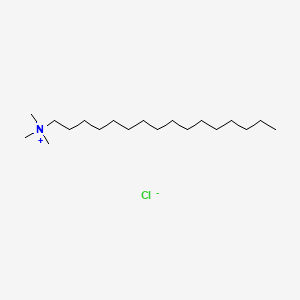
Hexadecyltrimethylammonium chloride
Cetyltrimethylammonium chloride is the organic chloride salt of cetyltrimethylammonium. It has a role as a surfactant. It is a quaternary ammonium salt and an organic chloride salt. It contains a cetyltrimethylammonium ion. — ChEBI
- IUPAC 名称
- hexadecyl(trimethyl)azanium chloride
- 分子式
- C19H42ClN
- 分子量
- 320.0 g/mol
- 精确质量
- 319.3005780 Da
- 拓扑极性表面积
- 0.0 Ų
- 氢键供体
- 0
- 氢键受体
- 1
- 共价单元
- 2
- 已定义的立体中心
- 0
又称
另有 16 个已报告名称
外部数据库标识符
- ChEBI:CHEBI:53581
- ChEMBL:CHEMBL1895807
- EPA DTXSID:DTXSID6026901
- PubMed:10124
来自其他科学数据库的证据
NIH PubChem PUG-View
Attributed physical-property, hazard, environmental and use annotations.
- Autoignition Temperature: 750 °F (USCG, 1999) 来源: CAMEO Chemicals
- Autoignition Temperature: 750 °F /ISOPROPYL ALCOHOL SOLN OF CETYLTRIMETHYLAMMONIUM CHLORIDE/ 来源: Hazardous Substances Data Bank (HSDB)
- Boiling Point: 180 °F at 760 mmHg (isopropyl alcohol) (USCG, 1999) 来源: CAMEO Chemicals
- Density: 0.9 at 77 °F (approx.) (USCG, 1999) - Less dense than water; will float 来源: CAMEO Chemicals
- Flash Point: 69 °F (USCG, 1999) 来源: CAMEO Chemicals
- LogP: log Kow= 3.23 来源: Hazardous Substances Data Bank (HSDB)
- Physical Description: Hexadecyltrimethylammonium chloride appears as colorless to pale yellow liquid with an odor of rubbing alcohol. Floats or sinks in water. (USCG, 1999) 来源: CAMEO Chemicals
- Physical Description: Liquid; CBI 来源: EPA Chemical Data Reporting (CDR)
- Physical Description: Solution: Clear to pale yellow liquid; [HSDB] White powder; [MSDSonline] 来源: Haz-Map, Information on Hazardous Chemicals and Occupational Diseases
- Solubility: Water solubility: 440 mg/l at 30 °C 来源: Hazardous Substances Data Bank (HSDB)
- First Aid: INGESTION: do NOT induce vomiting; drink large quanities of fluid and call a physician immediately.; EYES: flush with water for at least 15 min. and call a physician.; SKIN: flush with water. (USCG, 1999) 来源: CAMEO Chemicals
- Note: This chemical does not meet GHS hazard criteria for 0.5% (5 of 1105) of reports. 来源: European Chemicals Agency (ECHA)
- Signal: Danger 来源: European Chemicals Agency (ECHA)
- GHS Hazard Statements: H302 (49%): Harmful if swallowed [Warning Acute toxicity, oral]; H311 (28.6%): Toxic in contact with skin [Danger Acute toxicity, dermal]; H314 (41.5%): Causes severe skin burns and eye damage [Danger Skin corrosion/irritation]; H315 (52.3%): Causes skin irritation [Warning Skin corrosion/irritation]; H318 (85.7%): Causes serious eye damage [Danger Serious eye damage/eye irritation]; H335 (44.3%): May cause respiratory irritation [Warning Specific target organ toxicity, single exposure; Respiratory tract irritation]; H400 (99.4%): Very toxic to aquatic life [Warning Hazardous to the aquatic environment, acute hazard]; H410 (40.9%): Very toxic to aquatic life with long lasting effects [Warning Hazardous to the aquatic environment, long-term hazard] 来源: European Chemicals Agency (ECHA)
- Precautionary Statement Codes: P260, P261, P262, P264, P264+P265, P270, P271, P273, P280, P301+P317, P301+P330+P331, P302+P352, P302+P361+P354, P304+P340, P305+P354+P338, P316, P317, P319, P321, P330, P332+P317, P361+P364, P362+P364, P363, P391, P403+P233, P405, and P501 (click each P-code to see the statement) 来源: European Chemicals Agency (ECHA)
- ECHA C&L Notifications Summary: Aggregated GHS information provided per 1105 reports by companies from 42 notifications to the ECHA C&L Inventory. Each notification may be associated with multiple companies.; Reported as not meeting GHS hazard criteria per 5 of 1105 reports by companies.; There are 41 notifications provided by 1100 of 1105 reports by companies with hazard statement code(s).; Information may vary between notifications depending on impurities, additives, and other factors. The percentage value in parenthesis indicates the notified classification ratio from companies that provide hazard codes. Only hazard codes with percentage values above 10% are shown. For more detailed information, please visit ECHA C&L website. 来源: European Chemicals Agency (ECHA)
- Signal: Danger 来源: NITE-CMC
- GHS Hazard Statements: H302: Harmful if swallowed [Warning Acute toxicity, oral]; H315: Causes skin irritation [Warning Skin corrosion/irritation]; H318: Causes serious eye damage [Danger Serious eye damage/eye irritation]; H335: May cause respiratory irritation [Warning Specific target organ toxicity, single exposure; Respiratory tract irritation]; H400: Very toxic to aquatic life [Warning Hazardous to the aquatic environment, acute hazard]; H410: Very toxic to aquatic life with long lasting effects [Warning Hazardous to the aquatic environment, long-term hazard] 来源: NITE-CMC
- Precautionary Statement Codes: P261, P264, P264+P265, P270, P271, P273, P280, P301+P317, P302+P352, P304+P340, P305+P354+P338, P317, P319, P321, P330, P332+P317, P362+P364, P391, P403+P233, P405, and P501 (click each P-code to see the statement) 来源: NITE-CMC
- Signal: Warning 来源: NITE-CMC
- GHS Hazard Statements: H302: Harmful if swallowed [Warning Acute toxicity, oral]; H315: Causes skin irritation [Warning Skin corrosion/irritation]; H319: Causes serious eye irritation [Warning Serious eye damage/eye irritation]; H335: May cause respiratory irritation [Warning Specific target organ toxicity, single exposure; Respiratory tract irritation] 来源: NITE-CMC
- Precautionary Statement Codes: P261, P264, P264+P265, P270, P271, P280, P301+P317, P302+P352, P304+P340, P305+P351+P338, P319, P321, P330, P332+P317, P337+P317, P362+P364, P403+P233, P405, and P501 (click each P-code to see the statement) 来源: NITE-CMC
- Signal: Danger 来源: Hazardous Chemical Information System (HCIS), Safe Work Australia
- Cosmetic Ingredient Review Conclusion: The CIR Expert Panel concluded the following ingredients are safe in the present practices of use and concentration described in the safety assessment when formulated to be non-irritating...Cetrimonium Chloride... 来源: Cosmetic Ingredient Review (CIR)
- Cosmetic Ingredient Review Finding(s): Safe for use in cosmetics, with qualifications 来源: Cosmetic Ingredient Review (CIR)
- Environmental Bioconcentration: An estimated BCF of 71 was calculated for trimethylhexadecylammonium chloride(SRC), using an estimated log Kow of 3.23(1) and a regression-derived equation(2). According to a classification scheme(3), this BCF suggests the potential for bioconcentration in aquatic organisms is moderate. 来源: Hazardous Substances Data Bank (HSDB)
- Environmental Fate: TERRESTRIAL FATE: Based on a classification scheme(1), an estimated Koc value of 2.2X10+5(SRC), determined from a structure estimation method(2), indicates that trimethylhexadecylammonium chloride is expected to be immobile in soil(SRC). Volatilization of trimethylhexadecylammonium chloride from moist soil surfaces is not expected to be an important fate process(SRC) given an estimated Henry's Law constant of 2.9X10⁻¹⁰ atm-cu m/mole(SRC), using a fragment constant estimation method(3). Trimethylhexadecylammonium chloride is not expected to volatilize from dry soil surfaces(SRC) based upon an estimated vapor pressure of 2.8X10⁻¹⁰ mm Hg(SRC), determined from a fragment constant method(4). 来源: Hazardous Substances Data Bank (HSDB)
- Environmental Fate: AQUATIC FATE: Based on a classification scheme(1), an estimated Koc value of 2.2X10+5(SRC), determined from an estimation method(2), indicates that trimethylhexadecylammonium chloride is expected to adsorb to suspended solids and sediment in water(SRC). Volatilization from water surfaces is not expected(3) based upon an estimated Henry's Law constant of 2.9X10⁻¹⁰ atm-cu m/mole(SRC), developed using a fragment constant estimation method(4). According to a classification scheme(5), an estimated BCF of 71(SRC), from its log Kow of 3.23(6) and a regression-derived equation(7), suggests the potential for bioconcentration in aquatic organisms is moderate. The MITI, closed bottle, and Sturm tests revealed no degradation after 10 days, microbial growth after 17 days, and 84% degradation after 13 days, respectively(8). 10-20 ppm trimethylhexadecylammonium chloride was degraded with a half-life of 3.1 days in freshwater collected from the Ohio river 1 mile below discharge from a municipal treatment plant at 20 °C and pH 6.9(9). 来源: Hazardous Substances Data Bank (HSDB)
- Environmental Fate: ATMOSPHERIC FATE: According to a model of gas/particle partitioning of semivolatile organic compounds in the atmosphere(1), trimethylhexadecylammonium chloride, which has an estimated vapor pressure of 2.8X10⁻¹⁰ mm Hg at 25 °C(SRC), using a fragment constant estimation method(2), is expected to exist solely in the particulate phase in the ambient atmosphere. Particulate-phase trimethylhexadecylammonium chloride may be removed from the air by wet and dry deposition(SRC). 来源: Hazardous Substances Data Bank (HSDB)
- Consumer Uses: Cleaning agent; Corrosion inhibitor; Softener and conditioner; Surface modifier; Surfactant (surface active agent) 来源: EPA Chemical Data Reporting (CDR)
- Industry Uses: Corrosion inhibitor; Processing aids, specific to petroleum production; Softener and conditioner; Surface modifier; CBI; Processing aids not otherwise specified; Surfactant (surface active agent) 来源: EPA Chemical Data Reporting (CDR)
- Cosmetic Ingredient Review Link: CIR ingredient: Cetrimonium Chloride 来源: Cosmetic Ingredient Review (CIR)
- Sources/Uses: Available as a 25% aqueous solution and 50% solution in isopropyl alcohol and water for use in antifungal formulations and hair conditioners; Also used as a disinfectant/germicide, cationic detergent, fermentation aid, dispersant, coagulant for antibiotic production, and antistatic and softening agent for textile finishes; [HSDB] 来源: Haz-Map, Information on Hazardous Chemicals and Occupational Diseases
- Industrial Processes with risk of exposure: Using Disinfectants or Biocides [Category: Clean]; Textiles (Printing, Dyeing, or Finishing) [Category: Industry] 来源: Haz-Map, Information on Hazardous Chemicals and Occupational Diseases
- Uses: USED IN ANTIFUNGAL FORMULATION; IN HAIR CONDITIONER FORMULATION; DISINFECTANT; CATIONIC DETERGENT 来源: Hazardous Substances Data Bank (HSDB)
- Uses: SOFTENER IN HAIR TREATMENTS, EG, CREME RINSES 来源: Hazardous Substances Data Bank (HSDB)
- Uses: FERMENTATION AID 来源: Hazardous Substances Data Bank (HSDB)
- Uses: GERMICIDE 来源: Hazardous Substances Data Bank (HSDB)
- Uses: For more Uses (Complete) data for TRIMETHYLHEXADECYLAMMONIUM CHLORIDE (6 total), please visit the HSDB record page. 来源: Hazardous Substances Data Bank (HSDB)
映射方: Existing checksum-valid CAS to unique PubChem CID match. 检索时间: 2026-08-31. 打开来源记录
科学分类和危害注释仅提供背景信息,不能取代上方所示针对具体市场的监管决定。
其他来源的覆盖范围和匹配状态
| 来源 | 结果 | 已检查 |
|---|---|---|
| NIH PubChem PUG-View | 精确匹配 | 2026-08-31 |
已记录的无匹配结果是该来源已被检查的有效证据;这并不表示该物质在别处不存在。
于 2026-08-31 通过校验和有效的 CAS 匹配从美国国立卫生研究院 (NIH) PubChem 检索。化学性质不能取代本页的监管决定。
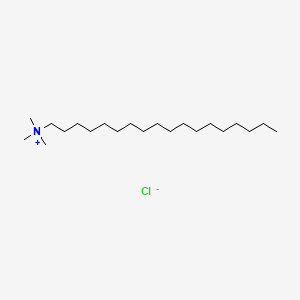
Stearyltrimethylammonium chloride
Stearyltrimethylammonium chloride is an organic molecular entity. — ChEBI
- IUPAC 名称
- trimethyl(octadecyl)azanium chloride
- 分子式
- C21H46ClN
- 分子量
- 348.0 g/mol
- 精确质量
- 347.3318782 Da
- 拓扑极性表面积
- 0.0 Ų
- 氢键供体
- 0
- 氢键受体
- 1
- 共价单元
- 2
- 已定义的立体中心
- 0
又称
另有 16 个已报告名称
外部数据库标识符
- ChEBI:CHEBI:81710
- ChEMBL:CHEMBL118745
- EPA DTXSID:DTXSID1026902
来自其他科学数据库的证据
NIH PubChem PUG-View
Attributed physical-property, hazard, environmental and use annotations.
- Physical Description: CBI; Large Crystals 来源: EPA Chemical Data Reporting (CDR)
- Carcinogen Classification: Not listed by IARC. Certain nitrosamines are classified by IARC as either probably or possibly carcinogenic to humans (Groups 2A and 2B, respectively). (L135) 来源: Toxin and Toxin Target Database (T3DB)
- Exposure Routes: Oral (A2880) ; inhalation (A2880) ; dermal (L1889) 来源: Toxin and Toxin Target Database (T3DB)
- Note: This chemical does not meet GHS hazard criteria for 3.7% (10 of 268) of reports. 来源: European Chemicals Agency (ECHA)
- Signal: Danger 来源: European Chemicals Agency (ECHA)
- GHS Hazard Statements: H302 (88.1%): Harmful if swallowed [Warning Acute toxicity, oral]; H311 (54.5%): Toxic in contact with skin [Danger Acute toxicity, dermal]; H312 (19.8%): Harmful in contact with skin [Warning Acute toxicity, dermal]; H314 (79.1%): Causes severe skin burns and eye damage [Danger Skin corrosion/irritation]; H318 (29.5%): Causes serious eye damage [Danger Serious eye damage/eye irritation]; H400 (71.6%): Very toxic to aquatic life [Warning Hazardous to the aquatic environment, acute hazard]; H410 (78.7%): Very toxic to aquatic life with long lasting effects [Warning Hazardous to the aquatic environment, long-term hazard] 来源: European Chemicals Agency (ECHA)
- Precautionary Statement Codes: P260, P262, P264, P264+P265, P270, P273, P280, P301+P317, P301+P330+P331, P302+P352, P302+P361+P354, P304+P340, P305+P354+P338, P316, P317, P321, P330, P361+P364, P362+P364, P363, P391, P405, and P501 (click each P-code to see the statement) 来源: European Chemicals Agency (ECHA)
- ECHA C&L Notifications Summary: Aggregated GHS information provided per 268 reports by companies from 19 notifications to the ECHA C&L Inventory. Each notification may be associated with multiple companies.; Reported as not meeting GHS hazard criteria per 10 of 268 reports by companies.; There are 18 notifications provided by 258 of 268 reports by companies with hazard statement code(s).; Information may vary between notifications depending on impurities, additives, and other factors. The percentage value in parenthesis indicates the notified classification ratio from companies that provide hazard codes. Only hazard codes with percentage values above 10% are shown. For more detailed information, please visit ECHA C&L website. 来源: European Chemicals Agency (ECHA)
- Signal: Warning 来源: NITE-CMC
- GHS Hazard Statements: H302: Harmful if swallowed [Warning Acute toxicity, oral]; H312: Harmful in contact with skin [Warning Acute toxicity, dermal] 来源: NITE-CMC
- Precautionary Statement Codes: P264, P270, P280, P301+P317, P302+P352, P317, P321, P330, P362+P364, and P501 (click each P-code to see the statement) 来源: NITE-CMC
- Signal: Danger 来源: Hazardous Chemical Information System (HCIS), Safe Work Australia
- GHS Hazard Statements: H302: Harmful if swallowed [Warning Acute toxicity, oral]; H312: Harmful in contact with skin [Warning Acute toxicity, dermal]; H314: Causes severe skin burns and eye damage [Danger Skin corrosion/irritation] 来源: Hazardous Chemical Information System (HCIS), Safe Work Australia
- Precautionary Statement Codes: P260, P264, P270, P280, P301+P317, P301+P330+P331, P302+P352, P302+P361+P354, P304+P340, P305+P354+P338, P316, P317, P321, P330, P362+P364, P363, P405, and P501 (click each P-code to see the statement) 来源: Hazardous Chemical Information System (HCIS), Safe Work Australia
- Health Effects: Quaternium-10 may react to produce nitrosamines, which are believed to be carcinogenic. (L1890) 来源: Toxin and Toxin Target Database (T3DB)
- Cosmetic Ingredient Review Conclusion: The CIR Expert Panel concluded the following ingredients are safe in the present practices of use and concentration described in the safety assessment when formulated to be non-irritating...Steartrimonium Chloride... 来源: Cosmetic Ingredient Review (CIR)
- Cosmetic Ingredient Review Finding(s): Safe for use in cosmetics, with qualifications 来源: Cosmetic Ingredient Review (CIR)
- Toxicity Summary: While quaternium-10 itself is not toxic, it is a nitrosating agent. Nitrosating agents may decompose and/or react to cause nitrosamine contamination. Nitrosamines are produced from secondary amines and amides in the presence of nitrite ions and are believed to be carcinogenic. Once in the body, nitrosamines are activated by cytochrome P-450 enzymes. They are then believed to induce their carcinogenic effects by forming DNA adducts at the N- and O-atoms. (L1889, L1890, A2878, A2879, A2880) 来源: Toxin and Toxin Target Database (T3DB)
- Cosmetic Ingredient Review Link: CIR ingredient: Steartrimonium Chloride 来源: Cosmetic Ingredient Review (CIR)
- Uses: Quaternium-10 is a quaternary ammonium salt found in numerous cosmetics. (L1890) 来源: Toxin and Toxin Target Database (T3DB)
映射方: Existing checksum-valid CAS to unique PubChem CID match. 检索时间: 2026-08-31. 打开来源记录
科学分类和危害注释仅提供背景信息,不能取代上方所示针对具体市场的监管决定。
其他来源的覆盖范围和匹配状态
| 来源 | 结果 | 已检查 |
|---|---|---|
| NIH PubChem PUG-View | 精确匹配 | 2026-08-31 |
已记录的无匹配结果是该来源已被检查的有效证据;这并不表示该物质在别处不存在。
于 2026-08-31 通过校验和有效的 CAS 匹配从美国国立卫生研究院 (NIH) PubChem 检索。化学性质不能取代本页的监管决定。
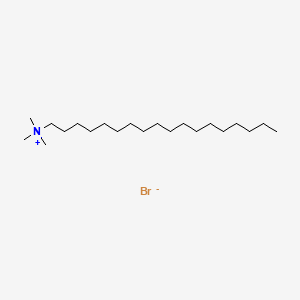
Octadecyltrimethylammonium bromide
The CIR Expert Panel concluded the following ingredients are safe in the present practices of use and concentration described in the safety assessment when formulated to be non-irritating...Steartrimonium Bromide... — Cosmetic Ingredient Review (CIR)
- IUPAC 名称
- trimethyl(octadecyl)azanium bromide
- 分子式
- C21H46BrN
- 分子量
- 392.5 g/mol
- 精确质量
- 391.28136 Da
- 拓扑极性表面积
- 0.0 Ų
- 氢键供体
- 0
- 氢键受体
- 1
- 共价单元
- 2
- 已定义的立体中心
- 0
又称
另有 16 个已报告名称
外部数据库标识符
- ChEMBL:CHEMBL109458
- EPA DTXSID:DTXSID40883652
来自其他科学数据库的证据
NIH PubChem PUG-View
Attributed physical-property, hazard, environmental and use annotations.
- Physical Description: White hygroscopic powder; [Sigma-Aldrich MSDS] 来源: Haz-Map, Information on Hazardous Chemicals and Occupational Diseases
- Signal: Danger 来源: European Chemicals Agency (ECHA)
- GHS Hazard Statements: H302 (13%): Harmful if swallowed [Warning Acute toxicity, oral]; H315 (100%): Causes skin irritation [Warning Skin corrosion/irritation]; H317 (10.9%): May cause an allergic skin reaction [Warning Sensitization, Skin]; H318 (10.9%): Causes serious eye damage [Danger Serious eye damage/eye irritation]; H319 (89.1%): Causes serious eye irritation [Warning Serious eye damage/eye irritation]; H335 (87%): May cause respiratory irritation [Warning Specific target organ toxicity, single exposure; Respiratory tract irritation] 来源: European Chemicals Agency (ECHA)
- Precautionary Statement Codes: P261, P264, P264+P265, P270, P271, P272, P280, P301+P317, P302+P352, P304+P340, P305+P351+P338, P305+P354+P338, P317, P319, P321, P330, P332+P317, P333+P317, P337+P317, P362+P364, P403+P233, P405, and P501 (click each P-code to see the statement) 来源: European Chemicals Agency (ECHA)
- ECHA C&L Notifications Summary: Aggregated GHS information provided per 46 reports by companies from 7 notifications to the ECHA C&L Inventory. Each notification may be associated with multiple companies.; Information may vary between notifications depending on impurities, additives, and other factors. The percentage value in parenthesis indicates the notified classification ratio from companies that provide hazard codes. Only hazard codes with percentage values above 10% are shown. For more detailed information, please visit ECHA C&L website. 来源: European Chemicals Agency (ECHA)
- Cosmetic Ingredient Review Conclusion: The CIR Expert Panel concluded the following ingredients are safe in the present practices of use and concentration described in the safety assessment when formulated to be non-irritating...Steartrimonium Bromide... 来源: Cosmetic Ingredient Review (CIR)
- Cosmetic Ingredient Review Finding(s): Safe for use in cosmetics, with qualifications 来源: Cosmetic Ingredient Review (CIR)
- Cosmetic Ingredient Review Link: CIR ingredient: Steartrimonium Bromide 来源: Cosmetic Ingredient Review (CIR)
映射方: Existing checksum-valid CAS to unique PubChem CID match. 检索时间: 2026-08-31. 打开来源记录
科学分类和危害注释仅提供背景信息,不能取代上方所示针对具体市场的监管决定。
其他来源的覆盖范围和匹配状态
| 来源 | 结果 | 已检查 |
|---|---|---|
| NIH PubChem PUG-View | 精确匹配 | 2026-08-31 |
已记录的无匹配结果是该来源已被检查的有效证据;这并不表示该物质在别处不存在。
于 2026-09-02 通过校验和有效的 CAS 匹配从美国国立卫生研究院 (NIH) PubChem 检索。化学性质不能取代本页的监管决定。
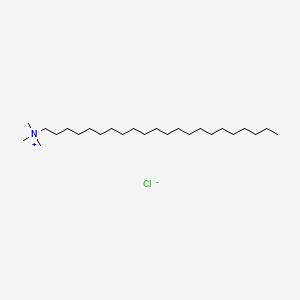
Behentrimonium Chloride
The CIR Expert Panel concluded the following ingredients are safe in the present practices of use and concentration described in the safety assessment when formulated to be non-irritating...Behentrimonium Chloride... — Cosmetic Ingredient Review (CIR)
- IUPAC 名称
- docosyl(trimethyl)azanium chloride
- 分子式
- C25H54ClN
- 分子量
- 404.2 g/mol
- 精确质量
- 403.3944784 Da
- 拓扑极性表面积
- 0.0 Ų
- 氢键供体
- 0
- 氢键受体
- 1
- 共价单元
- 2
- 已定义的立体中心
- 0
又称
另有 16 个已报告名称
外部数据库标识符
- EPA DTXSID:DTXSID60884964
于 2026-09-02 通过校验和有效的 CAS 匹配从美国国立卫生研究院 (NIH) PubChem 检索。化学性质不能取代本页的监管决定。
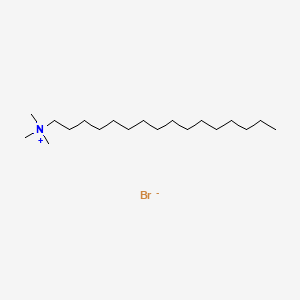
Hexadecyltrimethylammonium Bromide
Cetyltrimethylammonium bromide is the organic bromide salt that is the bromide salt of cetyltrimethylammonium; one of the components of the topical antiseptic cetrimide. It has a role as a detergent and a surfactant. It is a quaternary ammonium salt and an organic bromide salt. It contains a cetyltrimethylammonium ion. — ChEBI
- IUPAC 名称
- hexadecyl(trimethyl)azanium bromide
- 分子式
- C19H42BrN
- 分子量
- 364.4 g/mol
- 精确质量
- 363.25006 Da
- 拓扑极性表面积
- 0.0 Ų
- 氢键供体
- 0
- 氢键受体
- 1
- 共价单元
- 2
- 已定义的立体中心
- 0
又称
另有 16 个已报告名称
外部数据库标识符
- ChEBI:CHEBI:3567
- ChEMBL:CHEMBL307346
- EPA DTXSID:DTXSID5037028
于 2026-09-02 通过校验和有效的 CAS 匹配从美国国立卫生研究院 (NIH) PubChem 检索。化学性质不能取代本页的监管决定。
BEHENTRIMONIUM CHLORIDE (1) / CETRIMONIUM BROMIDE / CETRIMONIUM CHLORIDE (2)/ LAURTRIMONIUM BROMIDE / LAURTRIMONIUM CHLORIDE / STEARTRIMONIUM BROMIDE / STEARTRIMONIUM CHLORIDE (2) 的清单链接
HYDROGENATED TALLOWTRIMONIUM CHLORIDE
BEHENTRIMONIUM CHLORIDE (1) / CETRIMONIUM BROMIDE / CETRIMONIUM CHLORIDE (2)/ LAURTRIMONIUM BROMIDE / LAURTRIMONIUM CHLORIDE / STEARTRIMONIUM BROMIDE / STEARTRIMONIUM CHLORIDE (2) 的相关记录
该记录的直接匹配结果有限,因此同时显示附件 V 中的相邻条目。
CETRIMONIUM CHLORIDE (1) / STRARTRIMONIUM CHLORIDE (1)
CHLORHEXIDINE / CHLORHEXIDINE DIACETATE / CHLORHEXIDINE DIGLUCONATE / CHLORHEXIDINE DIHYDROCHLORIDE
METHYLCHLOROISOTHIAZOLINONE AND METHYLISOTHIAZOLINONE
HEXAMIDINE / HEXAMIDINE DIISETHIONATE / HEXAMIDINE DIPARABEN / HEXAMIDINE PARABEN
附件 V 对 BEHENTRIMONIUM CHLORIDE (1) / CETRIMONIUM BROMIDE / CETRIMONIUM CHLORIDE (2)/ LAURTRIMONIUM BROMIDE / LAURTRIMONIUM CHLORIDE / STEARTRIMONIUM BROMIDE / STEARTRIMONIUM CHLORIDE (2) 意味着什么
BEHENTRIMONIUM CHLORIDE (1) / CETRIMONIUM BROMIDE / CETRIMONIUM CHLORIDE (2)/ LAURTRIMONIUM BROMIDE / LAURTRIMONIUM CHLORIDE / STEARTRIMONIUM BROMIDE / STEARTRIMONIUM CHLORIDE (2) 是欧盟化妆品法规 1223/2009 附件 V 所列的准用防腐剂。只有列入该准用清单的物质才可在欧盟用作化妆品防腐剂。
每个防腐剂条目均规定了最大允许浓度和适用的产品范围。浓度不得超过所列最大值。部分防腐剂要求在产品标签上标示警示语。
本记录与 14 个 CosIng 清单成分相关联,便于名称和标识符的交叉引用。 本页还显示 12 条相关附件记录,其标识符、附件逻辑或命名模式存在重叠。
合规核查清单
- 使用浓度不得超过:0.1%
- 核实该防腐剂在准许浓度下对您的基质有效。
常见问题
附件 V 记录 BEHENTRIMONIUM CHLORIDE (1) / CETRIMONIUM BROMIDE / CETRIMONIUM CHLORIDE (2)/ LAURTRIMONIUM BROMIDE / LAURTRIMONIUM CHLORIDE / STEARTRIMONIUM BROMIDE / STEARTRIMONIUM CHLORIDE (2) 的来源说明
本页概述欧盟委员会公开化妆品资料中 BEHENTRIMONIUM CHLORIDE (1) / CETRIMONIUM BROMIDE / CETRIMONIUM CHLORIDE (2)/ LAURTRIMONIUM BROMIDE / LAURTRIMONIUM CHLORIDE / STEARTRIMONIUM BROMIDE / STEARTRIMONIUM CHLORIDE (2) 的一条附件 V 记录,并在可用时补充关联的清单或标识符匹配。
请使用本记录页面查看 BEHENTRIMONIUM CHLORIDE (1) / CETRIMONIUM BROMIDE / CETRIMONIUM CHLORIDE (2)/ LAURTRIMONIUM BROMIDE / LAURTRIMONIUM CHLORIDE / STEARTRIMONIUM BROMIDE / STEARTRIMONIUM CHLORIDE (2) 的附件 V 条件,但任何最终监管决定都应对照现行官方附件措辞和来源文件确认。
工具与后续步骤
检查您的配方
粘贴完整的 INCI 成分表,一次性检出 BEHENTRIMONIUM CHLORIDE (1) / CETRIMONIUM BROMIDE / CETRIMONIUM CHLORIDE (2)/ LAURTRIMONIUM BROMIDE / LAURTRIMONIUM CHLORIDE / STEARTRIMONIUM BROMIDE / STEARTRIMONIUM CHLORIDE (2) 及其他被标记的欧盟附件记录。
INCI 检查器条目对比
将 BEHENTRIMONIUM CHLORIDE (1) / CETRIMONIUM BROMIDE / CETRIMONIUM CHLORIDE (2)/ LAURTRIMONIUM BROMIDE / LAURTRIMONIUM CHLORIDE / STEARTRIMONIUM BROMIDE / STEARTRIMONIUM CHLORIDE (2) 与另一条附件记录并排对比,查看限制、浓度和附件归属的差异。
对比