
METHENAMINE
Methenamine
METHENAMINE 作为欧盟化妆品准用清单防腐剂条目出现在附件 V 中。 本记录中的最大浓度:0.15%。
记录详情
最大浓度
0.15%
INCI 词汇表名称
METHENAMINE
化学名称
Methenamine
化学名称 / IUPAC 名称
1,3,5,7-Tetraazatricyclo[3.3.1.1(3,7)]decane
监管信息
SCCS 意见
- Opinion concerning Restrictions on Materials listed in annex VI of Directive 76/768/EEC on Cosmetic Products
- Opinion on The Determination of certain Formaldehyde Releasers in Cosmetic Products
- SCIENTIFIC ADVICE ON the threshold for the warning ‘contains formaldehyde’ in Annex V, preamble point 2 for formaldehyde-releasing substances
已识别的成分
关键数据
化学身份与性质
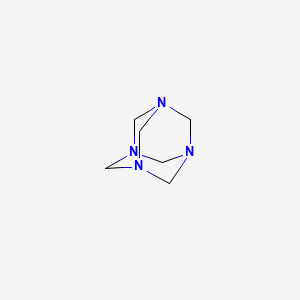
Hexamethylenetetramine
Hexamethylenetetramine is a polycyclic cage that is adamantane in which the carbon atoms at positions 1, 3, 5 and 7 are replaced by nitrogen atoms. It has a role as an antibacterial drug. It is a polycyclic cage, a tetramine and a polyazaalkane. — ChEBI
- IUPAC 名称
- 1,3,5,7-tetrazatricyclo[3.3.1.13,7]decane
- 分子式
- C6H12N4
- 分子量
- 140.19 g/mol
- 精确质量
- 140.106196400 Da
- XLogP3
- 0.3
- 拓扑极性表面积
- 13.0 Ų
- 氢键供体
- 0
- 氢键受体
- 4
- 共价单元
- 1
- 已定义的立体中心
- 0
又称
另有 16 个已报告名称
外部数据库标识符
- ChEBI:CHEBI:6824
- ChEMBL:CHEMBL1201270
- EPA DTXSID:DTXSID6020692
- PubMed:32876438
- PubMed:24689705
- PubMed:23571415
- PubMed:23110170
- PubMed:23076896
- PubMed:23060961
- PubMed:23060957
- PubMed:23012900
- PubMed:22966704
- PubMed:22959825
- PubMed:22947203
- PubMed:22917514
来自其他科学数据库的证据
EMBL-EBI ChEBI
hexamethylenetetramine
A polycyclic cage that is adamantane in which the carbon atoms at positions 1, 3, 5 and 7 are replaced by nitrogen atoms.
- 配方
- C6H12N4
- 平均质量
- 140.190 g/mol
- 单同位素质量
- 140.10620 Da
- 形式电荷
- 0
- polycyclic cage — is a (CHEBI:33640)
- polyazaalkane — is a (CHEBI:39474)
- tetramine — is a (CHEBI:39166)
- antibacterial drug — has role (CHEBI:36047)
- antibacterial agent — has role (CHEBI:33282)
- antibacterial drug — has role (CHEBI:36047)
- antibacterial agent — has role (CHEBI:33282)
- polycyclic cage — is a (CHEBI:33640)
- polyazaalkane — is a (CHEBI:39474)
- tetramine — is a (CHEBI:39166)
其他整理的名称
来自此来源的交叉引用
- CAS: 100-97-0 — ChemIDplus
- CAS: 100-97-0 — NIST Chemistry WebBook
- REGISTRY_NUMBER: 2018 — Reaxys
- REGISTRY_NUMBER: 26964 — Gmelin
- MANUAL_X_REF: 3344 — DrugCentral
- MANUAL_X_REF: D00393 — KEGG DRUG
- MANUAL_X_REF: HMDB0029598 — HMDB
- MANUAL_X_REF: LSM-5440 — LINCS
- MANUAL_X_REF: Methenamine — Wikipedia
- MANUAL_X_REF: US2762799 — Patent
- MANUAL_X_REF: US2762800 — Patent
映射方: Exact CAS cross-reference in the ChEBI compound record. 来源更新: 2017-02-22. 检索时间: 2026-08-31. 打开来源记录
NIH PubChem PUG-View
Attributed physical-property, hazard, environmental and use annotations.
- Autoignition Temperature: greater than 700 °F (NTP, 1992) 来源: CAMEO Chemicals
- Autoignition Temperature: 390 °C 来源: ILO-WHO International Chemical Safety Cards (ICSCs)
- Boiling Point: Sublimes (NTP, 1992) 来源: CAMEO Chemicals
- Color/Form: Crystallizes from ethanol as colorless, hygroscopic rhombododecahedra. 来源: Hazardous Substances Data Bank (HSDB)
- Color/Form: Colorless crystalline solid 来源: Hazardous Substances Data Bank (HSDB)
- Color/Form: Colorless, lustrous crystals or white crystalline powder 来源: Hazardous Substances Data Bank (HSDB)
- Color/Form: White, crystalline powder or colorless, lustrous crystals 来源: Hazardous Substances Data Bank (HSDB)
- Density: 1.35 at 68 °F (USCG, 1999) - Denser than water; will sink 来源: CAMEO Chemicals
- Density: 1.3394 g/cu cm at 22 °C 来源: Hazardous Substances Data Bank (HSDB)
- Density: Density: 1.27 at 25 °C 来源: Hazardous Substances Data Bank (HSDB)
- Density: 1.33 g/cm³ 来源: ILO-WHO International Chemical Safety Cards (ICSCs)
- Density: 1.331 @ -5°C 来源: PAC Chemical Database, U.S. Department of Energy
- Dissociation Constants: 1.4X10⁻⁹ (pK = 8.854), temperature not reported 来源: Hazardous Substances Data Bank (HSDB)
- Dissociation Constants: pKa = 4.89 at 25 °C 来源: Hazardous Substances Data Bank (HSDB)
- Flash Point: 482 °F (NTP, 1992) 来源: CAMEO Chemicals
- Flash Point: 482 °F 来源: Haz-Map, Information on Hazardous Chemicals and Occupational Diseases
- Flash Point: 250 °C (482 °F) - closed cup 来源: Hazardous Substances Data Bank (HSDB)
- Flash Point: 250 °C c.c. 来源: ILO-WHO International Chemical Safety Cards (ICSCs)
- LogP: log Kow = -2.18 at pH 7-9, 20 °C 来源: Hazardous Substances Data Bank (HSDB)
- LogP: -2.84 来源: ILO-WHO International Chemical Safety Cards (ICSCs)
- Melting Point: 536 °F (sublimes) (NTP, 1992) 来源: CAMEO Chemicals
- Melting Point: Sublimes at about 260 °C without melting and with partial decomposition 来源: Hazardous Substances Data Bank (HSDB)
- Melting Point: Sour taste; mp: 127-130 °C; ph of soln 4 /Methenamine mandelate/ 来源: Hazardous Substances Data Bank (HSDB)
- Melting Point: Odorless, crystalline powder; melting point: ~190 °C with decomposition; soluble in 8 parts water; slight soluble in alcohol /Methenamine sulfosalicylate/ 来源: Hazardous Substances Data Bank (HSDB)
- Melting Point: > 250 °C 来源: Human Metabolome Database (HMDB)
- Odor: Odorless 来源: Hazardous Substances Data Bank (HSDB)
- Odor: Practically odorless 来源: Hazardous Substances Data Bank (HSDB)
- Physical Description: Hexamethylenetetramine appears as odorless white crystalline powder or colorless lustrous crystals. Sublimes in a vacuum at about 505 °F with some decomposition. Solutions are strong bases (pH of 0.2 molar aqueous solution is 8.4). (NTP, 1992) 来源: CAMEO Chemicals
- Physical Description: Liquid; Dry Powder; Liquid; Dry Powder; Large Crystals 来源: EPA Chemical Data Reporting (CDR)
- Physical Description: Colourless or white crystalline powder 来源: EU Food Improvement Agents
- Physical Description: White, crystalline powder or colorless, lustrous crystals; [HSDB] 来源: Haz-Map, Information on Hazardous Chemicals and Occupational Diseases
- Physical Description: Solid 来源: Human Metabolome Database (HMDB)
- Physical Description: HYGROSCOPIC COLOURLESS CRYSTALS OR WHITE CRYSTALLINE POWDER. 来源: ILO-WHO International Chemical Safety Cards (ICSCs)
- Refractive Index: Index of refraction: 1.590 /monoclinic, isometric/ 来源: Hazardous Substances Data Bank (HSDB)
- Refractive Index: Index of refraction: 1.5911 at 25 °C 来源: Hazardous Substances Data Bank (HSDB)
- Solubility: greater than or equal to 100 mg/mL at 68 °F (NTP, 1992) 来源: CAMEO Chemicals
- Solubility: In water, 302,300 mg/L at 25 °C 来源: Hazardous Substances Data Bank (HSDB)
- Solubility: Solubility of methenamine in 100 g of various solvents at 20 °C is: 13.4 g chloroform, 7.25 g in methanol, 2.89 g in absolute ethanol, 0.65 g in acetone, 0.23 g in benzene, 0.14 g in xylene, 0.06 g in ether, and near zero in petroleum ether. 来源: Hazardous Substances Data Bank (HSDB)
- Solubility: At 12 °C, 81.3 g dissolves in 100 g of water; the solubility decreases slightly with increasing temperature. 来源: Hazardous Substances Data Bank (HSDB)
- Solubility: Freely soluble in water; practically insoluble in petroleum ether 来源: Hazardous Substances Data Bank (HSDB)
- Solubility: For more Solubility (Complete) data for METHENAMINE (6 total), please visit the HSDB record page. 来源: Hazardous Substances Data Bank (HSDB)
- Solubility: 449 mg/mL at 12 °C 来源: Human Metabolome Database (HMDB)
- Solubility: Solubility in water: good 来源: ILO-WHO International Chemical Safety Cards (ICSCs)
- Solubility: >21 [ug/mL] (The mean of the results at pH 7.4) 来源: Sanford-Burnham Center for Chemical Genomics
- Vapor Pressure: 0.004 [mmHg] 来源: Haz-Map, Information on Hazardous Chemicals and Occupational Diseases
- Vapor Pressure: 6.1X10⁻⁴ mm Hg at 25 °C 来源: Hazardous Substances Data Bank (HSDB)
- pH: pH of 0.2 molar aqueous solution: 8.4 来源: Hazardous Substances Data Bank (HSDB)
- Carcinogen Classification: No indication of carcinogenicity to humans (not listed by IARC). 来源: Toxin and Toxin Target Database (T3DB)
- Exposure Routes: The substance can be absorbed into the body by inhalation of its aerosol and by ingestion. 来源: ILO-WHO International Chemical Safety Cards (ICSCs)
- First Aid: EYES: First check the victim for contact lenses and remove if present. Flush victim's eyes with water or normal saline solution for 20 to 30 minutes while simultaneously calling a hospital or poison control center. Do not put any ointments, oils, or medication in the victim's eyes without specific instructions from a physician. IMMEDIATELY transport the victim after flushing eyes to a hospital even if no symptoms (such as redness or irritation) develop.; SKIN: IMMEDIATELY flood affected skin with water while removing and isolating all contaminated clothing. Gently wash all affected skin areas thoroughly with soap and water. If symptoms such as redness or irritation develop, IMMEDIATELY call a physician and be prepared to transport the victim to a hospital for treatment.; INHALATION: IMMEDIATELY leave the contaminated area; take deep breaths of fresh air. If symptoms (such as wheezing, coughing, shortness of breath, or burning in the mouth, throat, or chest) develop, call a physician and be prepared to transport the victim to a hospital. Provide proper respiratory protection to rescuers entering an unknown atmosphere. Whenever possible, Self-Contained Breathing Apparatus (SCBA) shou 来源: CAMEO Chemicals
- ERG2024, Guide 133 (Hexamethylenetetramine): General First Aid:; · Call 911 or emergency medical service.; · Ensure that medical personnel are aware of the material(s) involved, take precautions to protect themselves and avoid contamination.; · Move victim to fresh air if it can be done safely.; · Administer oxygen if breathing is difficult.; · If victim is not breathing:; -- DO NOT perform mouth-to-mouth resuscitation; the victim may have ingested or inhaled the substance.; -- If equipped and pulse detected, wash face and mouth, then give artificial respiration using a proper respiratory medical device (bag-valve mask, pocket mask equipped with a one-way valve or other device).; -- If no pulse detected or no respiratory medical device available, provide continuous compressions. Conduct a pulse check every two minutes or monitor for any signs of spontaneous respirations.; · Remove and isolate contaminated clothing and shoes.; · For minor skin contact, avoid spreading material on unaffected skin.; · In case of contact with substance, remove immediately by flushing skin or eyes with running water for at least 20 minutes.; · For severe burns, immediate medical attention is required.; · Effects of exposure (inhalation, ingestion, 来源: Emergency Response Guidebook (ERG)
- Signal: Warning 来源: Regulation (EC) No 1272/2008 of the European Parliament and of the Council
- GHS Hazard Statements: H228: Flammable solid [Danger Flammable solids]; H317: May cause an allergic skin reaction [Warning Sensitization, Skin] 来源: Regulation (EC) No 1272/2008 of the European Parliament and of the Council
- Precautionary Statement Codes: P210, P240, P241, P261, P272, P280, P302+P352, P321, P333+P317, P362+P364, P370+P378, and P501 (click each P-code to see the statement) 来源: Regulation (EC) No 1272/2008 of the European Parliament and of the Council
- Signal: Danger 来源: European Chemicals Agency (ECHA)
- GHS Hazard Statements: H228 (100%): Flammable solid [Danger Flammable solids]; H317 (100%): May cause an allergic skin reaction [Warning Sensitization, Skin] 来源: European Chemicals Agency (ECHA)
- Precautionary Statement Codes: P210, P240, P241, P261, P272, P280, P302+P352, P321, P333+P317, P362+P364, P370+P378, and P501 (click each P-code to see the statement) 来源: European Chemicals Agency (ECHA)
- ECHA C&L Notifications Summary: Aggregated GHS information provided per 1051 reports by companies from 19 notifications to the ECHA C&L Inventory. Each notification may be associated with multiple companies.; Information may vary between notifications depending on impurities, additives, and other factors. The percentage value in parenthesis indicates the notified classification ratio from companies that provide hazard codes. Only hazard codes with percentage values above 10% are shown. For more detailed information, please visit ECHA C&L website. 来源: European Chemicals Agency (ECHA)
- GHS Hazard Statements: H302 (100%): Harmful if swallowed [Warning Acute toxicity, oral]; H314 (100%): Causes severe skin burns and eye damage [Danger Skin corrosion/irritation]; H317 (100%): May cause an allergic skin reaction [Warning Sensitization, Skin]; H334 (100%): May cause allergy or asthma symptoms or breathing difficulties if inhaled [Danger Sensitization, respiratory]; H351 (100%): Suspected of causing cancer [Warning Carcinogenicity] 来源: European Chemicals Agency (ECHA)
- Precautionary Statement Codes: P203, P233, P260, P261, P264, P270, P271, P272, P280, P284, P301+P317, P301+P330+P331, P302+P352, P302+P361+P354, P304+P340, P305+P354+P338, P316, P318, P321, P330, P333+P317, P342+P316, P362+P364, P363, P403, P405, and P501 (click each P-code to see the statement) 来源: European Chemicals Agency (ECHA)
- ECHA C&L Notifications Summary: Aggregated GHS information provided per 39 reports by companies from 2 notifications to the ECHA C&L Inventory. Each notification may be associated with multiple companies.; Information may vary between notifications depending on impurities, additives, and other factors. The percentage value in parenthesis indicates the notified classification ratio from companies that provide hazard codes. Only hazard codes with percentage values above 10% are shown. For more detailed information, please visit ECHA C&L website. 来源: European Chemicals Agency (ECHA)
- Signal: Danger 来源: NITE-CMC
- GHS Hazard Statements: H228: Flammable solid [Danger Flammable solids]; H317: May cause an allergic skin reaction [Warning Sensitization, Skin]; H361: Suspected of damaging fertility or the unborn child [Warning Reproductive toxicity]; H372: Causes damage to organs through prolonged or repeated exposure [Danger Specific target organ toxicity, repeated exposure] 来源: NITE-CMC
- Cosmetic Ingredient Review Conclusion: On the basis of the animal and clinical data presented in this report, the CIR Expert Panel concludes that Methenamine is safe for cosmetic use at concentrations not to exceed 0.16% in formulation. It cannot be concluded that Methenamine is safe for use in cosmetic products intended to be aerosolized. 来源: Cosmetic Ingredient Review (CIR)
- Cosmetic Ingredient Review Finding(s): Safe for use in cosmetics, with qualifications 来源: Cosmetic Ingredient Review (CIR)
- Toxicity Summary: IDENTIFICATION AND USE: Methenamine is a white or colorless crystalline solid. It is an anti-infective agent. Methenamine hippurate tablets, USP are indicated for prophylactic or suppressive treatment of frequently recurring urinary tract infections when long-term therapy is considered necessary. Non-medical uses include the following: in adhesives, coatings, and sealing compounds; as cross-linking agent for hardening phenol-formaldehyde resin and vulcanizing rubber; as corrosion inhibitor for steel; as fuel tablets for camping stoves; as stabilizer for lubricating and insulating oils; in the chemical detection of metals; in the preservation of hides; as dye fixative; for the manufacture of explosive compounds; antimicrobial food additive. HUMAN EXPOSURE AND TOXICITY: GI distress frequently is caused by doses >500 mg four times a day, even with enteric coated tablets. Painful and frequent micturition, albuminuria, hematuria, and rashes may result from doses of 4 to 8 g/day given for longer than 3-4 weeks. Inhalation may cause asthma-like reactions in previously sensitized individuals. Vapors or solutions have produced skin irritation. Methenamine does not appear to be linked to con 来源: Hazardous Substances Data Bank (HSDB)
- Environmental Bioconcentration: An estimated BCF of 3 was calculated in fish for methenamine(SRC), using a log Kow of -2.18(1) and a regression-derived equation(2). According to a classification scheme(2), this BCF suggests the potential for bioconcentration in aquatic organisms is low(SRC). 来源: Hazardous Substances Data Bank (HSDB)
- Environmental Fate: TERRESTRIAL FATE: Based on a classification scheme(1), an estimated Koc value of 10(SRC), determined from a structure estimation method(2), indicates that methenamine is expected to have very high mobility in soil(SRC). The pKa of methenamine is 4.89(3), indicating that this compound will exist partially in cation form in the environment and cations generally adsorb more strongly to soils containing organic carbon and clay than their neutral counterparts(4). Volatilization of methenamine from moist soil surfaces is not expected to be an important fate process(SRC) given an estimated Henry's Law constant of 3.7X10⁻¹⁰ atm-cu m/mole(SRC), derived from its vapor pressure, 6.1X10⁻⁴ mm Hg(5), and water solubility, 3.02X10+5 mg/L(6). Methenamine is not expected to volatilize from dry soil surfaces based on its vapor pressure(SRC). Various biolodegradation screening studies have observed between 28-100% degradation of methenamine(7) suggesting that biodegradation is an important environmental fate process in soil(SRC). However, part (or most) of the degradation may be explained by hydrolysis to form formaldehyde and ammonia followed by biodegradation with the degradation rate increasing wi 来源: Hazardous Substances Data Bank (HSDB)
- Environmental Fate: AQUATIC FATE: Based on a classification scheme(1), an estimated Koc value of 10(SRC), determined from a structure estimation method(2), indicates that methenamine is not expected to adsorb to suspended solids and sediment(SRC). Volatilization from water surfaces is not expected(3) based upon an estimated Henry's Law constant of 3.7X10⁻¹⁰ atm-cu m/mole(SRC), derived from its vapor pressure, 6.1X10⁻⁴ mm Hg(4), and water solubility, 3.02X10+5 mg/L(5). According to a classification scheme(6), an estimated BCF of 3(SRC), from its log Kow of -2.18(7) and a regression-derived equation(2), suggests the potential for bioconcentration in aquatic organisms is low(SRC). Various biolodegradation screening studies have observed between 28-100% degradation of methenamine(8) suggesting that biodegradation is an important environmental fate process in soil(SRC). However, part (or most) of the degradation may be explained by hydrolysis to form formaldehyde and ammonia followed by biodegradation with the degradation rate increasing with acidity(8). Aqueous hydrolysis half-lives of 13.8 hours and 1.6 hours have been measured at 37.5 °C and pH 5.8 and pH 2 respectively(9). 来源: Hazardous Substances Data Bank (HSDB)
- Environmental Fate: ATMOSPHERIC FATE: According to a model of gas/particle partitioning of semivolatile organic compounds in the atmosphere(1), methenamine, which has a vapor pressure of 6.1X10⁻⁴ mm Hg at 25 °C(2), will exist in both the vapor and particulate phases in the ambient atmosphere. Vapor-phase methenamine is degraded in the atmosphere by reaction with photochemically-produced hydroxyl radicals(SRC); the half-life for this reaction in air is estimated to be 45 minutes(SRC), calculated from its rate constant of 5.1X10⁻¹⁰ cu cm/molecule-sec at 25 °C(SRC) that was derived using a structure estimation method(3). Particulate-phase methenamine may be removed from the air by wet and dry deposition(SRC). 来源: Hazardous Substances Data Bank (HSDB)
- Consumer Uses: Polymerization promoter; Chemical reaction regulator; Not Known or Reasonably Ascertainable; Hardener 来源: EPA Chemical Data Reporting (CDR)
- Industry Uses: Chemical reaction regulator; Monomers; Processing aids not otherwise specified; Binder; Other; Energy Releasers (explosives, motive propellant); Polymerization promoter; Terminator/Blocker; Processing aids, specific to petroleum production; Intermediate; Hardener; Adhesion/cohesion promoter; Not Known or Reasonably Ascertainable; Catalyst 来源: EPA Chemical Data Reporting (CDR)
- Cosmetic Ingredient Review Link: CIR ingredient: Methenamine 来源: Cosmetic Ingredient Review (CIR)
- Sources/Uses: Used in adhesives, coatings, sealants, and leather preservatives; also used as an anticorrosion agent, antibiotic, dye fixative, chemical stabilizer, and curing agent for formaldehyde resins and rubber; [HSDB] Used as a drug (methenamine) taken by mouth to prevent recurrent urinary tract infections; [Medscape DrugInfo] Used as a hardener for epoxy resins of the bisphenol A type; Used in the tire, rubber, foundry, and phenol-formaldehyde resin industries; Sometimes used in topical drugs and cosmetics; [Kanerva, p. 1811] Used as a formaldehyde releaser for photographic film development. [Kanerva, p. 1054-5] 来源: Haz-Map, Information on Hazardous Chemicals and Occupational Diseases
- Industrial Processes with risk of exposure: Molding and Core Making [Category: Foundry]; Painting (Pigments, Binders, and Biocides) [Category: Paint]; Working with Glues and Adhesives [Category: Other]; Plastic Composites Manufacturing [Category: Industry]; Leather Tanning and Processing [Category: Industry]; Photographic Processing [Category: Other] 来源: Haz-Map, Information on Hazardous Chemicals and Occupational Diseases
- Uses: Anti-Infective Agents, Urinary 来源: Hazardous Substances Data Bank (HSDB)
- Uses: For methenamine (USEPA/OPP Pesticide Code: 045501) there are 0 labels match. /SRP: Not registered for current use in the U.S., but approved pesticide uses may change periodically and so federal, state and local authorities must be consulted for currently approved uses./ 来源: Hazardous Substances Data Bank (HSDB)
- Uses: HMTA is used in the rubber industry to prevent vulcanized rubber from blocking and as a accelerator, as a curing agent for thermosetting resins (particularly phenyl-formaldehyde and urea-formaldehyde resins; in foundry mold castings as part of binder resins, in the production of nitrilotriacetic acid; in the manufacture of adhesives and coatings; in firelogs and briquettes for camping; and in flame-retardent materials. Because of its unique ability to hydrolyze to formaldehyde and ammonia under acidic conditions, it is also used in pharmaceuticals, for intestinal infection, and as a preservative in the food industry. 来源: Hazardous Substances Data Bank (HSDB)
- Uses: In adhesives, coatings, and sealing compounds; as cross-linking agent for hardening phenol-formaldehyde resin and vulcanizing rubber; as corrosion inhibitor for steel; as fuel tablets for camping stoves; as stabilizer for lubricating and insulating oils; in the chemical detection of metals; in the preservation of hides; as dye fixative; for the manufacture of explosive compounds; antimicrobial food additive; detection of metals. 来源: Hazardous Substances Data Bank (HSDB)
- Uses: For more Uses (Complete) data for METHENAMINE (9 total), please visit the HSDB record page. 来源: Hazardous Substances Data Bank (HSDB)
- Uses: Use (kg; approx.) in Germany (2009): >500; Use (kg; exact) in Germany (2009): 670; Consumption (g per capita; approx.) in Germany (2009): 0.00611; Consumption (g per capita; exact) in Germany (2009): 0.00818; Calculated removal (%): 8.8 来源: NORMAN Suspect List Exchange
映射方: Existing checksum-valid CAS to unique PubChem CID match. 检索时间: 2026-08-31. 打开来源记录
科学分类和危害注释仅提供背景信息,不能取代上方所示针对具体市场的监管决定。
其他来源的覆盖范围和匹配状态
| 来源 | 结果 | 已检查 |
|---|---|---|
| EMBL-EBI ChEBI | 精确匹配 | 2026-08-31 |
| NIH PubChem PUG-View | 精确匹配 | 2026-08-31 |
已记录的无匹配结果是该来源已被检查的有效证据;这并不表示该物质在别处不存在。
于 2026-09-02 通过校验和有效的 CAS 匹配从美国国立卫生研究院 (NIH) PubChem 检索。化学性质不能取代本页的监管决定。
METHENAMINE 的清单链接
METHENAMINE 的相关记录
该记录的直接匹配结果有限,因此同时显示附件 V 中的相邻条目。
POLYAMINOPROPYL BIGUANIDE
1-Hydroxy-4-methyl-6-(2,4,4-trimethylpentyl)-2 pyridon, piroctone olamine
附件 V 对 METHENAMINE 意味着什么
METHENAMINE 是欧盟化妆品法规 1223/2009 附件 V 所列的准用防腐剂。只有列入该准用清单的物质才可在欧盟用作化妆品防腐剂。
每个防腐剂条目均规定了最大允许浓度和适用的产品范围。浓度不得超过所列最大值。部分防腐剂要求在产品标签上标示警示语。
本记录与 1 个 CosIng 清单成分相关联,便于名称和标识符的交叉引用。 本页还显示 12 条相关附件记录,其标识符、附件逻辑或命名模式存在重叠。
合规核查清单
- 使用浓度不得超过:0.15%
- 核实该防腐剂在准许浓度下对您的基质有效。