
Trinickel disulfide; nickel subsulfied [1]; heazlewoodite [2]
Trinickel disulfide; nickel subsulfied [1]; heazlewoodite [2] 在附件 II 中被列为在欧盟市场上市的化妆品的禁用物质。
记录详情
化学名称
Trinickel disulfide; nickel subsulfied [1]; heazlewoodite [2]
监管信息
其他指令
(EC) 2009/790
SCCS 意见
- Opinion concerning Chemical Ingredients in Cosmetic Products classified as Carcinogenic, Mutagenic or Toxic to Reproduction according to the Chemicals Directive 67/548/EECC
- Opinion concerning Chemical Ingredients in Cosmetic Products classified as Carcinogenic, Mutagenic or Toxic to Reproduction according to the Chemicals Directive 67/548/EEC
CMR
| 类别 | Carcinogenic | Mutagenic | Reprotoxic |
|---|---|---|---|
| Cat. 1A | ✓ | — | — |
| Cat. 2 | — | ✓ | — |
关键数据
化学身份与性质
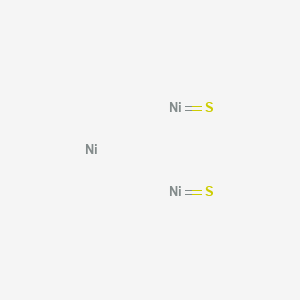
NICKEL SULFIDE (Ni3S2)
Nickel Subsulfide is exposure to inorganic carcinogenic Nickel Subsulfide, an atmospheric pollutant primarily generated by industries that manufacture lithium batteries, results in inflammation, hyperplasia, and fibrosis in the lungs and olfactory epithelium. (NCI04) — NCI Thesaurus (NCIt)
- IUPAC 名称
- nickel;sulfanylidenenickel
- 分子式
- Ni3S2
- 分子量
- 240.22 g/mol
- 精确质量
- 239.745611 Da
- 拓扑极性表面积
- 64.2 Ų
- 氢键供体
- 0
- 氢键受体
- 2
- 共价单元
- 3
- 已定义的立体中心
- 0
又称
另有 12 个已报告名称
外部数据库标识符
来自其他科学数据库的证据
NIH PubChem PUG-View
Attributed physical-property, hazard, environmental and use annotations.
- Color/Form: Hexagonal crystals 来源: Hazardous Substances Data Bank (HSDB)
- Density: 5.82 (NTP, 1992) - Denser than water; will sink 来源: CAMEO Chemicals
- Density: 5.87 来源: Hazardous Substances Data Bank (HSDB)
- Density: Relative density (water = 1): 5.82 来源: ILO-WHO International Chemical Safety Cards (ICSCs)
- Melting Point: 1454 °F (NTP, 1992) 来源: CAMEO Chemicals
- Melting Point: 787 °C 来源: Hazardous Substances Data Bank (HSDB)
- Melting Point: 790 °C 来源: ILO-WHO International Chemical Safety Cards (ICSCs)
- Physical Description: Nickel subsulfide appears as pale yellowish-bronze metallic-lustrous crystals or shiny gold-green (metallic) crystalline powder. (NTP, 1992) 来源: CAMEO Chemicals
- Physical Description: Large Crystals; CBI; Wet Solid; Other Solid 来源: EPA Chemical Data Reporting (CDR)
- Physical Description: Yellowish-bronze to gold-green metallic solid; [CAMEO] Slightly soluble in water; [ACGIH] 来源: Haz-Map, Information on Hazardous Chemicals and Occupational Diseases
- Physical Description: PALE YELLOWISH BRONZE LUMPS WITH METALLIC LUSTRE. 来源: ILO-WHO International Chemical Safety Cards (ICSCs)
- Solubility: less than 1 mg/mL at 70.7 °F (NTP, 1992) 来源: CAMEO Chemicals
- Solubility: INSOL IN COLD WATER; SOL IN NITRIC ACID 来源: Hazardous Substances Data Bank (HSDB)
- Solubility: Solubility in water, mg/l at 37 °C: 517 (practically insoluble) 来源: ILO-WHO International Chemical Safety Cards (ICSCs)
- Substance: Nickel Subsulfide 来源: NTP Technical Reports
- NTP Technical Report: TR-453: Toxicology and Carcinogenesis Studies of Nickel Subsulfide (CASRN 12035-72-2) in F344/N Rats and B6C3F1 Mice (Inhalation Studies) (1996 ) 来源: NTP Technical Reports
- Peer Review Date: 11/29/94 来源: NTP Technical Reports
- Conclusion for Male Rat: Clear Evidence 来源: NTP Technical Reports
- Conclusion for Female Rat: Clear Evidence 来源: NTP Technical Reports
- Conclusion for Male Mice: No Evidence 来源: NTP Technical Reports
- Conclusion for Female Mice: No Evidence 来源: NTP Technical Reports
- Summary: Under the conditions of these 2-year inhalation studies, there was clear evidence of carcinogenic activity of nickel subsulfide in male F344/N rats based on increased incidences of alveolar/bronchiolar adenoma, carcinoma, and adenoma or carcinoma (combined) and on increased incidences of benign, malignant, and benign or malignant (combined) pheochromocytoma of the adrenal medulla. There was clear evidence of carcinogenic activity of nickel subsulfide in female F344/N rats based on increased incidences of alveolar/bronchiolar carcinoma and alveolar/bronchiolar adenoma or carcinoma (combined) and an increased incidence of benign pheochromocytoma of the adrenal medulla. There was no evidence of carcinogenic activity of nickel subsulfide in male or female B6C3F1 mice exposed to 0.6 or 1.2 mg/m3.; Exposure of male and female rats to nickel subsulfide by inhalation for 2 years resulted in inflammation, hyperplasia, and fibrosis in the lung; inflammation and atrophy of the olfactory epithelium in the nose; and hyperplasia in the adrenal medulla (females). Exposure of male and female mice to nickel subsulfide by inhalation for 2 years resulted in inflammation, bronchialization, hyperplasia 来源: NTP Technical Reports
- Carcinogen Classification: 1, carcinogenic to humans. (L135) 来源: Toxin and Toxin Target Database (T3DB)
- Exposure Routes: The substance can be absorbed into the body by inhalation of its aerosol. 来源: ILO-WHO International Chemical Safety Cards (ICSCs)
- Exposure Routes: Inhalation (L41) ; oral (L41) ; dermal (L41) 来源: Toxin and Toxin Target Database (T3DB)
- First Aid: EYES: First check the victim for contact lenses and remove if present. Flush victim's eyes with water or normal saline solution for 20 to 30 minutes while simultaneously calling a hospital or poison control center. Do not put any ointments, oils, or medication in the victim's eyes without specific instructions from a physician. IMMEDIATELY transport the victim after flushing eyes to a hospital even if no symptoms (such as redness or irritation) develop.; SKIN: IMMEDIATELY flood affected skin with water while removing and isolating all contaminated clothing. Gently wash all affected skin areas thoroughly with soap and water. If symptoms such as redness or irritation develop, IMMEDIATELY call a physician and be prepared to transport the victim to a hospital for treatment.; INHALATION: IMMEDIATELY leave the contaminated area; take deep breaths of fresh air. IMMEDIATELY call a physician and be prepared to transport the victim to a hospital even if no symptoms (such as wheezing, coughing, shortness of breath, or burning in the mouth, throat, or chest) develop. Provide proper respiratory protection to rescuers entering an unknown atmosphere. Whenever possible, Self-Contained Breathing Ap 来源: CAMEO Chemicals
- Signal: Danger 来源: Regulation (EC) No 1272/2008 of the European Parliament and of the Council
- GHS Hazard Statements: H317: May cause an allergic skin reaction [Warning Sensitization, Skin]; H331: Toxic if inhaled [Danger Acute toxicity, inhalation]; H341: Suspected of causing genetic defects [Warning Germ cell mutagenicity]; H350i: May cause cancer by inhalation [Danger Carcinogenicity]; H372 **: Causes damage to organs through prolonged or repeated exposure [Danger Specific target organ toxicity, repeated exposure]; H400: Very toxic to aquatic life [Warning Hazardous to the aquatic environment, acute hazard]; H410: Very toxic to aquatic life with long lasting effects [Warning Hazardous to the aquatic environment, long-term hazard] 来源: Regulation (EC) No 1272/2008 of the European Parliament and of the Council
- Precautionary Statement Codes: P203, P260, P261, P264, P270, P271, P272, P273, P280, P302+P352, P304+P340, P316, P318, P319, P321, P333+P317, P362+P364, P391, P403+P233, P405, and P501 (click each P-code to see the statement) 来源: Regulation (EC) No 1272/2008 of the European Parliament and of the Council
- Signal: Danger 来源: NITE-CMC
- GHS Hazard Statements: H317: May cause an allergic skin reaction [Warning Sensitization, Skin]; H331: Toxic if inhaled [Danger Acute toxicity, inhalation]; H334: May cause allergy or asthma symptoms or breathing difficulties if inhaled [Danger Sensitization, respiratory]; H341: Suspected of causing genetic defects [Warning Germ cell mutagenicity]; H350: May cause cancer [Danger Carcinogenicity]; H361: Suspected of damaging fertility or the unborn child [Warning Reproductive toxicity]; H371: May cause damage to organs [Warning Specific target organ toxicity, single exposure]; H372: Causes damage to organs through prolonged or repeated exposure [Danger Specific target organ toxicity, repeated exposure] 来源: NITE-CMC
- Precautionary Statement Codes: P203, P233, P260, P261, P264, P270, P271, P272, P280, P284, P302+P352, P304+P340, P308+P316, P316, P318, P319, P321, P333+P317, P342+P316, P362+P364, P403, P403+P233, P405, and P501 (click each P-code to see the statement) 来源: NITE-CMC
- GHS Hazard Statements: H317: May cause an allergic skin reaction [Warning Sensitization, Skin]; H334: May cause allergy or asthma symptoms or breathing difficulties if inhaled [Danger Sensitization, respiratory]; H350: May cause cancer [Danger Carcinogenicity]; H372: Causes damage to organs through prolonged or repeated exposure [Danger Specific target organ toxicity, repeated exposure] 来源: NITE-CMC
- Precautionary Statement Codes: P203, P233, P260, P261, P264, P270, P271, P272, P280, P284, P302+P352, P304+P340, P318, P319, P321, P333+P317, P342+P316, P362+P364, P403, P405, and P501 (click each P-code to see the statement) 来源: NITE-CMC
- Health Effects: The most common harmful health effect of nickel in humans is an allergic reaction. This usually manifests as a skin rash, although some people experience asthma attacks. Long term inhahation of nickel causes chronic bronchitis and reduced lung function, as well as damage to the naval cavity. Ingestion of excess nickel results in damage to the stomach, blood, liver, kidneys, and immune system, as well as having adverse effects on reproduction and development. (L41) 来源: Toxin and Toxin Target Database (T3DB)
- Toxicity Summary: ... Respiratory absorption with secondary gastrointestinal absorption of nickel (insoluble & soluble cmpd) is the major route of entry during occupational exposure. A significant quantity of inhaled material is swallowed following mucocillary clearance from the respiratory tract. Poor personal hygiene & work practices can contribute to gastrointestinal exposure. Percutaneous absorption is negligible, quantitatively, but is important in the pathogenesis of contact hypersensitivity. Absorption is related to the solubility of the cmpd, following the general relationships nickel carbonyl> soluble nickel cmpd> insoluble nickel cmpd. ... Long term inhalation exposure to ... nickel subsulfide caused mucosal damage & infalmmatory reaction in the respiratory tract in rats, mice & guinea pigs. ... Pulmonary fibrosis was seen in rats exposed to nickel subsulfide. In an inhalation study, nickel subsulfide induced benign & malignant pulmonary tumors in rats. ... Nickel subsulfide ... induced local mesenchymal tumors in a variety of experimental animals after im, sc, ip, intrapleural, intraocular, introsseous, intrarenal, intra-articular, intratesticular or intra-adipose admin. ... Nickel subsul 来源: Hazardous Substances Data Bank (HSDB)
- Toxicity Summary: Nickel is known to substitute for other essential elements in certain enzmes, such as calcineurin. It is genotoxic, and some nickel compounds have been shown to promote cell proliferation. Nickel has a high affinity for chromatin proteins, particularly histones and protamines. The complexing of nickel ions with heterochromatin results in a number of alterations including condensation, DNA hypermethylation, gene silencing, and inhibition of histone acetylation, which have been shown to disturb gene expression. Nickel has also been shown to alter several transcription factors, including hypoxia-inducible transcription factor, activating transcription factor, and NF-KB transcription factor. There is also evidence that nickel ions inhibit DNA repair, either by directly inhibiting DNA repair enzymes or competing with zinc ions for binding to zinc-finger DNA binding proteins, resulting in structural changes in DNA that prevent repair enzymes from binding. Nickel ions can also complex with a number of cellular ligands including amino acids, peptides, and proteins resulting in the generation of oxygen radicals, which induce base damage, DNA strand breaks, and DNA protein crosslinks. (L41, 来源: Toxin and Toxin Target Database (T3DB)
- Environmental Fate: IT IS NOT BELIEVED TO BE SIGNIFICANT ATMOSPHERIC OR WATER POLLUTANT. 来源: Hazardous Substances Data Bank (HSDB)
- Consumer Uses: Intermediates; Other; Not Known or Reasonably Ascertainable; Catalyst; Intermediate 来源: EPA Chemical Data Reporting (CDR)
- Industry Uses: Not Known or Reasonably Ascertainable; Catalyst; Intermediate; Other 来源: EPA Chemical Data Reporting (CDR)
- Sources/Uses: Used in lithium primary batteries; [HSDB] Formed in smelting and refining of nickel ores and may be formed when nickel catalysts are used in petroleum refining; [ACGIH] 来源: Haz-Map, Information on Hazardous Chemicals and Occupational Diseases
- Industrial Processes with risk of exposure: Battery Manufacturing [Category: Industry]; Metal Extraction and Refining [Category: Industry] 来源: Haz-Map, Information on Hazardous Chemicals and Occupational Diseases
- Uses: In lithium primary batteries 来源: Hazardous Substances Data Bank (HSDB)
映射方: Existing checksum-valid CAS to unique PubChem CID match. 检索时间: 2026-08-31. 打开来源记录
科学分类和危害注释仅提供背景信息,不能取代上方所示针对具体市场的监管决定。
其他来源的覆盖范围和匹配状态
| 来源 | 结果 | 已检查 |
|---|---|---|
| NIH PubChem PUG-View | 精确匹配 | 2026-08-31 |
已记录的无匹配结果是该来源已被检查的有效证据;这并不表示该物质在别处不存在。
于 2026-09-02 通过校验和有效的 CAS 匹配从美国国立卫生研究院 (NIH) PubChem 检索。化学性质不能取代本页的监管决定。
Trinickel disulfide; nickel subsulfied [1]; heazlewoodite [2] 的相关记录
该记录的直接匹配结果有限,因此同时显示附件 II 中的相邻条目。
Nickel (II) sulfide [1]; nickel sulfide [2]; millerite[3]
Nickel monoxide [1]; nickel oxide [2]; bunsenite [3]
6-(2-Chloroethyl)-6-(2-methoxyethoxy)-2,5,7,10-tetraoxa-6-silaundecane
附件 II 对 Trinickel disulfide; nickel subsulfied [1]; heazlewoodite [2] 意味着什么
Trinickel disulfide; nickel subsulfied [1]; heazlewoodite [2] 被列为欧盟化妆品法规 1223/2009 附件 II 中的禁用物质,不得有意添加。第 17 条另行规定了在良好生产规范下技术上不可避免、且符合第 3 条安全要求的非有意微量存在的情形。
配方师必须筛查其成分和原料,确保均不含该物质。供应商应在被要求时提供证明不含该物质的文件。
本页还显示 12 条相关附件记录,其标识符、附件逻辑或命名模式存在重叠。
合规核查清单
- 核实该物质不存在于所有原料和成品配方中。
- 向原料供应商索取不含该物质的确认函或 CoA。
- 将筛查结果记录在产品信息档案 (PIF) 中。
- 该物质具有 CMR 分类。使用前请查看上方的 CMR 表,并核实现行附件 II/III 状态。
常见问题
附件 II 记录 Trinickel disulfide; nickel subsulfied [1]; heazlewoodite [2] 的来源说明
本页概述欧盟委员会公开化妆品资料中 Trinickel disulfide; nickel subsulfied [1]; heazlewoodite [2] 的一条附件 II 记录,并在可用时补充关联的清单或标识符匹配。
请使用本记录页面查看 Trinickel disulfide; nickel subsulfied [1]; heazlewoodite [2] 的附件 II 条件,但任何最终监管决定都应对照现行官方附件措辞和来源文件确认。